

Pranayama, derived from the Sanskrit words prana (life force) and ayama (extension or control), is a breathing practice in yoga. It is believed to improve our physical, mental, and spiritual well-being. Pronounced as “praa-nuh-yaa-muh”, it includes various breathing patterns that are designed to increase the prana (vital life force). Each technique has its own benefits and challenges.
If you are a yoga teacher or a practitioner, follow along with this article to learn the types of pranayama, their guidelines, and who should avoid doing these techniques.
Quick Answer
- Pranayama is the ancient yogic practice of intentional breath control. There are dozens of types of pranayama, including kalalbhati, plavini, and sheetkari. Individuals with heart conditions, respiratory issues, pregnancy, and psychiatric conditions should avoid performing pranayama.
What is Pranayama?
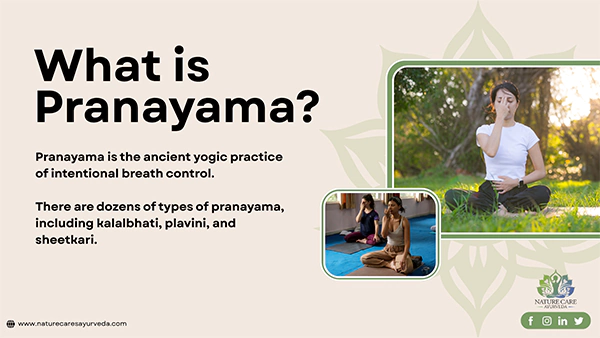
To understand the meaning of Pranayama, first you need to focus on what prana is. Prana is the life force; it is the energy we require for our daily actions like speaking, thinking, breathing, and moving. Pranayama is the expansion and control of this life force through the conscious regulation of breath through puraka (inhalation), kumbhaka (retention), and rechaka (exhalation).
Pranayama benefits in purifying our nadis (energy channels) and allows the prana to flow freely. Further, it is an integral part of Ayurveda, balancing the kapha, vata, and pitta dosha and promoting mind-body healing.
Did you know?
In his Yoga Sutras, sage Patanjali defines pranayama as a conscious, deliberate regulation and cessation of the breath’s inhalation and exhalation. He also mentions it as a means of attaining a higher state of awareness.
7 Types of Pranayama
How many types of pranayama are there? Yoga offers over 50 pranayama techniques that provide different benefits. These breathing techniques are broken down into the three major groups:
- Uttejak (energizing)
- Sampad (balancing)
- Shamvat (calming)
For instance, Kapalbhati falls under the uttejak category, and sheetali comes under the shamvat category.
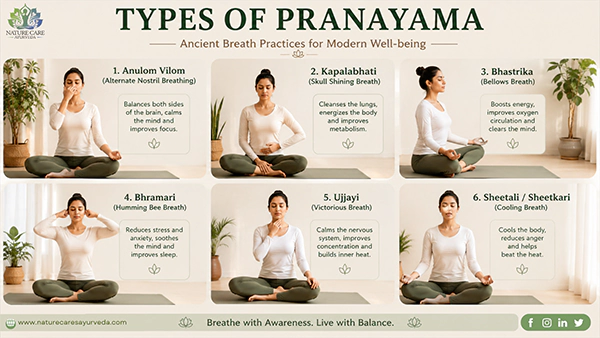
Let’s unlock the top 7 types of pranayama with pictures and their benefits:
1. Anulom Vilom (Alternate Nostril Breathing)
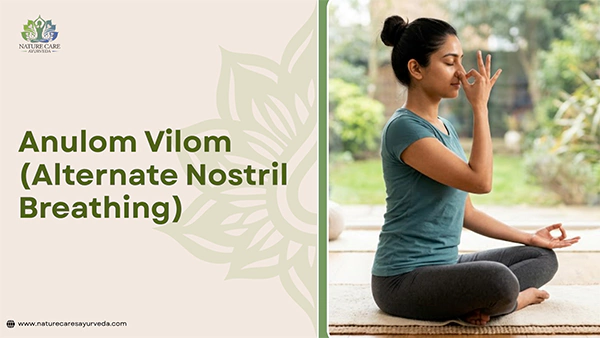
Anulom vilom is a calming breathing exercise. It is done to purify the nadis and balance the mind. This is a conscious breathing practice that involves closing one nostril and inhaling from the other. The regular practice calms the nervous system and provides mental clarity. It is also used as a sinus treatment in Ayurveda.
How to Practice
Close the right nostril with the thumb and inhale through the left. Then close the left nostril with your ring finger, open the right nostril, and exhale. Repeat by inhaling through the right and exhaling through the left. Start with the 4 counts of inhales and exhales.
Benefits
- Enhances mental clarity and focus
- Calms the nervous system
- Reduces stress
- Improves lung capacity
Research Insights
The study by the National Center for Biotechnology Information in 2025 highlights that the twelve weeks of Anulom Vilom have improved the cardiac sympathovagal balance. It has also improved cognition and quality of life (QoL) and reduced depression, stress, and anxiety in patients with mild to moderate Parkinson’s disease (PD).
2. Kapalabhati (Skull Shining Breath)
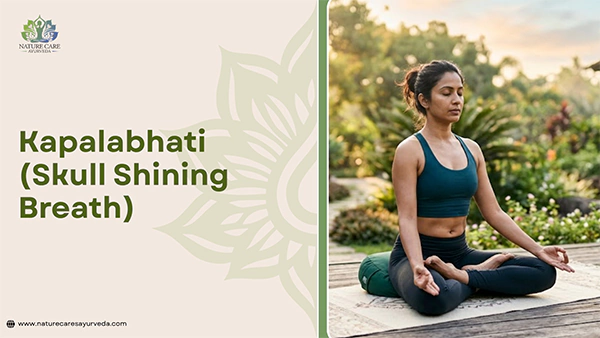
Kapalbhati is a widely practiced respiratory exercise in India as it supports digestion and mental health when done right. This technique involves a sharp exhale for the contraction of abdominal muscles and a passive inhale with fast breathing. It’s best done on an empty stomach to bring the entire system into balance.
How to Practice
Focus on the passive, gentle inhalations followed by the forceful exhalations by actively contracting the abdominal muscles. Start with the 30 rounds at a comfortable speed.
Benefits
- Purifies the lungs and sinuses
- Benefits in weight loss
- Improves cognitive function
- Supports digestion and metabolism
Research Insights
The 2022 study by the National Center for Biotechnology Information reveals that during and after kapalbhati, the body experiences sympathetic activation and parasympathetic withdrawal, followed by increased gamma wave activation in the brain, indicating heightened cognitive focus.
3. Nadi Shodhana (Channel Purification)
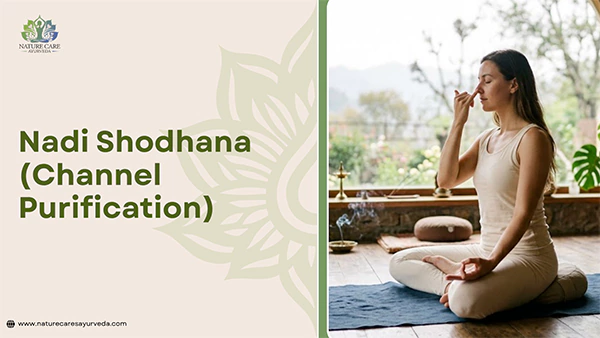
Nadi Shodhana is considered similar to anulom vilom with added kumbhaka (breath retention). It is one of the important techniques and, as per the classical texts, should be performed before the other pranayama practices. It is an introductory exercise to balance the body’s channels.
How to Practice
It is done similarly to anulom vilom, but in anulom vilom you don’t need to hold your breath. To do it, inhale the breath, retain it, and exhale in the ratio of 1:4:2. This retention is designed to improve introspective awareness. As anulom vilom is gentler, start with it and move to nadi shodhana after a few weeks.
Benefits
- Reduces tension and fatigue
- Improves mental clarity
- Strengthens the respiratory and heart function.
4. Ujjayi (Ocean Breath)
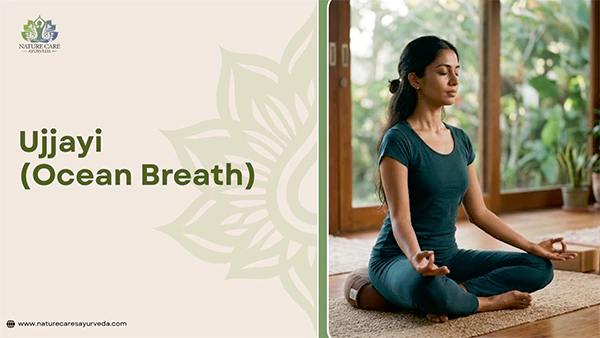
Ujjayi, which translates to “victorious,” is the foundational breathing technique. It is believed to stimulate the energy channels in the astral body. This practice involves the gentle constriction of the back of the throat while inhaling and exhaling to create the sound of ocean waves. It is part of the Ashtanga and Vinyasa yoga sequences.
How to Practice
Inhale through the nose with slight constriction in the back of the throat. Then exhale through the nose, keeping the back of the throat narrowed to maintain the oceanic sound. Keep the breath slow and continue for several rounds while listening to the whispering sound.
Benefits
- Builds internal body heat and stamina
- Improves concentration
- Relieves mental fatigue
Research Insights
The 2025 study findings suggest that short-term ujjayi pranayama is a beneficial strategy to enhance emotional intelligence in nursing students. It may improve their readiness for emotionally demanding clinical environments.
5. Brahmari (Humming Bee Breath)
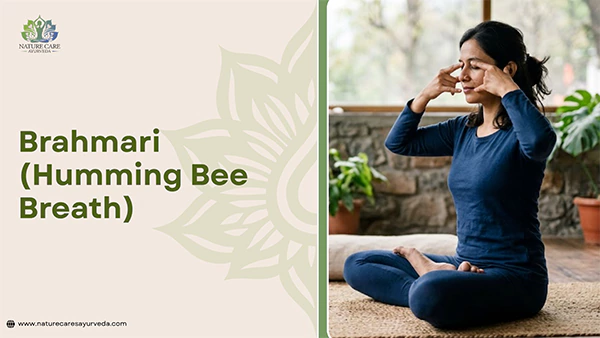
Brahmari is the shamvat (calming) yoga technique. In this, the individual inhales in snoring and breathe out humming at a high pitch like a bumblebee with a “mmm” sound. This helps improve focus and calm the mind, enhancing control over the senses. It is known to be one of the most soothing pranayama types.
How to Practice
Sit in the shanmukhi mudra, gently placing the thumbs on the ear cartilages, index fingers above the eyebrows, middle fingers over the closed eyelids, and ring fingers beside the nostrils. Inhale and exhale through the nose while making a low-pitched humming sound. Repeat the cycle for 5-10 rounds.
Benefits
- Improved sleep
- Better focus
- Stress and anxiety relief
Research Insights
Another 2023 study by Science Direct’ concludes that both Nadi Shodhana and Bhramari Pranayama are effective in balancing the sympathovagal tone. As a result, they are beneficial for the management of hypertension.
6. Sheetali (Cooling Breath)
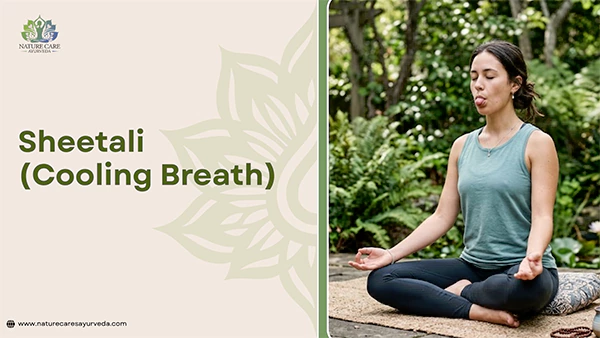
Sheetali is a powerful breathing technique designed to lower the body’s temperature. It is done especially in warm weather or when the body feels overheated. In this, the tongue is rolled into a tube and air is inhaled. It creates a cooling effect that soothes the nervous system.
How to Practice
Open your mouth and roll the tongue’s lateral edges so it forms a tube or a “U” shape. Slowly inhale through the rolled tongue to feel the cooling sensation. Draw the tongue inside and exhale through the nostrils. Repeat this for 5 to 10 rounds.
Benefits
- Cools the body
- Helps in hyperacidity and acid reflux
- Reduces anxiety and anger
7. Bhastrika (Bellows Breath)
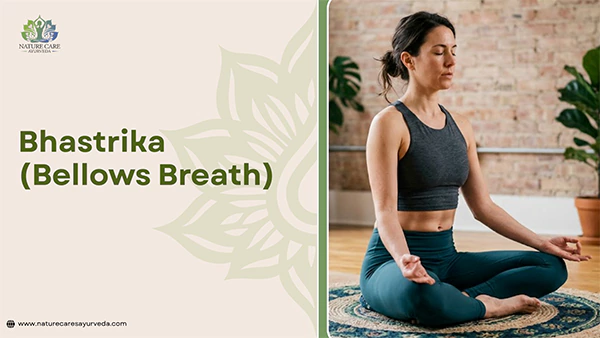
Bhastrika is the Uttejak (energizing) breathwork that is the advanced version of kapalbhati, mimicking the blacksmith’s bellows. It includes rapid forceful inhalations and exhalations powered by the diaphragm. This is best practised in the morning and generates heat in the body.
How to Practice
Take a deep breath in, then forcefully inhale and exhale through both nostrils. The belly should expand forcefully on the inhale and contract sharply on the exhale, maintaining the rhythmic pace.
Benefits
- Clears the respiratory system, chest, and sinuses
- Sharpens the mental focus
- Supports metabolism and digestion
Quick Answer
The 7 widely practised pranayama techniques are anulom vilom, kapalbhati, nadi shodhana, ujjayi, brahmari, sheetali, and bhastrika.
Other Types of Pranayama
There is a wide variety of different types of pranayama, including samvritti pranayama, plavini pranayama, and surya bhedana pranayama. They are designed to balance the nervous system and increase lung capacity.
Here are additional widely practiced pranayama types:
| Pranayama Type | Description |
| Samvritti (Equal/Box Breath) | This breathwork involves the equal duration of inhalation, retention, and exhalation. It promotes stability, calms the body, and increases prana. |
| Plavini (Floating Breath) | In this, the practitioner intentionally gulps air to fill the stomach. It is traditionally believed to make the body light as a flower petal to float on water. |
| Sheetkari (Hissing Breath) | It is a cooling breathing exercise in which the air is inhaled through the clenched teeth, producing a hissing sound. It reduces stress and calms the nervous system. |
| Surya Bhedana (Right Nostril Breathing) | This technique involves breathing through the right nostril and exhaling through the left. It stimulates the body’s solar energy channel, warms the body, and increases vitality. |
| Chandra Bhedana (Left Nostril Breathing) | In this, the practitioner inhales through the left nostril and exhales through the right. This activates the lunar energy channel, reduces stress, and lowers the body temperature. |
| Murch’cha (Fainting/Swooning Breath) | An advanced breathwork practice that includes deep inhalation with breath retention. It is designed to induce a state of lightheadedness or semi-conscious suspension. |
| Dirga Pranayama (Three-Part Breath) | This involves filling the torso with air in three stages: belly, rib cage, and upper chest. It is followed by the complete exhalation in the reverse order. This increases the lung capacity and calms the nervous system. |
Pranayama Practice Guidelines
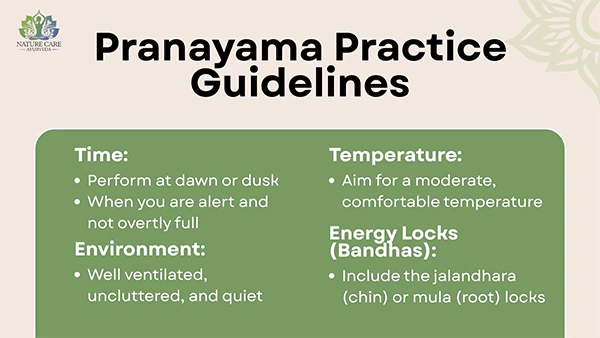
There are some foundational guidelines that the individual should follow to do pranayama. For instance, perform it at dusk or dawn, ensuring a quiet environment and optimal temperature.
Time
Traditionally, this breathwork is performed at dawn or dusk when nature is calm. Perform it when you are alert and not overtly full. Avoid this practice within the two hours of heavy meals.
Environment
The environment plays a huge role in pranayama. It should be well ventilated, uncluttered, and quiet.
Temperature
Temperature should be optimal to successfully do the breathwork. Avoid extreme temperatures, as too cold will make the focus challenging and too hot will make you sleepy. Aim for a moderate, comfortable temperature.
Energy Locks (Bandhas)
Energy locks are the internal muscular contractions used to seal, direct, and contain vital life force within the body. The advanced retentions include the jalandhara (chin) or mula (root) locks, which should be learned from a qualified practitioner.
Common Mistakes to Avoid While Performing Pranayama
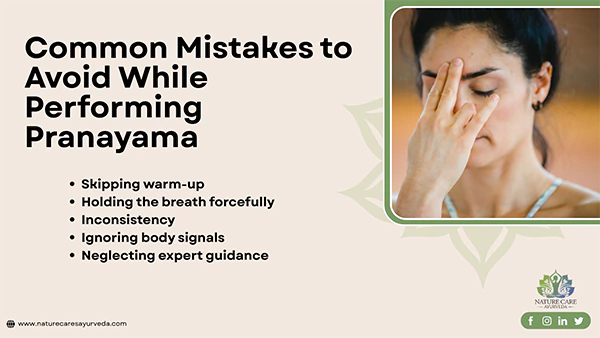
There are some common mistakes made among practitioners, such as skipping the warm-up, forcing the breath, and neglecting body signals. Beginners should avoid retention and stop immediately if you feel dizzy.
- Skipping warm-up: Don’t jump into advanced techniques like bhastrika right away. Give two to three minutes to simple breath awareness as a warm-up. This leads to well-controlled and comfortable practice.
- Holding the breath forcefully: The breath retention should always be calm and sustainable, never strained. During kumbhaka (retention), if you feel dizzy or experience shortness of breath, release and return to normal breathing.
- Inconsistency: For benefits, it’s crucial to do the breathwork consistently. Doing it once a week will hardly be useful. Focus on a daily few-minute session rather than an hour-long session once in a while.
- Ignoring body signals: It’s important to listen to your body while performing the techniques. If you experience any sort of discomfort or strain, stop immediately and take a break.
- Neglecting expert guidance: Expert guidance is always beneficial in these breathing practices. It helps identify the areas of improvement for the practitioner.
Contraindications for Safe Pranayama Practice
Can everyone perform pranayama? Some of the techniques are safe for everyone. However, depending on health conditions like hypertension, pregnancy, and respiratory issues, some breathing practices should be strictly avoided.
- Pregnancy: Avoid breath retention, forceful abdominal locks, and rapid breathing techniques during pregnancy.
- Heart conditions and hypertension: If somebody has uncontrolled blood pressure, heart disease, or recent heart surgery, refrain from breath retention and forceful breathing. This can lead to straining on the heart.
- Respiratory issues: Do not perform the rapid breathing practices in conditions like severe asthma, pneumonia, or acute infections.
- Neurological and psychiatric conditions: Individuals with a history of epilepsy, severe seizures, or uncontrolled migraines should avoid the advanced breathing techniques.
Final Thoughts
Pranayama is a powerful practice that provides incredible benefits for health. It actively regulates tridosha with specific breathing techniques. At first, it may look challenging, including the struggle to connect deeply with the mind and body. But by prioritising consistency over intensity, you can incorporate various types of pranayama in your daily routine and improve your physical and mental well-being.
FAQs
Q1: What are the types of yoga breathing?
Ans: There are dozens of yoga breathing practices, including Sheetali, Bhramari, Anulom Vilom, Bhastrika, Kapalbhati, and Ujjayi. Each is designed to serve a different purpose, from energizing the body to calming the mind.
Q2: How often should I practise pranayama?
Ans: Daily practice is much more beneficial than longer occasional sessions. Give 5 to 10 minutes daily in the morning or evening to see benefits.
Q3: Can I do yoga breathing at home?
Ans: Yes! It can be easily done at home; for this, you just need a peaceful space and a comfortable place to sit.
Q4: Is yoga breathing good for beginners?
Ans: Yes! Some techniques like natural breath observation and anulom vilom are well suited for beginners. These are safe, easy to learn, and gentle.
Q5: How long before I notice results from pranayama?
Ans: The subtle changes like a quieter mind and improved sleep are noticed within 1-2 weeks. The meaningful changes such as energy, focus, and overall well-being may be gradual, taking about months of consistent practice.
Sources