


Aloe vera, referred to as kumari in Ayurveda, is famous in traditional medicine for its pitta dosha balancing nature both internally and externally. With its medicinal properties, the juice benefits digestion, heart health, and oral hygiene. Its topical application also helps heal irritated skin, wounds, and burns.
If you want to reap the health advantages from this miracle plant, follow along with this article, which encapsulates the benefits of aloe vera juice, uses, and potential side effects.
Quick Answer
Aloe vera is known as kumari in Ayurveda. Its juice is made with the extracted gel from the leaves of the aloe vera plant that benefits skin, hair, digestion, and oral health. It also helps manage blood sugar and cholesterol levels in the body.
What is Aloe Vera Juice?

Aloe vera juice refers to a drink that is made by mixing the clear inner gel of the plant leaf with water. This is famously sold in the market as Aloe vera juice. The juice is consumed internally and applied to the skin directly for various benefits.
Benefits of Aloe Vera Juice for Overall Health
Aloe vera that is known as ghrita kumari in Sanskrit, is a green healer. It supports skin, hair, and metabolism in the body. The juice also balances blood sugar and cholesterol levels, improving heart health.
Let’s see the benefits for aloe vera drink for overall well-being in Ayurveda for beginners:
1. Improves Digestion
Aloe juice is believed to support digestive health due to its anti-inflammatory fatty acids. The juice has the deepan (appetizer) and pachan (digestive) properties, which help prevent acidity and indigestion. Thanks to its natural compounds, it coats and soothes the lining of the stomach and eases discomfort. Further, this drink shows promising results to be used in conditions like irritable bowel syndrome (IBS).
Scientific View
In a study mentioned on the National Center for Biotechnology Information, it is concluded that aloe vera is an effective and safe treatment for patients with IBS compared to placebo.
2. Lowers Blood Sugar
The juice helps in the management of madhumeha (diabetes) by supporting blood glucose and insulin levels. The cause of diabetes in Ayurveda is known to be vata imbalance and poor digestion. Aloe water helps reduce aggravated vata and improves digestion by removing ama (toxins) from the body. In this way, aloe vera drink benefits in reducing blood sugar levels.
3. Good for Oral Health
Aloe vera benefits oral and dental health due to its antibacterial properties. The gel can help with conditions like gingivitis, periodontitis, and alveolar osteitis. Regular use also limits the bacteria that cause cavities. Aloe vera mouthwash is found to be beneficial in reducing the pain related to oral mucositis. Further, it acts like a powerful antioxidant and remineralizer for teeth that prevents the loss of tooth enamel thickness.
4. Enhances Skin Health
One of the popular benefits of aloe vera juice is its effect on skin health. Its topical application is famous in the skincare industry. Further, its consumption can help your skin stay hydrated and well moisturized. The gel has anti-inflammatory properties which relieves irritation, redness, and minor acne.
It is also used in the treatment of burns and skin disorders like atopic dermatitis. The regular consumption of the juice may also support collagen production, decreasing the appearance of fine lines and promoting skin elasticity.
Scientific View
A study by the National Center for Biotechnology Information highlights that aloe vera can be used in the treatment of wounds. It can also prevent ulcers by retaining skin moisture and integrity.
5. Helps in Weight Management
One of the best advantages of aloe juice is promoting weight management. It boosts metabolism and enables the body to burn fat naturally. Also, it is a low-calorie drink that has diuretic properties, helping to flush out salt and water from the body. As a result, it reduces water retention and makes you appear slimmer.
6. Improves Hair
The juice is effective in strengthening the hair because of its high amino acid content. With this, it improves the elasticity and reduces split ends and breakage. Aloe vera juice and benefits the hair due to its ability to moisturize. Whether you are applying or drinking the juice, it helps reduce dryness and flakiness in the hair.
It also prevents dandruff and an itchy scalp with its anti-inflammatory and antifungal properties. Thanks to its cooling nature, it is a perfect solution for sensitive scalp issues.
7. Lowers Bad Cholesterol
It may help lower the bad cholesterol levels in the body and prevent artery blockages. The cause of bad cholesterol in Ayurveda is viewed as an imbalance in agni (digestive fire). Poor digestion leads to excess ama (toxins). This causes the accumulation of bad cholesterol in the bloodstream. Aloe vera benefits in controlling the cholesterol levels by eliminating these toxins.
With the combined effect on blood sugar levels and cholesterol, it might reduce the risks of cardiovascular diseases.
8. Relieves Constipation
Constipation is caused by vata imbalance in the large intestine. Aloe vera benefits constipation because of its vata-balancing and bhedana (elimination of feces by breaking hard stools) properties. The leaf gel works as a mild laxative containing the bioactive compounds known as anthraquinone glycosides. As a result, it supports smoother bowel movements and eases the excretion of stools.
Nutritional Value and Ayurvedic Properties of Aloe Vera
The inner clear gel of aloe vera mainly contains water. The remaining part contains vitamins, minerals, and amino acids. The juice is famous in traditional medicine due to its sheeta (cooling) potency and tridosha balancing nature.
Here are the nutritional value and Ayurvedic properties of aloe vera juice:
Nutritional Value of Aloe Vera (8 Ounces)
| Nutrient | Value |
| Calories | 36 kcal |
| Carbohydrates | 9 g |
| Sugar | 9 g |
| Calcium | 19 mg |
| Sodium | 19 mg |
Ayurvedic Properties of Aloe Vera
| Property | Action |
| Rasa (taste) | Tikta (bitter) |
| Guna (qualities) | Guru (heavy), snigdha (oily), picchila (sticky) |
| Veepaka (post-digestive effect) | Katu (pungent) |
| Virya (potency) | Sheeta (cooling) |
| Tridosha Effect | Balances all the doshas |
The Ayurvedic significance of this plant is mentioned in the shloka below:
कुमारी शीतला तिक्ता मधुरा भेदनी जये। गुल्मप्लीयकृदद्धि कफचरहरी हरेत ग्रन्ध्याग्निदग्यविस्फोटपित्तरक्तत्वगामयान्॥ चक्षुध्या विधवातघ्नी बलकारका वृष्या रसायनी॥
वातपित्तकृमिहर कुमारी कफसुमं गुरु। – कै.नि औषधि वर्ग (1639-1640)
How to Use Aloe Vera Juice

Using aloe vera is quite easy in the daily routine, as it is an adaptable remedy to different preferences. The juice is easily available in the market and can be drank in many ways. You may drink it plain or use it in fruit juices or smoothies to mask its strong taste.
Here are the tips to enjoy this remedy in the daily regimen:
- The juice is easily available in the market. You can buy it from trusted brands for consumption.
- You may also prepare it at home by extracting the gel from the leaves and blending it with water.
- Aloe vera juice can be drunk plain safely. However, if you don’t prefer the strong flavour, mix it with more water or coconut water. Flavoring agents like lemon, honey, or salt can be used as per individual preference.
- It can also be mixed with fruit juices and smoothies for enhanced nutrition.
Recommended Dosage and Best Time to Consume Aloe Vera Juice
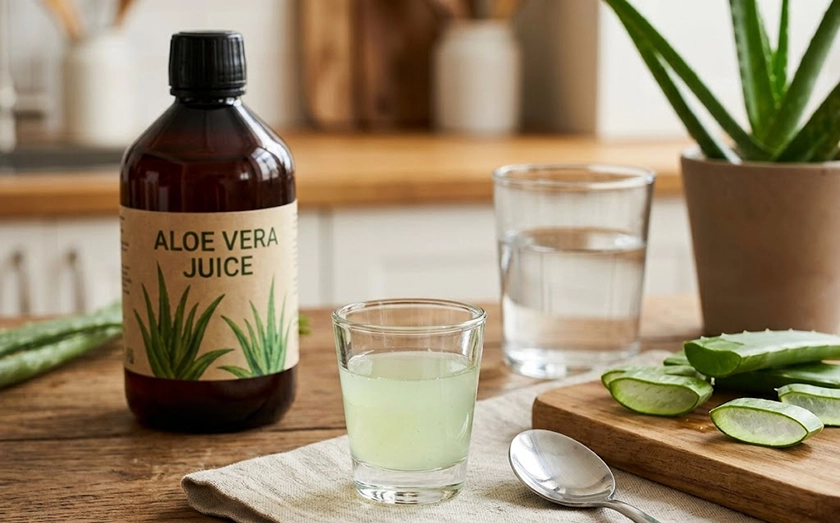
It’s generally considered that 30 ml of aloe vera juice once or twice a day is safe for consumption. You may consume it in the morning on an empty stomach, before meals, or at bedtime, as per the aloe juice benefits to want to see in your health. In this natural remedy, the long-term use matters more than the exact hour of the day. Therefore, it’s important to be consistent.
Recommended Dosage of Aloe Vera Juice
- 30 ml of the juice is generally considered safe for consumption once or twice a day.
- Begin with a small serving and gradually increase the dosage, letting your body adjust to it.
- Excessive consumption should be avoided to prevent the risks of side effects.
Best Time to Consume Aloe Juice
| Morning (empty stomach) | Supports digestion, boosts hydration, and allows maximum nutrient absorption. |
| Before meals | Coats the stomach lining and helps with issues like acid reflux and heartburn. |
| Bedtime | Promotes regular bowel movements due to its mild laxative properties. |
Note: The above provided information is for educational purposes and should not be considered medical advice. Always consult a healthcare practitioner before adding any supplement to your daily routine.
Side Effects and Precautions of Aloe Vera Juice
Though it is highly beneficial for health, aloe vera can still lead to some side effects like nausea, loose stools, kidney and liver issues, and allergic reactions. Pregnant and breastfeeding women and children below 12 should avoid consuming it as it is not considered safe for them. People who are already on medications should also consult a healthcare practitioner before starting its consumption.
Side Effects
- Digestive issues: Excessive consumption can overstimulate the gut and cause cramps. It can also lead to loose stools and nausea.
- Electrolyte imbalance: Frequent diarrhea can lower your body’s potassium and sodium levels.
- Kidney damage: High doses of aloe latex can damage the kidneys.
- Liver problems: Drinking the juice for a long time is linked to toxic hepatitis (liver inflammation) in some cases.
- Allergic reactions: People who are allergic to the plants in the Liliaceae family (garlic, onion, and tulips) are likely to be allergic to aloe vera. This can cause hives, swelling, and contact eczema.
Precautions
- Pregnant and breastfeeding women: Pregnant women should avoid this juice as it may stimulate uterine contractions, increasing the risk of premature labour or miscarriage. It may also cause severe diarrhea in nursing babies.
- Children: Children under the age of 12 should avoid consuming the aloe latex or whole leaf extract by mouth.
- Medicinal interactions: If you take any medications for blood thinning, diabetes, or heart disease, it’s important to talk to a doctor before consuming aloe vera juice. It can interfere with such medications.
Bottom Line
Using aloe vera in a daily wellness routine is a simple and effective solution for digestive issues and skin concerns. There are various benefits of aloe vera juice thanks to its antioxidant, hydration, and soothing properties. Regular consumption may promote internal balance and better weight management. However, using too much can increase the risks of side effects like stomach cramps and diarrhea. It’s always recommended to talk to a doctor first to ensure that it’s safe for you.
FAQs
Q1: Do we need to refrigerate aloe vera juice?
Ans: Yes! It’s better to refrigerate the aloe vera juice in order to increase its shelf life and maintain its freshness.
Q2: What are the aloe vera benefits for hair?
Ans: Aloe vera is beneficial for hair due to its high amino acid content. It improves hair elasticity and reduces split ends. This also moisturises hair and reduces dryness and flakiness.
Q3: What are the benefits of aloe vera juice for weight loss?
Ans: The juice is effective in the weight loss journey as it boosts metabolism and helps the body burn fat naturally. It also reduces water retention in the body and helps you look slimmer.
Q4: Does aloe vera juice reduce blood sugar?
Ans: Yes! It may reduce blood sugar levels by supporting digestion and balancing the vata dosha in the body. It also manages cholesterol levels, improving cardiovascular health ultimately.
Q5: What are the benefits of drinking aloe vera juice?
Ans: Aloe vera juice offers several benefits to our health. It improves hair, skin, and heart health. This juice is also effective in supporting oral and dental health. Further, it has a possible role in promoting weight management and controlling blood sugar and bad cholesterol.
Sources: