


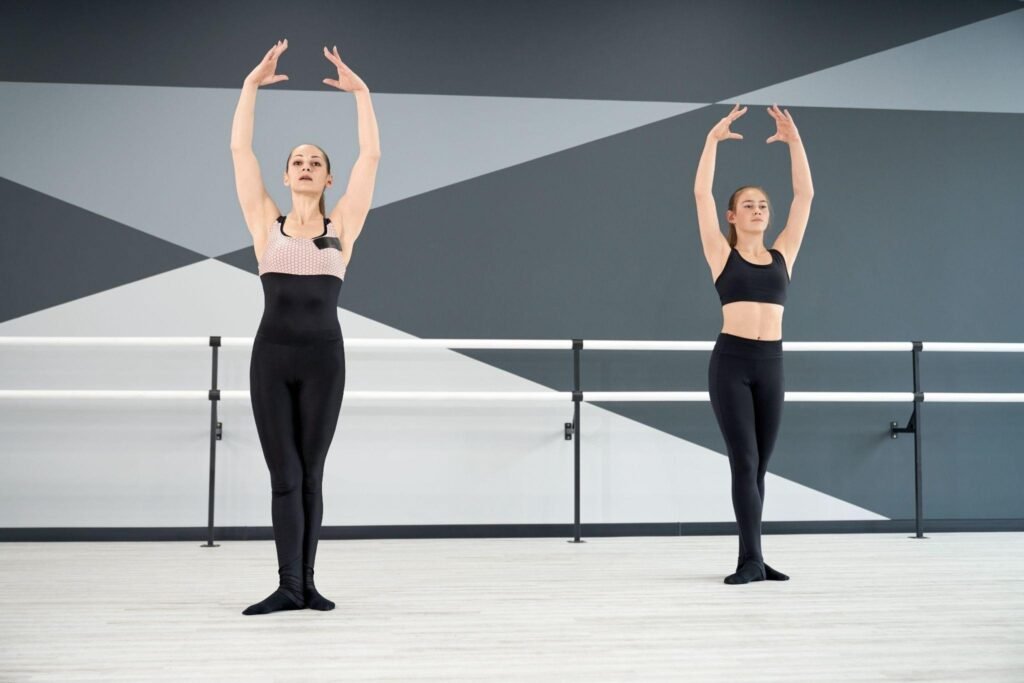
Ballet-inspired exercise can help those adults who want a structured approach to strength, mobility and body control without relying solely on conventional gym routines. A ballet workout in Singapore may combine controlled movements with balance, posture, and flexibility work, creating a session that challenges several physical qualities at once. The focus should remain more on sound techniques rather than simply copying advanced dance movements.
A ballet dancer workout is something more than flexibility. Strength, coordination, stability, and movement awareness help dancers perform controlled sequences with greater consistency.
1. Prioritise Controlled Movement
Control should come before speed. Ballet-inspired exercises can look easy when performed by experienced dancers, yet maintaining alignment while moving slowly needs considerable muscular effort.
Start with movements that let you maintain a stable position throughout the exercise. Pay attention to the placement of your feet, knees, hips, and shoulders. Avoid rushing through repetitions only to increase the number completed.
A controlled pace also makes it simpler to notice compensating movements. If your shoulders rise, your hips shift, or your knees lose alignment, minimize the range or slow the exercise until you can regain control.
This strategy can make a ballet workout in Singapore more useful for developing movement awareness instead of treating every session as a race.
2. Build Strength Around the Core
Core strength aids balance and posture during many ballet movements. The aim is not simply to perform abdominal exercises, but to learn how to maintain a stable torso while the limbs move.
Exercises that include leg lifts, standing balances, and controlled transitions can challenge the muscles around the trunk. Emphasize keeping the ribcage, pelvis, and spine in a comfortable, stable position.
Progress slowly. A stronger movement pattern matters more than increasing difficulty before your technique is ready.
Core work can also complement other types of exercise. If you participate in running, strength training, or recreational activities, improved trunk control may help you approach movement with much awareness.
3. Train Balance on Purpose
Balance deserves dedicated attention because it pairs strength, coordination, and concentration. A ballet dancer workout may include single-leg positions, controlled rises and changes of direction that challenge stability.
When practising balance, start with a position you can hold safely. Use a barre or another stable support when required. As your control improves, you can reduce reliance on support instead of immediately attempting a more difficult position.
Keep your breathing steady. Holding your breath can create unwanted tension and make controlled movement harder.
Regular balance work can also help you understand how small changes in weight affect your stability.
4. Develop Mobility Gradually
Mobility and flexibility are related, but they are not the same. Ballet-inspired training should develop useful movement ranges while managing control.
Avoid forcing a stretch simply to reach a deeper position. Rather, work within a comfortable range and progress gradually. Warm muscles can move more comfortably, so simple preparation before deeper mobility exercises can be useful.
Pay attention to areas that feel especially restricted. A qualified instructor can help determine how exercises should be adapted instead of asking you to push through discomfort.
The aim is functional movement that you can control, instead of flexibility for its own sake.
5. Maintain Postural Awareness
Posture is central to ballet technique, but good posture does not mean holding the body tightly. The body needs to remain organised while still allowing natural movement.
During standing exercises, think about the relationship between your feet, pelvis, spine and shoulders. Avoid pulling the shoulders heavily backwards or tightening the abdomen so strongly that breathing becomes difficult.
A ballet workout in Singapore can offer repeated opportunities to practise these relationships. Over time, the goal is to recognise efficient alignment without requiring you to consciously monitor every body part during every movement.
6. Allow Time for Recovery
Strength and control develop through consistent training, but recovery stays part of the process. Muscles need time to adapt after challenging sessions.
Schedule rest according to your overall activity level. Gentle movement may feel right on a recovery day, while intense training may need more downtime.
Pay attention to persistent pain, unusual swelling, or a significant shift in movement. These symptoms should not be treated as a normal type of improving fitness. Seek appropriate professional advice when needed.
Key Signs
A useful ballet-inspired routine should leave you noticing gradual improvements such as:
- Good awareness of body alignment
- Greater stability during single-leg movements
- More controlled transitions
- Improved confidence with balance exercises
- Increased mobility within a comfortable range
- Better ability to manage posture while moving
- Greater awareness of when fatigue influences technique
A ballet dancer workout can support multiple aspects of physical fitness when it is approached progressively. Adults do not need to train like professional dancers to benefit from selected principles. Consistent technique, sensible progression and proper recovery provide a stronger foundation than chasing difficult movements too early.
Contact BalletBody to explore ballet-inspired fitness sessions designed around strength, posture, mobility and controlled movement.
FAQs
- What is the hardest movement in ballet?
Ans. The hardest movement in ballet is fouetté en pointe.
- What are some ballet exercises?
Ans. Some of the best ballet exercises are Pliés, Tendus, Port De Bras, and Dégagés.
- What muscles do ballet dancers use the most?
Ans. Ballet dancers use deep hip rotators, the calf complex, core muscles, and gluteals.