


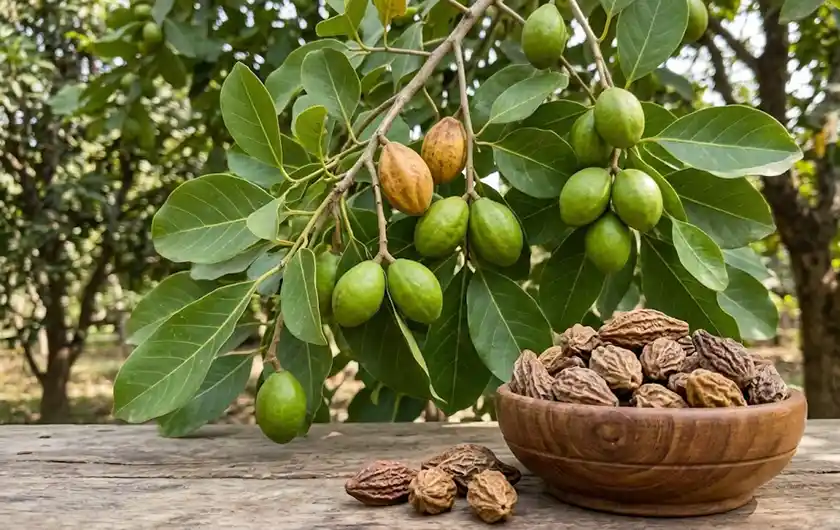
Haritaki, valued in Ayurveda as the “king of medicines,” is a miraculous fruit that is used in various traditional remedies. Also popular as Indian walnut and Indian hog plum, it is great for treating pain and anxiety. It also improves digestion and the immune system. Having astringent, purgative, laxative, and antioxidant properties, it is a potent herb in Ayurveda for overall wellness.
In this article, discover the therapeutic benefits and Ayurvedic properties of haritaki and also learn how to use it in the daily routine.
Quick Answer
Haritaki is the fruit of the Terminalia chebula tree. It is famous in Ayurveda and Siddha medicine as it supports the respiratory system, digestion, immune function, skin, hair, and reproductive health. You can use it for consumption or external application on hair and skin. It is also paired with other Ayurvedic ingredients for seasonal use. The herb should be used after a doctor’s consultation, as it has some side effects like digestive issues, allergic reactions, and low blood sugar.
What is Haritaki?
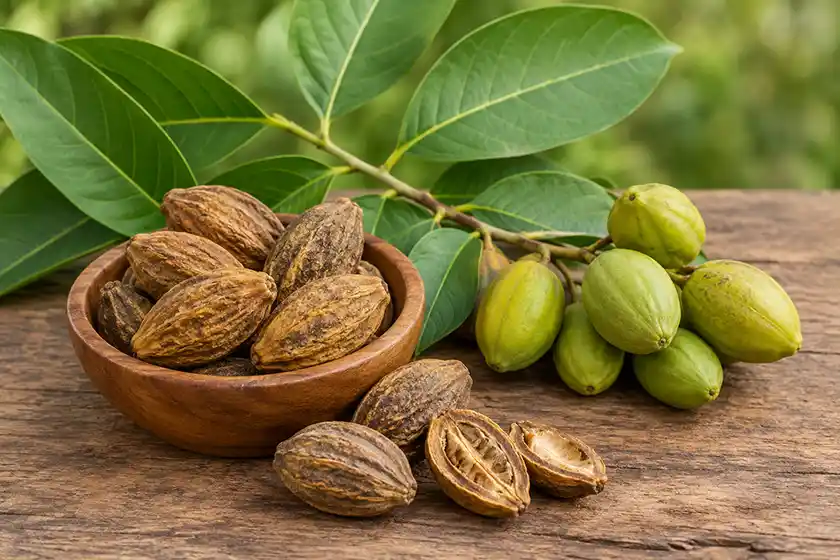
Haritaki refers to the fruit of Terminalia chebula (commonly called Harad in Hindi). It is a significant herb in Ayurveda or Siddha medicine. This fruit is small (less than an inch in size) and oblong in shape. It is often collected when it is green and then dried golden brown or black. After that, the fruits are powdered and used in traditional remedies.
Here is the basic information about Haritaki:
| Common Names | Harad, haradey, kaddukki (in South Asia), kayakalpa, Indian walnut, and Indian hog plum |
| Family | Combretaceae (Indian almond family) |
| Genus | Terminalia L. (Tropical almond) |
| Species | Terminalia chebula Retz. |
| Native Range | South Asia and Southeast Asia |
| Parts Used | Mainly the fruits |
Did you know?
The name haritaki is interpreted as “that which embodies hari”. Hari is referred to as Lord Shiva, one of the three gods in Hindu mythology who is responsible for creation, upkeep, and destruction of the world.
Top Haritaki Benefits for Health
Haritaki is one of the rare herbs in Ayurveda that balances all three doshas – pitta, vata, and kapha. The fruit supports digestion, skin, hair, and cognitive function. Regular use also improves immunity and supports healthy weight management.
Let’s unlock the best haritaki benefits for overall well-being:
Improves Digestion
Haritaki powder benefits gut health issues like heartburn, diarrhoea, flatulence, peptic ulcers, gastroesophageal reflux disease, indigestion, and constipation. The fruit’s carminative nature helps break down the food particles in the stomach and intestine, enhancing the secretion of the digestive juices. As a result, it increases the absorption of essential nutrients through the intestine.
Study Insights
Based on the study by the Research Journal of Pharmacy and Technology, Terminalia chebula improves micronutrient absorption and utilization. The study also suggests that haritaki protects the gut and fights harmful bacteria.
1. Promotes Weight Loss
Haritaki is one of the most effective Ayurvedic herbs for weight management. It detoxifies the body by removing ama (toxins) and, as a result, reduces the hunger pangs. The herb is also believed to decrease the accumulation of LDL cholesterol in the body. It also boosts metabolism, helping to reduce weight faster.
2. Enhances Reproductive Health
Haritaki plant is beneficial for the sexual health of both males and females. It has the rasayana property “alchemy,” which means “something that remains virile throughout life”. It is a natural aphrodisiac that increases libido by reducing mental stress and anxiety. This herb is a great addition to the diet to treat various reproductive issues and increase virility and stamina in males.
3. Improves Cognitive Functioning
Indian walnuts have brain-boosting properties due to the antioxidants and flavonoids. This is a preferred natural remedy to improve focus, mental capacity, concentration, calmness, and alertness. It may help delay the progression of neurodegenerative disorders like Dementia and Parkinsons. This is a memory-boosting fruit that promotes reasoning and problem-solving.
4. Helps Prevent Diabetes
This Ayurvedic herb has chebulinic acid that inhibits the enzymes that break down the starchy carbohydrates. This slows glucose absorption in the body and ultimately prevents blood sugar spikes post-meal. Hence, regular haritaki uses may help bring down blood glucose levels and relieve the various diabetic symptoms.
5. Enhances Immune System
Indian walnuts have immune-boosting properties that make the body stronger to fight infections and diseases. The antioxidants in this fruit protect the immune cells from oxidative stress, as a result promoting their effectiveness. Further, haritaki tablet uses balance the tridosha (vata, kapha, and pitta dosha), restoring internal harmony and natural defence mechanisms.
6. Promotes Skin and Hair Vitality
Haritaki benefits for skin and hair health as a potent herb in Ayurveda. It purifies the blood and removes toxins, which promotes balanced, clear skin, reducing blemishes. The herb has antioxidant properties that help fight oxidative stress, decrease inflammation, and support a healthier complexion. It is also believed to support vitality and regeneration of the skin, improving circulation and detoxification.
In Ayurveda, Indian walnut is used in hair care, thanks to its cleansing and nourishing effects. It maintains scalp health and supports hair texture. The powder can also enhance hair growth and prevent premature greying.
Study Insights
A study by the Journal of Ayurveda & Holistic Medicine highlights that haritaki paste can completely or partially reduce the symptoms of padadari (cracked feet).
7. Supports Respiratory System
The fruit has anti-inflammatory, antibiotic, and anti-asthmatic properties. With this, it helps treat many respiratory problems like sore throats, coughs, and allergies. It is one of the best Ayurvedic home remedies for dry cough.
The fruit is believed to be effective in removing the accumulation of mucus as a natural expectorant. By boosting immunity, it also helps prevent respiratory infections. Ultimately, haritaki works as a valuable remedy for promoting respiratory health.
Nutrition and Ayurvedic Properties of Haritaki
Indian walnut is nutritious for the body as it provides dietary fiber and minerals like potassium and calcium. Traditionally, it is famous for holistic well-being due to its tridoshahara property and ushana potency.
Take a look below to learn about its nutritional value and Ayurvedic properties:
Nutritional Composition of Haritaki
| Nutrient | Value (per 100 g) |
| Calories | 319 kcal |
| Carbohydrates | 69.7 g |
| Fiber | 38 g |
| Protein | 3.7 g |
| Fat | 1 g |
| Calcium | 185 mg |
| Iron | 2.7 mg |
| Potassium | 700 mg |
| Sodium | 55 mg |
Ayurvedic Properties of Haritaki
| Property | Action |
| Rasa (taste) | Contains five of the six rasas: madhura (sweet), amla (sour), katu (pungent), tikta (bitter), kashaya (astringent) |
| Guna (qualities) | Laghu (light) and ruksha (dry) |
| Virya (potency) | Ushna (hot) |
| Vipaka (post-digestive effect) | Madhura (sweet) |
| Dosha effect | Balances all three doshas: vata, kapha, and pitta dosha |
Did you know?
The Medicine Buddha is the celestial Buddha for healing and medicine. It is depicted as holding haritaki fruit in his right hand as a symbol for the eradication of physical and mental illness.
How to Use Haritaki
Haritaki is famously available in powder and capsule forms in the market. You can use the churna with warm water or honey for consumption. If you like to consume it in pill form, use the capsules and tablets. You may also make triphala churna by combining it with bibhitaki and amalaki for extended health benefits.
| Method | Description |
Churna (powder)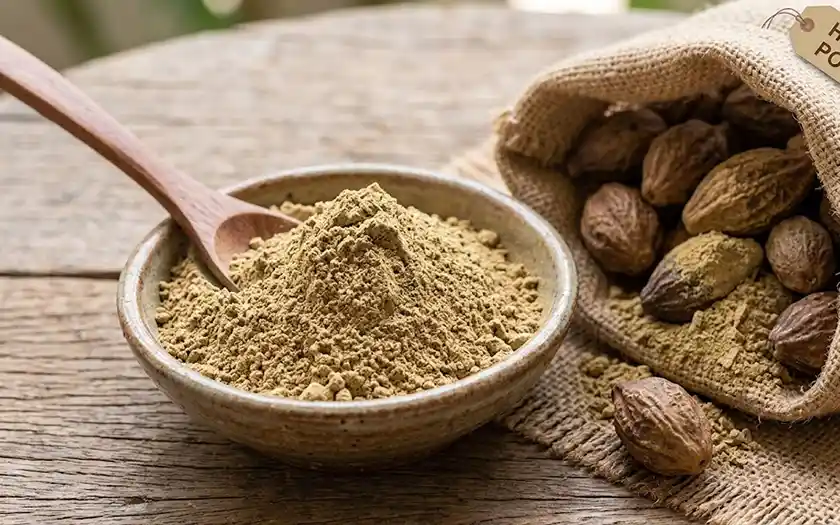 | Mix the haritaki powder with honey or warm water. Consume this mixture to promote better digestion or at bedtime for laxative effects. |
Capsules | The herb is available in capsule form for controlled and convenient use. |
Decoction | Boil the haritaki churna in water and strain the liquid. Drink it to address respiratory ailments. |
Triphala Churna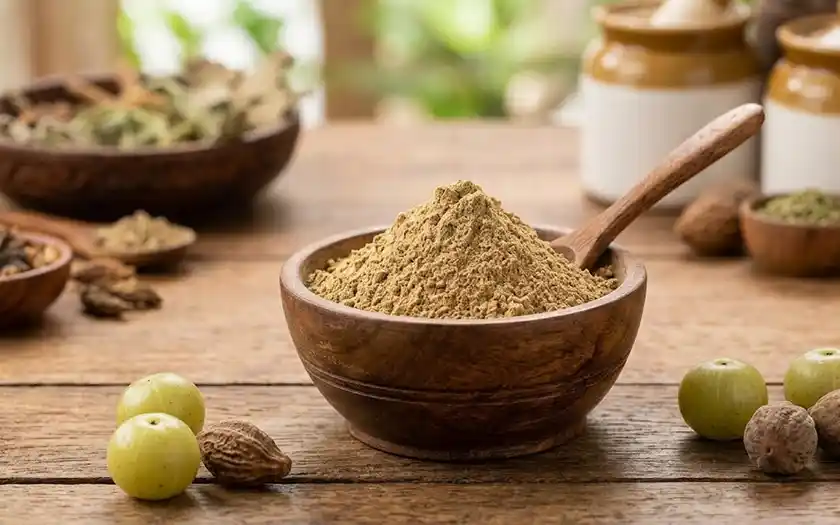 | Combine haritaki, bibhitaki, and amalaki in equal parts to create the popular triphala Ayurvedic formulation. Take this churna for improved gut health and detoxification. |
This powder can also be used to make face packs and hair masks. Let’s see some of the methods below:
Pore Reducing Pack

- Make a paste with a spoonful of haritaki powder, ½ spoon of multani mitti, ½ spoon of besan, and 2 tablespoons of rose water.
- Apply it to the face and let it sit for 20 minutes.
- Rinse with cool water. Apply twice a week for better results.
Dark Circle Diminishing Pack

- Make a paste with a spoonful of haritaki powder, ½ spoon of aloe vera gel, and 2 drops of almond oil.
- Massage it around the eye in a circular motion.
- Allow it to dry for about 15 minutes and rinse with cool water.
- Apply moisturizer to keep the skin supple.
- Use it thrice a week for best results.
Hair Cleansing Mask
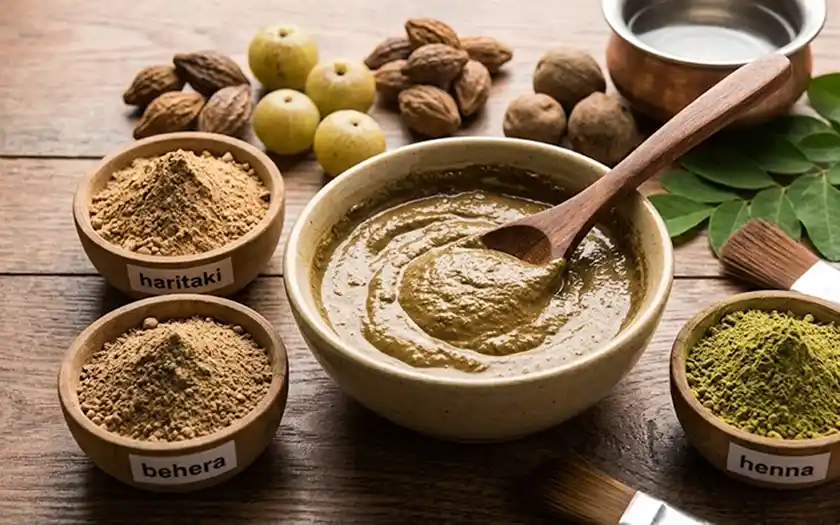
- Combine haritaki powder with amla, behera, and henna powder (1 tablespoon each).
- Add warm water or tea liquor to make a paste.
- Apply to the hair and let it dry for 1 hour.
- Rinse off with cool water and condition the hair.
Note: Always conduct a patch test on the inner arm before applying to the larger area to check sensitivity and allergic reactions.
Seasonal Use of Haritaki (Ritu Haritaki)
Seasonal use of haritaki is known as ritu haritaki. In this, the herb is paired with a specific dietary vehicle (anupan) according to the six seasons in India to balance the changing doshas.
| Season | Use |
| Varsha (monsoon) | Use it with saindhava lavana or rock salt to balance vata and pitta dosha. |
| Sharad (fall) | Consume it with sharkara or sugar to balance aggravated pitta. |
| Hemanta (before winter) | Take it with shunthi or dry ginger for warmth and nourishment. |
| Shishira (late winter) | Use it with pippali or long pepper to improve digestion. |
| Vasanta (spring) | Take it with madhu or honey to balance excess kapha. |
| Grishma (summer) | Consume it with guda or jaggery to restore strength. |
Study Insights
According to the 2021 study by the National Center for Biotechnology Information, rituharitaki is effective in reducing the severity and frequency of diseases in varsha ritu.
Side Effects and Precautions of Haritaki
Haritaki can cause some side effects like digestive issues, dehydration, low blood sugar, and allergic reactions. It’s recommended not to use it during pregnancy, breastfeeding, diarrhea, or while using certain medications.
Side Effects of Indian Walnut
- Digestive issues: As it has a mild laxative effect, it can cause stomach ache, bloating, or loose stools.
- Dehydration and electrolyte imbalance: Over-intake can lead to excessive purgation, causing dehydration, fatigue, and weakness.
- Low blood sugar: The herb may lower blood sugar levels. As a result, it can be risky if combined with diabetes medications.
- Allergic reactions: In rare cases, it may cause rashes, itching, and swelling.
Precautions of Indian Walnut Use
- Pregnant and breastfeeding women: Avoid using it during pregnancy and breastfeeding without a doctor’s consultation.
- People with diarrhea or dehydration: Avoid during fasting, long travel, or diarrhea, as it can worsen fluid loss and loose motions.
- Medicinal interactions: If you are using blood thinners, blood pressure drugs, and anti diabetic treatment, avoid using this herb. It can interact with these medicines and lead to dangerous outcomes.
Bottom Line
Haritaki is a magical Ayurvedic herb that holds great value in the treatment of innumerable diseases. It supports the respiratory system, hair, skin, digestion, and immunity. The fruit has antioxidant and anti-inflammatory properties that help in supporting overall well-being.
Whether you are consuming it in capsule or powder form or applying it to your hair or skin, it is a wonderful remedy for multiple benefits. However, it is recommended to get a proper consultation before using it daily to understand the right dosage and prevent side effects.
FAQs
Q1: Is it safe to take haritaki every day?
Ans: In small amounts, the herb is considered safe for daily use. However, it is recommended to talk to a doctor if you are looking to use it daily.
Q2: Is haritaki good for acidity?
Ans: Yes! The fruit is good for acidity and overall digestion. To reduce gas and related stomach cramps, consume it with water.
Q3: Can haritaki help with constipation?
Ans: Yes! It may help with constipation due to its mild laxative properties and fiber content.
Q4: How do I use haritaki for detoxification?
Ans: Yes! The powder may improve detoxification. Consume this with warm water and honey to cleanse toxins.
Q5: How long does haritaki take to show results?
Ans: The time required for haritaki to show results depends on the intended use and the individual’s health. You may notice the digestive benefits in a few days, but the other benefits may take longer to appear.
Sources: