


If you’ve noticed a parent misplacing their keys more often, repeating a story they told you yesterday, or seeming a little foggier by evening, you’re not imagining it, and you’re not alone in worrying about it. Cognitive changes are one of the most common concerns families raise as parents grow older, and it’s natural to want to do something proactive rather than just watch and wait.
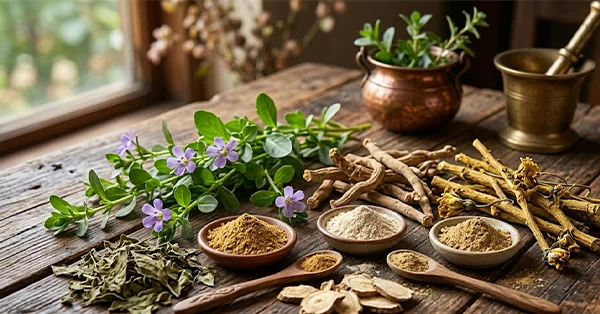
Ayurveda has a specific term for this pursuit: Medhya Rasayana. “Medhya” means intellect or retention, and “Rasayana” refers to a rejuvenating practice or preparation. Together, the phrase describes a category of herbs and habits described in classical texts as supportive of memory, learning, and mental clarity, especially in later life.
This guide walks through what modern research says about the herbs most associated with Medhya Rasayana, and how dinacharya, Ayurveda’s daily-routine framework, pairs with what we now know about circadian rhythm and cognitive aging.
Before we go further: the information below is about supporting general cognitive wellness, not about diagnosing or treating dementia, Alzheimer’s disease, or any other medical condition. If a parent is showing signs of significant memory loss, confusion, personality changes, or difficulty with daily tasks, please see a doctor or neurologist for a proper evaluation, herbs and routines are a complement to medical care, never a substitute for it.
Key Notes
- Brahmi (Bacopa monnieri) has the strongest human research behind it among traditional Medhya herbs, including trials specifically in older adults.
- Shankhpushpi is traditionally well regarded, but rigorous human trials are still limited. It’s reasonable to try, but shouldn’t be oversold.
- Curcumin (from turmeric) shows the most consistent benefit for working memory specifically in older adults, though overall research findings are mixed.
- A steady daily routine, dinacharya is backed by real circadian rhythm research showing consistent sleep-wake timing is linked to better cognitive outcomes in aging.
- Herbs and routines support brain health; they don’t replace medical evaluation for concerning symptoms.
- What Is Medhya Rasayana?
- Brahmi (Bacopa monnieri): The Best-Studied Medhya Herb
- Shankhpushpi: Traditional, Promising, Still Under-Studied
- Turmeric and Curcumin: Modest but Real Benefits for Working Memory
- Dinacharya: Why a Steady Daily Routine Matters More Than You'd Think
- Using These Herbs Safely, Especially for Aging Parents
- When to See a Doctor, Not Just Try an Herb
- Conclusion
- FAQs
What Is Medhya Rasayana?
In classical Ayurvedic texts like the Charaka Samhita, certain herbs are specifically classified for their effect on intellect and memory; this category is called Medhya Rasayana. Modern researchers studying Bacopa monnieri (Brahmi) have pointed to this classical framework directly, noting that it’s traditionally described as a Medhya Rasayana and, based on pharmacological evidence, may support cognitive function through mechanisms like modulating cholinergic pathways and supporting synaptic plasticity in areas of the brain tied to memory.
The idea isn’t that one herb or pill “boosts” the brain overnight, it’s a long-term, routine-based approach that pairs specific herbs with lifestyle practices meant to protect cognitive function as the body ages.
Brahmi (Bacopa monnieri): The Best-Studied Medhya Herb

Brahmi has more human clinical research behind it than most other Ayurvedic herbs used for memory, including studies specifically in older populations:
- A randomized trial in elderly participants found that a standardized Bacopa monnieri extract significantly improved cognitive performance and reduced anxiety and depression scores compared to placebo (Calabrese et al., 2008). (Source – National Center for Biotechnology Information)
Researchers believe Brahmi’s effects are linked to compounds called bacosides, which are thought to support communication between neurons and have antioxidant properties that may help offset oxidative stress in the aging brain.
From a dosha perspective, Brahmi’s cooling, calming quality makes it especially well suited for Vata-type cognitive symptoms, including the scattered, anxious, easily overwhelmed quality that often intensifies with age. Vata is the dosha most associated with the nervous system and naturally increases as we get older.
Shankhpushpi: Traditional, Promising, Still Under-Studied
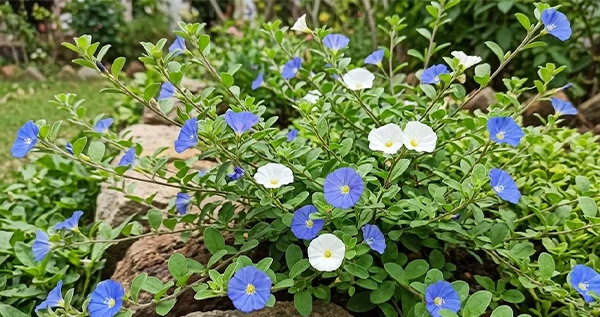
Shankhpushpi (Convolvulus pluricaulis) is one of Ayurveda’s most historically referenced brain tonics, traditionally used for memory, mental fatigue, and calming an overactive mind. It’s worth being straightforward here: while preclinical research suggests memory-enhancing and antioxidant effects, well-controlled human clinical trials are still limited.
One open-label study of healthy young adults found improvements in long-term memory measures after two months of supplementation, but it wasn’t placebo-controlled, so it can’t rule out a placebo effect.
That doesn’t mean Shankhpushpi isn’t worth considering as part of a broader routine. It has centuries of traditional use and a strong safety profile. But it’s more honest to describe it as promising rather than proven, especially compared to Brahmi.
Turmeric and Curcumin: Modest but Real Benefits for Working Memory
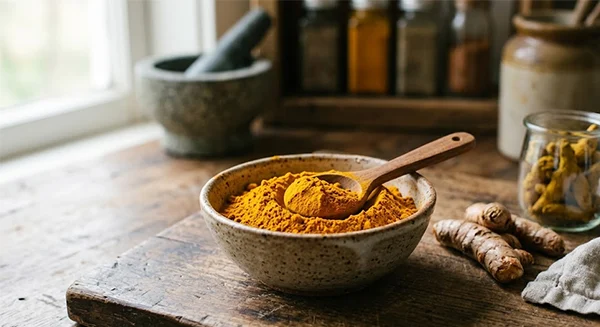
Turmeric’s active compound, curcumin, has been studied specifically in older adults for its effect on cognition:
- An 18-month, double-blind, placebo-controlled trial in non-demented adults found that daily curcumin supplementation improved memory performance compared to placebo (Small et al., 2018). (Source: National Center for Biotechnology Information)
- A 12-week, double-blind, placebo-controlled trial in healthy older adults (ages 50-80) found curcumin supplementation improved working memory performance and reduced fatigue and mood disturbance compared to placebo. (Source: National Center for Biotechnology Information)
It’s worth noting that larger meta-analyses of curcumin and cognition report mixed, inconsistent overall results; the clearest, most reproducible benefit shows up specifically in working memory among older adults, not across every cognitive domain. That’s a more modest claim than some marketing around turmeric suggests, but it’s a genuinely evidence-backed one.
Dinacharya: Why a Steady Daily Routine Matters More Than You’d Think
Dinacharya, literally “daily conduct,” is Ayurveda’s framework of anchoring the day around consistent timing: waking, eating, and sleeping at roughly the same hours every day. In classical Ayurvedic thinking, this consistency is what keeps Vata dosha (associated with the nervous system and, in aging, with restlessness and cognitive scatter) grounded.
What’s genuinely striking is how closely this lines up with current circadian rhythm research. A 2026 study from Johns Hopkins Bloomberg School of Public Health found that in cognitively healthy older adults, more fragmented daily rest-activity rhythms were associated with smaller memory-related brain regions and faster brain volume loss over time.
Separate research using U.S. national health survey data has found that stronger, more regular rest-activity rhythms are associated with better cognitive function in older adults, while disrupted circadian rhythms have been linked to greater risk of Alzheimer’s disease and related dementias.
In other words: the Ayurvedic emphasis on routine timing for sleeping, eating, and activity isn’t just tradition for its own sake, it maps onto a measurable, modern marker of brain health.
A Sample Dinacharya for Cognitive Support
| Time of Day | Practice |
| Early morning (same wake time daily) | Wake at a consistent hour; get natural sunlight exposure within the first hour — this helps anchor the circadian clock |
| Morning | Abhyanga (warm oil self-massage) before bathing — traditionally used to calm Vata and ground the nervous system for the day ahead |
| Midday | Largest meal of the day, eaten at a consistent time, when digestive capacity (Agni) is traditionally considered strongest |
| Afternoon | Brahmi or Shankhpushpi, if using, typically taken with warm milk or water |
| Evening | Lighter dinner, eaten several hours before bed; gentle walk |
| Night (same bedtime daily) | Wind-down routine without screens; consistent bedtime, even on weekends |
The consistency matters more than any single element, the research above points specifically to rhythm regularity, not to any one activity in isolation.
Using These Herbs Safely, Especially for Aging Parents
- Many older adults are on multiple medications, blood thinners, blood pressure medication, and diabetes medication in particular can interact with herbal supplements. Always check with a doctor or pharmacist before adding any new herb to an aging parent’s routine.
- Start with one herb at a time, at the lowest suggested dose, so you can tell what’s actually helping.
- Give it real time, the studies above ran anywhere from 12 weeks to 18 months. This is a long-game approach, not a quick fix.
- If you’re also exploring Ashwagandha for an aging parent’s stress or sleep, note that it’s traditionally used alongside Medhya herbs rather than as a replacement for them, the two address different aspects of aging (adrenal/stress resilience versus cognitive/memory support).
When to See a Doctor, Not Just Try an Herb
It’s worth repeating clearly: normal age-related forgetfulness (occasionally misplacing items, needing a moment to recall a word) is different from symptoms that warrant medical evaluation. See a doctor promptly if a parent shows:
- Memory loss that disrupts daily life or work
- Difficulty completing familiar tasks (cooking a regular meal, managing finances they’ve always handled)
- Confusion about time, place, or people they know well
- Noticeable personality or mood changes
- Withdrawal from activities they used to enjoy
None of the herbs or routines above are a substitute for that evaluation. They’re most valuable as ongoing support for general cognitive wellness in aging, alongside, never instead of proper medical care.
Conclusion
Supporting a parent’s cognitive health as they age isn’t about a single miracle herb it’s a combination of well-chosen, well-studied botanicals like Brahmi, a realistic view of promising-but-less-proven options like Shankhpushpi, and — perhaps most underrated of all the simple discipline of a consistent daily rhythm that both ancient dinacharya practice and modern circadian science agree matters.
If you’re just getting oriented in Ayurveda for beginners, starting with routine consistency for an aging parent is often the easiest and best-evidenced first step, before adding any herbs at all.
FAQs
Q1: Can Brahmi help with Alzheimer’s disease specifically?
Ans: Most of the strongest research on Brahmi involves general age-associated memory changes in adults without dementia, not Alzheimer’s disease itself. Some exploratory research is underway in mild cognitive impairment and early Alzheimer’s, but it’s not yet conclusive. Please don’t use Brahmi as a substitute for a proper diagnostic workup if you suspect Alzheimer’s in a parent.
Q2: How long before we’d notice a difference with these herbs?
Ans: Based on the clinical trials referenced above, expect 12 weeks as a reasonable minimum before evaluating whether an herb is helping, and some benefits (like the curcumin memory trial) were measured over 18 months.
Q3: Is it safe to combine Brahmi, Shankhpushpi, and curcumin?
Ans: Traditionally these are sometimes combined, but for an aging parent, especially one on other medications it’s safer to introduce them one at a time and involve their doctor, so any interaction or side effect is easy to identify.
Q4: What’s the single easiest thing we can start with?
Ans: Based on the research above, fixing wake and sleep times to be consistent every day, and getting morning sunlight exposure, has real evidence behind it, doesn’t require sourcing any supplement, and is a good foundation before adding herbs.
Sources: