

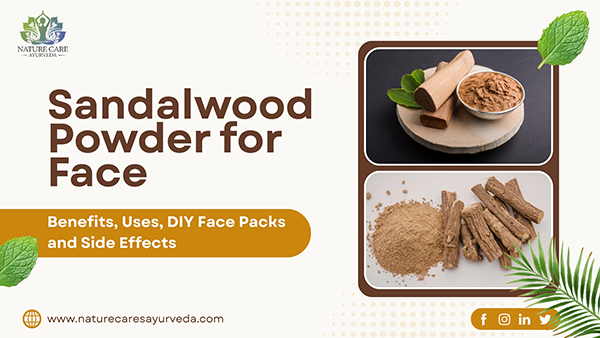
Sandalwood powder is one of the most potent natural ingredients in Ayurveda for maintaining healthy skin. Also known as “Chandana” in Ayurvedic texts, it is popular for its cooling, soothing, and cleansing properties.
For centuries, wood and oil have both been highly valued in different religions and faiths. Apart from being sacred, it is highly beneficial for the skin.
From ancient queens who used it religiously to modern scientists exploring the therapeutic properties, sandalwood remains a remarkable choice for beauty and skin health.
It is widely used in face packs, masks, herbal creams, and other skincare formulations, as using sandalwood powder for the face provides a naturally glowing complexion.
Quick answer:
Sandalwood powder for the face is commonly used to soothe irritation, reduce acne, control excess oil, brighten skin, improve texture, and support an even complexion. It can be applied as a face pack, cleanser, or spot treatment depending on your skin type.
- Benefits of Sandalwood Powder for Face
- How to Use Sandalwood Powder on Face
- DIY Sandalwood Face Packs for Different Skin Types
- Key Nutrients and Active Compounds in Sandalwood Powder
- How Long Does Sandalwood Powder Take to Work
- How to Choose the Right Sandalwood Powder
- Side Effects of Sandalwood Powder for Face
- Precautions Before Using Sandalwood Powder on Face
- Scientific and Ayurvedic Evidence of Sandalwood Powder Uses
- Conclusion
- FAQs
Benefits of Sandalwood Powder for Face
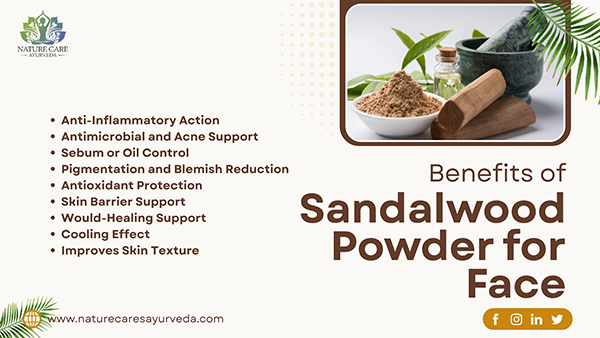
Sandalwood powder is known for its therapeutic and cosmetic properties. Not only does it provide smooth, flawless skin, but it also treats certain skin conditions. Check out what the major benefits of adding sandalwood to your skincare regimen are.
- Anti-Inflammatory Action
Sandalwood powder contains compounds such as alpha-santalol, making it one of the most valued herbs in the Ayurvedic medicine catalog and particularly useful for reducing skin inflammation. This calms redness, irritation, and sensitivity, making the skin even and relaxed.
- Antimicrobial and Acne Support
The natural antimicrobial properties can help reduce acne-causing bacteria on the skin. This can lower the frequency of breakouts and support better skin.
- Sebum or Oil Control
Sandalwood has mildly astringent properties, reducing excess oil production. It can keep skin less oily and prevent pores from clogging, soothing the acne-prone skin.
- Pigmentation and Blemish Reduction
Regular use of sandalwood powder can fade the dark spots and blemishes. The soothing and healing properties can result in even and clear skin.
- Antioxidant Protection
The antioxidant support from flavonoids and phenolic compounds protects skin cells from damage caused by free radicals, UV rays, or pollution.
- Skin Barrier Support
By reducing inflammation or oxidative environmental stress, sandalwood improves the skin barrier and retains moisture in and harmful irritants out.
- Would-Healing Support
Sandalwood supports faster recovery of minor skin infections, cuts, and acne marks by diminishing microbial irritation and inflammation.
- Cooling Effect
The natural cooling properties soothe overheated or irritated skin. This makes it beneficial in hot weather or for inflamed skin.
- Improves Skin Texture
Sandalwood powder cleanses the skin gently and removes dead skin cells effectively. This offers smoother, softer, and more refined skin.
How to Use Sandalwood Powder on Face
Sandalwood powder can be used in a daily skincare routine in several simple ways. Here’s how you can incorporate Sandalwood powder in your skincare regimen:
- As a Gentle Cleanser
Mix sandalwood powder with a little water to create a thin paste and gently massage it into the damp skin. This will remove dirt, makeup, excess oil, and impurities without stripping the skin.
- As a spot treatment
Apply a small amount of sandalwood powder with rose water and apply directly to redness or blemishes. Leave until dry and rinse with water to calm the skin.
- As an Exfoliating Scrub
Combine sandalwood powder with other mild exfoliating ingredients and gently massage onto the face using circular motions. This will help remove the dead skin cells and leave smoother skin.
- For Oil Control
People with oily skin often struggle with open pores; thus, adding sandalwood powder into your routine can help control sebum production by absorbing excess oil, keeping the skin fresh all day long.
DIY Sandalwood Face Packs for Different Skin Types
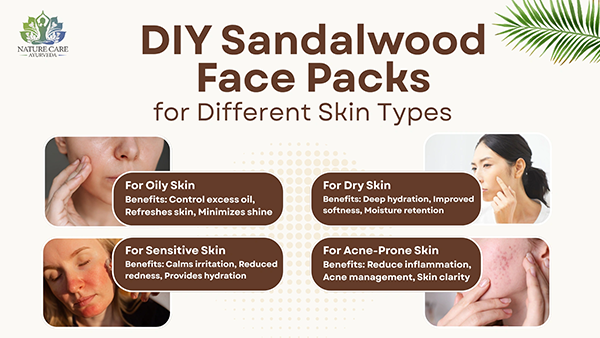
Sandalwood powder can be combined with other natural ingredients to create face packs tailored for different skin types and concerns. Some of the best options are:
For Oily Skin
Ingredients
- 1 tablespoon sandalwood powder
- Rose water
How to Make and Use
Mix the sandalwood powder with enough rose water to form a smooth, lump-free paste.
Apply an even layer on your face, avoiding the eye area. Leave it on for 15 minutes, or until it dries.
Then, rinse with cool water and pat your skin dry. Use a light moisturizer afterwards.
Benefits
- Control excess oil
- Refreshes skin
- Minimizes shine
For Dry Skin
Ingredients
- 1 tablespoon sandalwood powder
- 1 teaspoon honey
- Milk as needed
How to make and use
Combine sandalwood powder and honey in a bowl. Add a small amount of milk and mix it to achieve a cream-like consistency.
Apply the mixture evenly on your skin and leave it for 15-20 minutes.
Rinse using lukewarm water and follow with a moisturizer.
Note: Honey acts as a natural humectant. You can also explore the benefits of honey for overall wellness. that helps attract and retain moisture, making skin soft and hydrated.
Benefits
- Deep hydration
- Improved softness
- Better moisture retention
For Sensitive Skin
Ingredients
- 1 tablespoon sandalwood powder
- Fresh aloe vera gel
How to Make and Use
Mix sandalwood powder with fresh aloe vera gel until a smooth paste forms.
Apply the thin layer to clear skin and leave it for 10-15 minutes. Rinse gently with cool water and do not scrub the skin.
This is a gentle combination that is ideal for sensitive skin and helps soothe any discomfort on the skin.
Benefits
- Calms irritation
- Reduced redness
- Provides hydration
For Acne-Prone Skin
Ingredients
- 1 tablespoon sandalwood powder
- A pinch of turmeric
- Rose water
How to Make and Use
Mix sandalwood powder and turmeric in a bowl. Add rose water and create a smooth paste.
Apply the mixture to the face, focusing mainly on the acne-prone areas.
Leave it for 10-15 minutes before rinsing out thoroughly with water. Use it only twice a week, or it can dry out the skin.
Benefits
- Helps reduce inflammation
- Support acne management
- Improves skin clarity
For Combination Skin
Ingredients
- 1 tablespoon sandalwood powder
- Yogurt
How to Make and Use
Add enough yogurt to the sandalwood powder and create a smooth paste.
Apply it evenly on the face and leave for 15 minutes, then clean it with lukewarm water using circular motions to exfoliate skin.
Yogurt will boost hydration, while sandalwood powder will remove dead skin cells.
Benefits
- Balances oily and dry areas
- Improves texture
- Provides mild exfoliation
For Dull Skin
Ingredients
- tablespoon sandalwood powder
- 1 teaspoon honey
- Rose water
How to make and use
Mix sandalwood powder, honey, and rose water, and create a smooth paste. Cleanse the skin, and apply the paste evenly.
Leave the paste for 15-20 minutes to allow the ingredients to soften and nourish the skin.
Clean the partially dried paste, and fully drying it can cause dryness. Pat your skin dry, and use a moisturizer afterwards.
Key Nutrients and Active Compounds in Sandalwood Powder
These are the components that provide the unique skin-enhancing properties to sandalwood, making it a fine choice for skincare formulations aimed at brightening, calming, and balancing the skin.
| Component | Description | Skin Benefits |
| Alpha-Santalol | A natural compound found in sandalwood that is responsible for many healing properties. | Helps calm skin irritation, redness, and inflammation. |
| Beta-Santalol | A plant compound that works together with alpha-santalol. | Soothes the skin and provides a cooling, refreshing effect. |
| Flavonoids | Natural antioxidants present in plants help protect cells from damage. | Protect the skin from free radicals and provide healthy-looking skin. |
| Tannins | Plant compound with mild astringent properties. | Controls excess oil, tightens pores, and improves skin texture. |
| Phenolic Compounds | Plant-based compounds are popular for their antioxidant and protective effects. | Protects the skin from pollution, environmental damage, and premature aging. |
| Essential Oils | Aromatic oils present in sandalwood provide a distinctive fragrance. | Keep skin soft, smooth, and moisturized. |
How Long Does Sandalwood Powder Take to Work
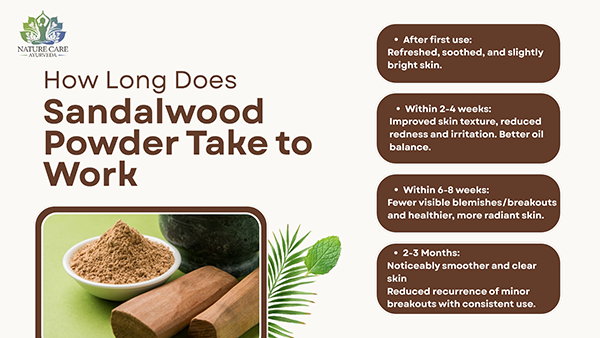
The timeline for visible results depends on the skin type, skincare routine, consistency of use, and specific skin concerns.
| Timeline | Expected Results |
| Immediate Results (After first use) |
|
| Within 2-4 weeks |
|
| Within 6-8 weeks |
|
| Long-term results (2-3 Months) |
|
Important Note: It is essential to stay consistent with natural skincare ingredients. Regular application, combined with the right method and a proper routine that includes sun protection, can maximize the potential benefits.
How to Choose the Right Sandalwood Powder
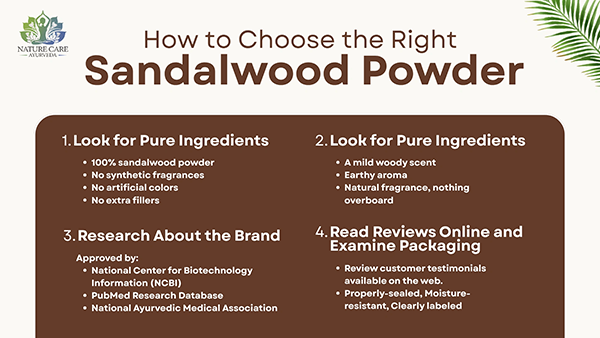
The market is loaded with products labeled as sandalwood powder, but not all are pure. Thus, it requires adequate contemplation before buying sandalwood powder.
1. Look for Pure Ingredients
Make sure to choose a product that has:
- 100% sandalwood powder
- No synthetic fragrances
- No artificial colors
- No extra fillers
2. Check the Aroma
The authentic or branded sandalwood powder usually consists of:
- A mild woody scent
- Earthy aroma
- Natural fragrance, nothing overboard
The product must not smell like flowers or perfumes; it must be earthy and natural, i.e., woody and spice-like.
3. Research About the Brand
If you’re unsure how to evaluate herbal products, read our guide on how to choose the right Ayurvedic supplement.
The best sources to research the efficacy of sandalwood powders are:
- National Center for Biotechnology Information (NCBI)
- PubMed Research Database
- National Ayurvedic Medical Association
4. Read Reviews Online
Make sure you check all the reviews and customer testimonials available on the web. This will help you know about product quality, purity, user experience, and authenticity.
5. Examine Packaging
Quality sandalwood powder must be
- Properly-sealed
- Moisture-resistant
- Clearly labeled
Once you are done checking the quality, make sure you know about the related side effects and precautions.
Side Effects of Sandalwood Powder for Face
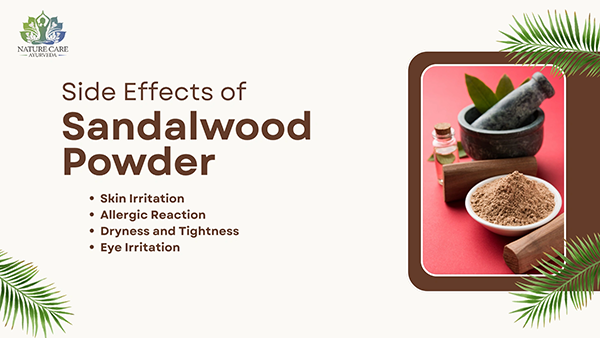
Sandalwood powder is generally considered safe for most skin types, as it is a natural remedy. However, it can cause side effects in some individuals, mainly with sensitivity or allergies. Learn more about whether Ayurvedic medicines have side effects before using any herbal remedy and the precautions to take.
Skin Irritation: Mild irritation, itching, or burning sensation after applying sandalwood powder if it is mixed with harsh ingredients or left on the skin too long.
Allergic Reaction: Though not so common, sandalwood can trigger allergic reactions in certain individuals. If there is redness, swelling, itching, rash, or discomfort, discontinue using it.
Dryness and Tightness: Frequent use of sandalwood can cause dryness, sensitivity, or tightness.
Eye Irritation: Accidental contact with the eyes can cause stinging, redness, or discomfort. The powder must be applied carefully and away from the eyes.
Precautions Before Using Sandalwood Powder on Face
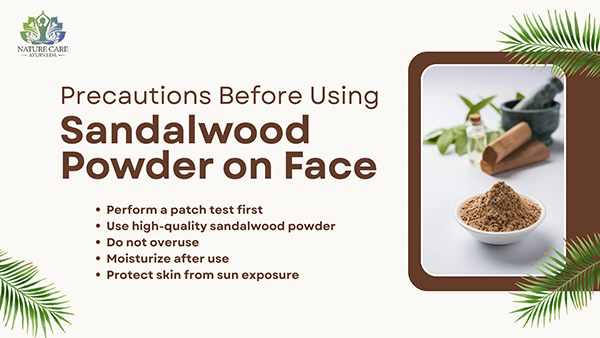
Here are the precautions to follow while you are regularly using sandalwood powder.
Perform a patch test first: before applying it on your entire face, make sure you do a patch test on a discreet area like your inner arm. Wait for 24 hours to check for any side effects.
Use high-quality sandalwood powder: Choose authentic and reputable sources to buy sandalwood powder from. Avoid artificial fragrances, contaminants, or additives.
Do not overuse: Using sandalwood powder too frequently on the face can strip skin’s natural oil. Applying it twice a week is sufficient.
Moisturize after use: If your skin feels dry after application, use a good moisturizer to maintain hydration and support the skin barrier.
Protect skin from sun exposure: After using any skincare treatment, applying sunscreen during the day can protect the skin and maintain overall health.
Scientific and Ayurvedic Evidence of Sandalwood Powder Uses
Charaka Samhita
Charak Samhita includes Chandana in several important herbal groups. Such as:
- Varnya Mahakashaya: herbs that promote complexion and radiance.
- Daha Prashamana Mahakashaya: herbs that alleviate burning sensations and excess heat.
- Kandughna Mahakashaya: herbs that reduce itching and skin discomfort.
- Trishna Nigrahana Mahakashaya: herbs that relieve excessive thirst and heat-related conditions,
Sushruta Samhita
The Sushruta Samhita mentions Chandana (sandalwood) in numerous medical formulations used in skin disorders, wound care, inflammation, and conditions associated with excessive heat in the body.
Ashtanga Hridaya
In the Ashtanga Hridaya of Vagbhata, Chandana is classified among herbs used to balance Pitta dosha in several traditional mixtures that support skin health and reduce inflammatory conditions.
Conclusion
Sandalwood powder is one of the most trusted natural skincare ingredients for its soothing, cooling, and brightening properties. It contains bioactive compounds such as alpha-santalol, antioxidants, and natural essential oils, thus managing acne, excess oil, skin irritation, and poor texture.
Although sandalwood has a long history in Ayurveda and emerging scientific support, results vary based on skin type and consistency of use. Performing a patch test before regular application is recommended.
FAQs
Q1: Which is better, Multani Mitti or sandalwood?
Ans: It depends on what properties you are looking for. Multani Mitti is best for deep cleansing and oil control, while Sandalwood (Chandan) is best for nourishment, calming irritation, and achieving a glowing complexion.
Q2: Which sandalwood is best for face whitening?
Ans: Both white sandalwood (Safedchandan) and red sandalwood (Rakthachandan) are suitable for skin brightening, but they won’t magically change the complexion; instead, they will clear it.
Q3: Can I use sandalwood powder daily on my face overnight?
Ans: No, you should not use sandalwood powder overnight; it is best to use it twice a week.
Q4: What can I mix with sandalwood powder for my face?
Ans: For oily skin: Rose water, Multani Mitti
For Dry and dull skin: raw milk and honey
For hyperpigmentation & dark spots: a pinch of turmeric powder and aloe vera gel.
Sources: