

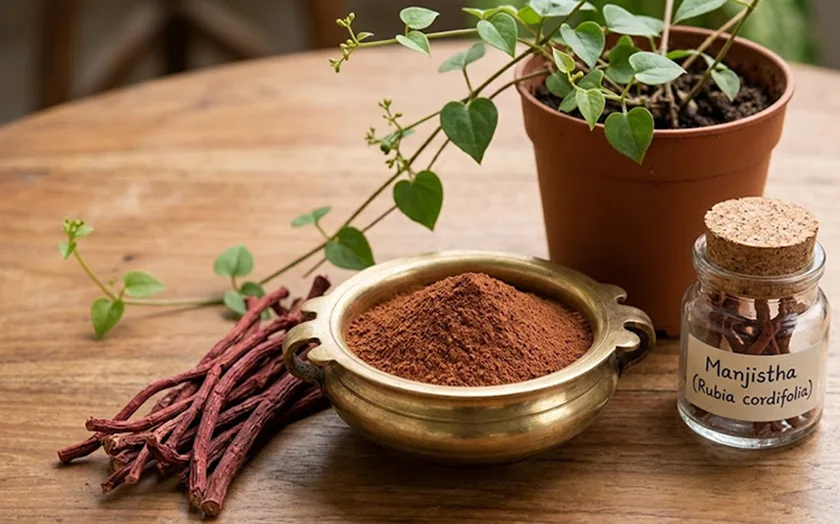
Manjistha is a valued Ayurvedic herb that has many health advantages. With its antioxidant and anti-inflammatory properties, the herb supports liver function and enhances skin health. Also known as Manjit in Hindi and Indian Madder in English, this plant is also used as a natural hair dye or food colorant.
If you want to include this wonderful herb in your natural health and skincare routine, read this article to understand its nutritional value, benefits, and possible side effects.
Quick Answer
Manjistha is a perennial climbing shrub that is famous in Ayurvedic medicine for its vibrant red roots. It benefits skin health, the liver, the reproductive system, and digestion. The herb also helps in wound healing and cardiovascular support.
It can be used for both consumption and topical application. However, it can cause some side effects like digestive issues, skin irritation, and body fluid discoloration.
What is Manjistha?
Manjistha in English called Indian madder, features heart-shaped leaves, greenish-white flowers, and small round berries. It is especially famous for its vibrant red roots, as they have antioxidant and anti-inflammatory properties. The flowering vine plant is native to Asia, Africa, and Europe.
| Botanical name | Rubia cordifolia |
| Common names |
|
| Plant type | Perennial climbing shrub |
| Native range | Tropical and temperate regions across Asia, Africa, and parts of Europe. |
| Parts used | Roots and rhizomes |
| Forms of use | Powder, capsule, and extract |
| Active compounds | Rubiadin, purpurin, and other anthraquinones |
Best Manjistha Benefits for Our Health
Manjistha is a famous herb in Ayurveda as it supports our skin, liver, and digestion. Further, manjistha tablets benefits also include improving our immunity, respiration, and cardiovascular health. It also aids weight loss and promotes wound healing.
Here are the benefits of manjistha in detail:
1. Improves the Skin
Manjistha benefits for skin, making it healthy and glowing. It is also beneficial in conditions like psoriasis. Ayurveda links psoriasis to the pitta dosha and rakta dhatu imbalance. The pitta samana and raktasodhaka (blood purifying) properties of Indian madder help balance the pitta dosha, purify blood, and eliminate ama (toxins) from the body. Ultimately, reducing the symptoms of psoriasis.
It is also effective in reducing acne and eczema with its antibacterial and anti-inflammatory properties. By improving blood circulation, manjistha powder benefits for skin, enhancing a radiant complexion and even tone.
2. Supports Liver Health
By promoting detoxification and protecting the liver cells from damage, manjistha powder benefits liver function. It helps filter out ama (toxins) and address nutrient deficiencies in the body.
The rich antioxidant properties help reduce oxidative stress and inflammation. As a result, manjishtadi kwath benefits decrease the risk of liver diseases. Regular consumption can be beneficial for both metabolic health and overall liver wellness.
3. Supports Reproductive Health
The herb has a hormonal balancing effect in females. It may help regulate the irregular menstrual cycle and alleviate the symptoms of menopause and PMS.
By promoting detoxification and enhancing the flow of blood in the pelvic region, it improves reproductive health. In this way, the Ayurvedic herb contributes to enhancing fertility and reducing the chances of infections.
4. Improves Digestion
Manjistha powder uses stimulate agni (digestive fire) and promotes better breakdown of food. Ultimately, it is believed to be effective in issues like bloating, indigestion, and constipation. Due to its detoxifying property, it helps cleanse the digestive tract and promote better nutrient absorption.
5. Promotes Wound Healing
As a “vrana ropana”, the herb is considered effective in healing wounds. It is used in many herbal formulations to treat ulcers and wounds. In many folklores, manjistha has been used in decoctions to wash the wounds. Combine manjishtha powder with coconut oil. Use this mixture for quick healing and reduction in inflammation.
Study Insights
A clinical study by the National Center for Biotechnology Information highlights that manjishthadi ghrita has high efficacy in “vrana ropana” with minimal scarring without producing any adverse effects.
6. Enhances Immune Function
Manjistha churna benefits strengthen the body’s natural defenses against diseases and infections. Due to its anti-inflammatory and antimicrobial activity, it protects the body against fungal, bacterial, and viral infections. Regular consumption may help improve the immune system naturally.
7. Helps with Respiratory Issues
Manjistha tea benefits a variety of respiratory issues, including flu, sore throat, common cold, and cough. Along with anti-inflammatory and antibacterial properties, it also has anti-asthmatic properties. The consumption of the herb can be effective in mucus removal and easing breathing.
8. Aids Weight Loss
It is one of the best Ayurvedic herbs for weight management. With its fiber and nutrients, it helps curb cravings and prevent overeating. It is also believed to lower LDL (bad cholesterol) levels, which can improve metabolism and help the body maintain a healthy weight.
9. Helps with Diabetes
Manjistha root benefits in many medicinal formulations. The heating nature and bitter taste of the herb enhance metabolic rate, flush out waste from the body, and optimize insulin levels.
It also has antioxidant and hypoglycemic properties that help in lowering the blood sugar levels and eliminating further complications.
Study Insights
A study by the National Center for Biotechnology Information highlights that Rubia cordifolia L. (RC) extract contains various antioxidant compounds with cardioprotective effects.
10. Improves Cardiovascular Health
Indian Madder is a potent cardio-tonic that supports heart health. It can relax the blood vessels and heart muscles and prevent the deposition of calcium. The herb is believed to reduce the risk of atherosclerosis and heart attacks. Due to its vasodilating activity, it also helps manage blood pressure levels.
Study Insights
A study by the National Center for Biotechnology Information highlights that Rubia cordifolia L. (RC) extract contains various antioxidant compounds with cardioprotective effects.
Ayurvedic Properties of Manjistha
Manjistha is tikta (bitter), kashaya (astringent), and madhura (sweet) in taste, and it has ushna (hot) potency. The herb primarily balances kapha and pitta dosha.
Let’s see its Ayurvedic properties in detail:
| Rasa (taste) | Tikta (bitter), kashaya (astringent), madhura (sweet) |
| Guna (qualities) | Guru (heavy) and rooksha (dry) |
| Virya (potency) | Ushna (hot) |
| Vipaka (post-digestive effect) | Katu (pungent) |
| Dosha effect | Kapha and Pitta shamak (pacifies the Kapha and Pitta doshas) |
Recommended Dosage of Manjistha
It is generally safe to use ¼ to ½ teaspoon of manjistha powder twice a day. You can also use the powder or oil for external application for skin issues. The herb is also available in capsules or tablets in the market for ease of use.
| Powder | 1⁄4 to 1⁄2 teaspoon twice a day |
| Oil | 2-5 drops or as per requirement |
| Tablets or capsules | 1-2 tablets or capsules twice a day |
| Kwath | 20-50 ml in divided doses |
Note: The above-provided information is for educational purposes only and should not be considered medical advice. Talk to the Ayurvedic doctor for the right dosage as per your individual needs.
How to Use Manjistha Herb
Manjistha is a versatile herb that is valued for both its internal and external use. You can make tea or consume its tablets to see its health benefits. You can apply it externally for acne and many skin disorders. The herb is also used in textile and beauty products for its natural colour.
Let’s take a closer look at the manjistha powder used for skin, its tea preparation, and other uses.
Internal Use
| Use | Description |
Powder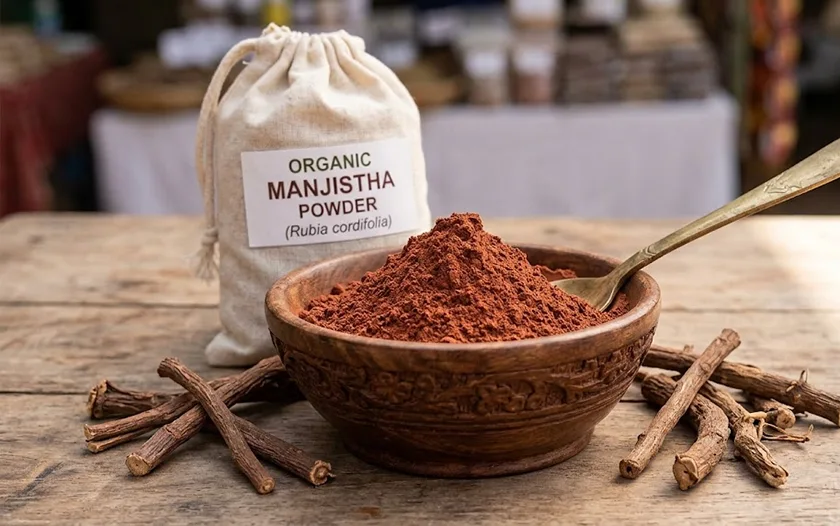 | Mix ¼ to ½ teaspoon of powder in honey or warm water. Consume this mixture twice a day. |
Tea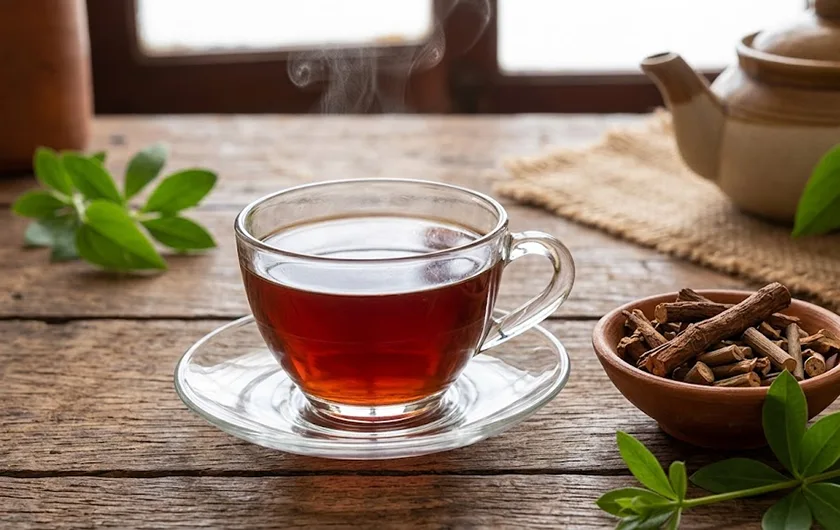 | Add ¼ teaspoon of powder to 200 ml of boiled water to make therapeutic manjistha tea. Let it steep, strain the powder, and add honey for better taste. |
Tablets or Capsules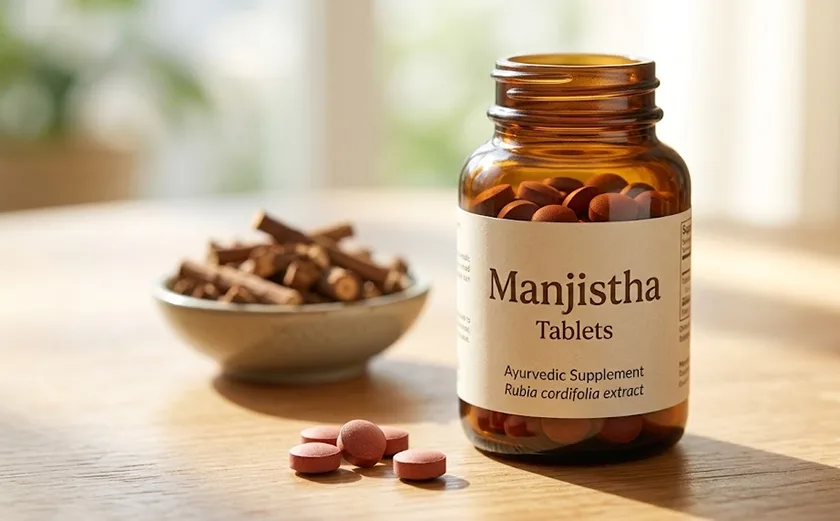 | If you do not like the taste of the powder, swallow the tablets or capsules after meals. |
External Use
| Use | Description |
Face Pack for Dry Skin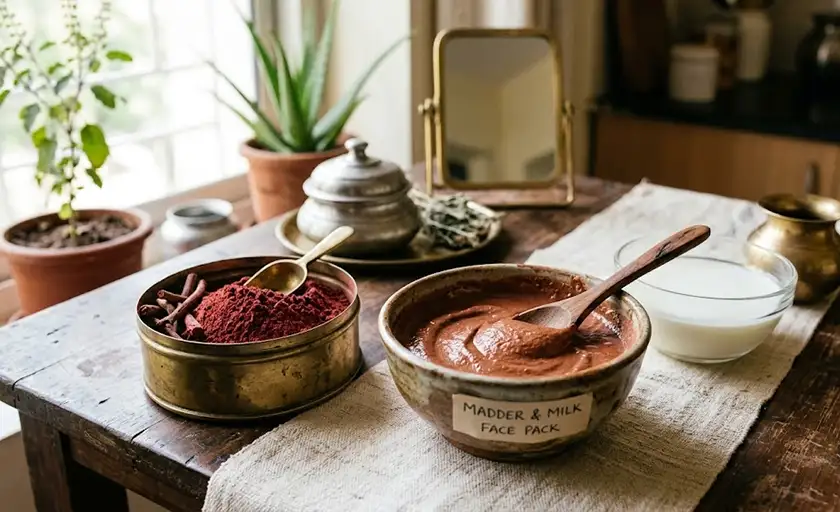 | Mix 1 teaspoon of Indian Madder powder with milk. Apply it to the face and leave for 15-20 minutes. Rinse with lukewarm water. |
Face Pack for Oily Skin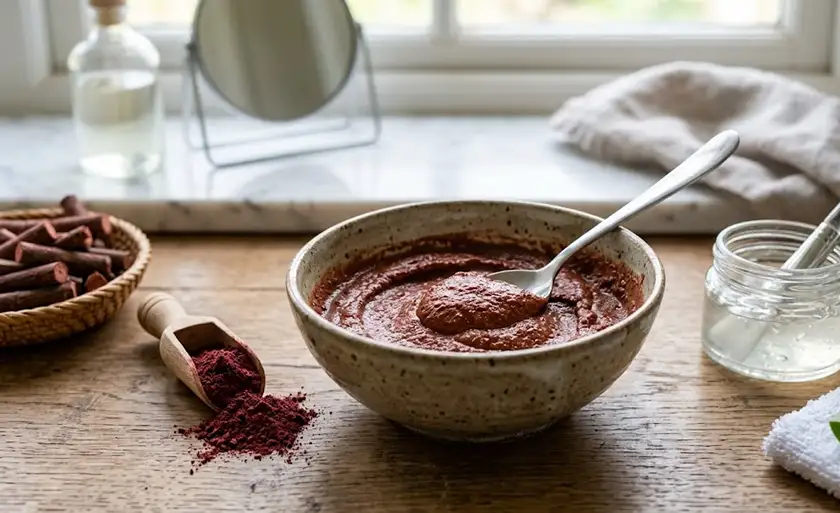 | Combine 1 teaspoon of Indian Madder powder with aloe vera gel or rose water. Apply to the face and leave for 15-20 minutes. Rinse and use 1-2 times a week for best results. |
Paste for Eczema or Dermatitis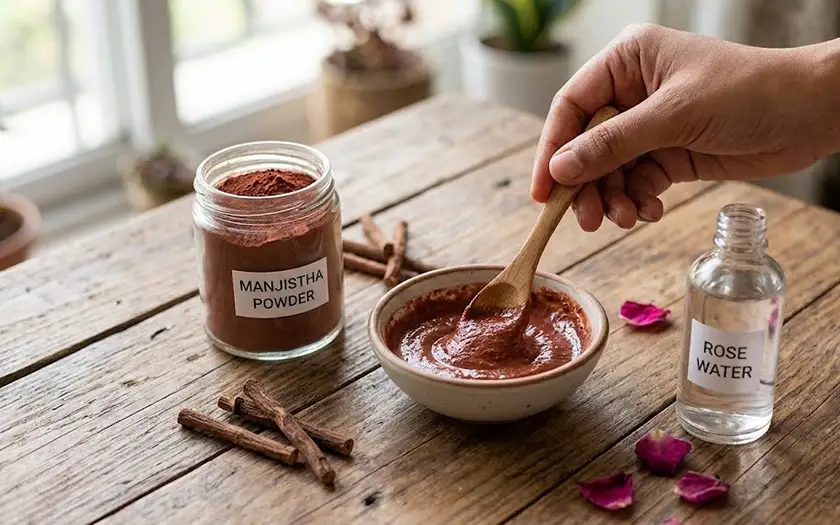 | Take ½ to 1 teaspoon of Manjistha powder and combine it with rose water. Apply it to the affected area and wait for 1-2 hours. Wash it off with tap water. Use this 2-3 times a week for effective relief from these skin issues. |
Oil 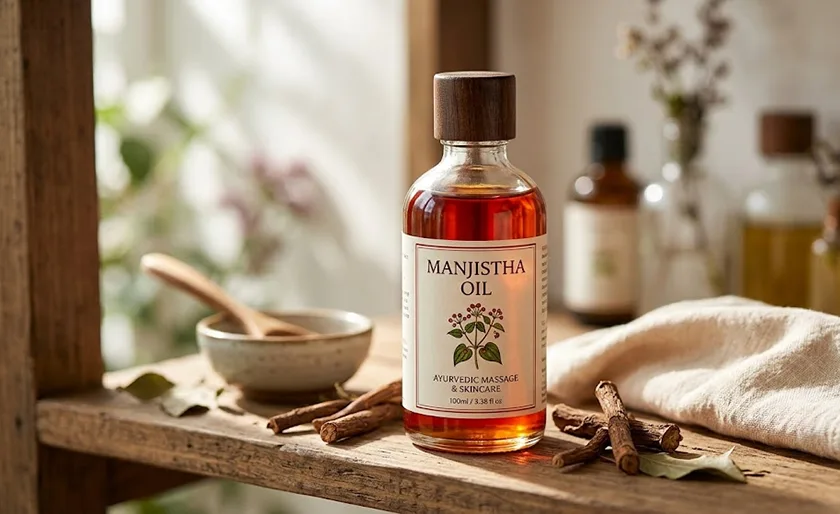 | Mix 2-5 drops of manjistha oil with a carrier oil like coconut oil. Apply it to the affected areas of the skin. Use it for issues such as acne, psoriasis, and minor wounds, once or twice a day to get relief from the symptoms. |
Note: Always conduct a patch test on a small area of the skin before applying to the whole face to check for irritation and allergies.
Other Uses
- Dyeing: One of the common manjistha uses is dyeing textiles and fabrics. It has a dye molecule, Munjistin, that provides a rich red colour. Apart from that, the presence of alizarin and purpurin provides a tinge of yellow and brown colour.
- Beauty Products: The natural colour of the plant root is used in beauty and cosmetic products. It’s commonly used in lip balms, blushes, and other beauty products.
- Painting: Various artists, crafters, and painters use the natural colour of the roots in paintings or other creative works.
Traditionally Used Herbs with Manjistha
In Ayurvedic practice, manjistha has been used along with other herbs like neem, sariva, haldi, and khadira for cleansing and skin care.
Let’s learn more about these traditionally used herbs:
| Herb | Reason for Use |
| Sariva (Hemidesmus indicus) | It is a cooling herb that is paired with Indian madder for various skin care formulations and raktaprasadana. |
| Neem (Azadirachta indica) | Neem is popular for its skin care and cleansing uses. It is especially beneficial in formulas associated with pitta dosha. |
| Khadira (Acacia catechu) | It is a traditional herb that is often paired with Indian madder in formulations associated with raktaprasadana. |
| Haldi (turmeric) | Haldi is used along with this herb due to its anti-inflammatory and skin-care uses. |
Side Effects and Precautions of Manjistha
Manjistha is generally considered safe for health, but one must always be careful of its potential side effects, like digestive issues, constipation, and skin irritation. It’s important to avoid its consumption during pregnancy, breastfeeding, or allergies.
Take a look below to learn about manjistha side effects and precautions:
Side Effects of Indian Madder
- Digestive Issues: Overconsumption can lead to digestive issues like diarrhoea and nausea.
- Dryness and Constipation: The herb is rooksha (dry) in nature, so it causes mouth and body dryness. It can also worsen constipation in sensitive individuals.
- Body Fluid Discolouration: Excessive consumption can cause a change in the colour of stool and urine to brown and orange.
- Skin Irritation: Application on sensitive skin can cause redness, rash, or staining.
Precautions of Indian Madder
- Pregnancy and Breastfeeding: Avoid using the herb during pregnancy or breastfeeding unless prescribed by the Ayurvedic practitioner.
- Medicinal Interactions: The herb can interact with certain medicines, especially those for blood thinning and diabetes.
- Allergies: Individuals who are allergic to the Madder family should exercise caution while using this herb.
Final Thoughts
Manjistha is truly a powerful remedy with a wide range of health benefits due to its anti-inflammatory, blood-purifying, and antioxidant properties. It improves skin, the cardiovascular system, and digestion. Whether you consume it in the form of powder, take it as a supplement, or apply the oil topically, it is an effective natural solution for overall wellness.
FAQs
Q1: What are manjistha oil benefits for skin?
Ans: The herbal oil provides many benefits for the skin, including clearing blemishes, calming inflammation, and evening out the complexion.
Q2: How to use manjistha for skin issues?
Ans: You can consume manjistha tea to promote healthier skin from within. It can also be mixed with rose water and honey to make a face mask. Manjistha-infused oils and creams are also available in the market for direct application.
Q3: What is manjistha, and where does it come from?
Ans: Manjistha, or Indian madder, is a climbing herb that is native to India and other parts of Asia. Its roots have a deep red colour, and they have been used in Ayurvedic medicine for centuries for their health benefits.
Q4: What are the main health benefits of using manjistha?
Ans: Manjistha is a famous herb for boosting immunity, purifying the blood, and supporting detoxification. It also supports liver and kidney health.
Q5: Is manjistha safe for everyone to use?
Ans: The herb is generally safe for most people, though pregnant and breastfeeding women and individuals who are already on medications should consult a doctor before using it.
Sources: