


Gaining weight is a real struggle for many people due to their high metabolic rate. The market is flooded with products for weight gain, supplements, medicine, and many other stuff that claim to help gain weight, but most are not sustainable and may have side effects as well. If you are afraid to consume supplements or medicine, Ayurveda has a solution for you.
Here we will describe the 5 best foods, such as banana with milk and full-fat cow’s milk with spices, that help you gain weight naturally for Ayurveda for beginners.
Top 5 Ayurvedic Foods for Healthy Weight Gain
Ayurveda offers many natural remedies that improve digestion and nutrient absorption. Some of the best ones are ghee, full fat cow milk, soaked dates, figs and raisins. Let’s unlock the top 5 ayurvedic foods that can help you gain healthy weight:
1. Ghee (Clarified Butter) The Foundational Brimhana Food

Ghee is the primary food in Indian diets and is great for an Ayurvedic weight gain strategy. As per Ayurveda, Ghee is the finest brimhana substance in the kitchen pharmacopeia. It has three qualities, guru, snigdha, and madhura, that directly pacify aggravated vata, which is the most common dosha behind low body weight.
A vata-dominant constitution burns through food quickly, stays dry in tissues, and struggles to build mass. Ghee counteracts every one of these tendencies.
Practically, ghee carries fat-soluble nutrients deep into tissues. Ancient texts, including the Charaka Samhita, list it as a rasayana, a rejuvenative, that builds ojas, the refined essence of all seven dhatus. When digestion is strong, adding 2–3 teaspoons of organic cow ghee to warm rice, dal, or roti at lunch and dinner creates a nourishing effect that no supplement can replicate.
- How to use it: Start with one teaspoon on warm rice or khichdi. Build up to two to three teaspoons across meals. Do not add ghee to cold food; it needs warmth to stay digestible.
2. Ashwagandha with Warm Milk – The Muscle Builder
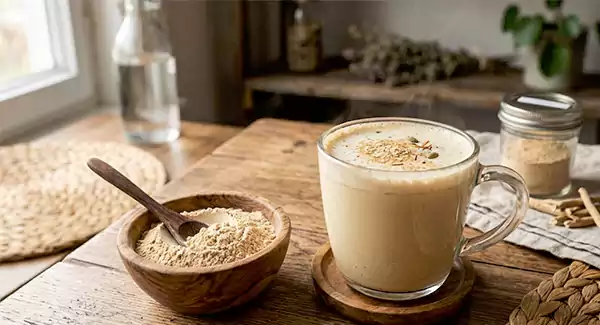
Ashwagandha holds a unique position in Ayurvedic medicine. It is classified as both a balya (strength-giving) and a brimhana herb, meaning it builds tissue mass and builds functional strength within that tissue.
What separates ashwagandha from other weight-gain foods is its action on muscle tissue specifically. Modern research now confirms what Ayurvedic physicians have known for centuries: it raises anabolic hormones, improves nitrogen retention, and reduces cortisol, the stress hormone that burns muscle.
Stress-driven weight loss, where someone eats adequately but stays thin due to anxiety or overexertion, responds particularly well to ashwagandha.
The traditional preparation is ksheerapaka, half a teaspoon of ashwagandha churna in a cup of full-fat cow’s milk until it reduces slightly, then drinking it warm at night. A 2025 study by Journal of Ayurveda and Integrated Medical Sciences highlights that Ashwagandadhi Ksheera Paka may contribute positively to maternal and fetal weight gain during pregnancy.
Night is the best time to consume ashwagandha, as it works best while your body is in repair mode.
- How to use it: Half to one teaspoon of ashwagandha powder in warm milk at bedtime. Adding a small piece of jaggery or mishri improves taste and adds the madhura rasa that further supports tissue building. Continue for at least 45 days to notice sustained change.
3. Soaked Dates, Figs, and Raisins, The Overnight Tissue Builders
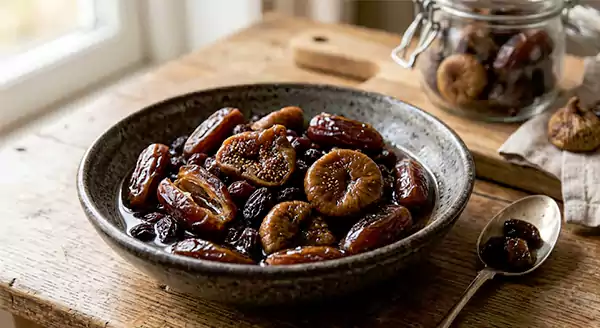
This trio, khajoor (dates), anjeer (figs), and draksha (raisins), is one of the oldest weight-gain recipes in Ayurvedic households. Each of these fruits is madhura, guru, and snigdha in quality. Together, they are a concentrated source of natural sugars, iron, calcium, and easily absorbable complex carbohydrates.
The keyword here is soaked. Soaking overnight in water breaks down phytic acid and activates the fruit’s enzymes, making nutrients more bioavailable, a process that aligns perfectly with Ayurveda’s emphasis on digestibility over raw nutrient content. A hard-to-digest nutrient is wasted; an easy-to-digest nutrient feeds your tissues.
Dates in particular have been listed in texts like Ashtanga Hridayam as beneficial for rasa and rakta dhatu (plasma and blood), the first two layers of tissue that must be built before muscle and fat can accumulate.
Figs support bowel regularity, which matters enormously here: constipation impairs absorption of all nutrients, and no weight gain strategy works on a backed-up gut.
- How to use them: Soak 3–4 dates, 2 dry anjeer, and a small handful of raisins overnight. Eat first thing in the morning on an empty stomach, or with warm milk. Six weeks of consistency is typically enough to notice a shift in energy and filling out of the face and limbs.
4. Banana with Ghee or Milk, The Everyday Calorie-Dense Staple
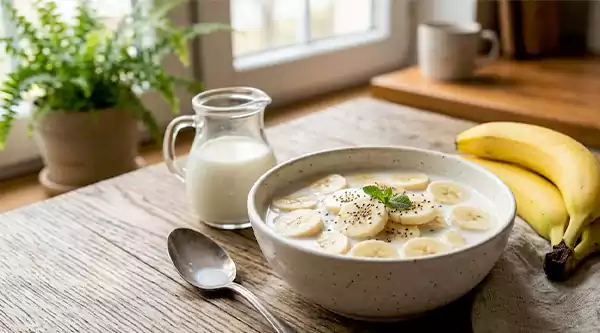
Bananas are one of the best foods across the world for gaining weight. We often hear from our elders or gym instructors, eat bananas to get strength, and especially for weight gain. As per Ayurveda, it has guru, brimhana, snigdha, and post-digestive taste that are considered as a perfect tissue-building food.
If you consume a banana with ghee or warm milk, it affects fat tissues and muscles and becomes more effective. Ghee increases the absorption of banana’s fat-soluble nutrients and slows glucose release, preventing the quick-burning effect that makes thin people stay thin despite eating fruit.
The combination of banana + ghee eaten twice daily, once in the morning and once after lunch, is a time-tested Ayurvedic protocol for building healthy body mass. For those who prefer a drink, blending banana with warm full-fat milk and a pinch of cardamom and saffron produces a rasayana-grade nourishing tonic that addresses both physical mass and ojas.
Saffron (kesar) here is not just flavored. It is a medhya (mind-nourishing) herb that calms vata and, by reducing anxiety-driven metabolism, helps the body hold on to the weight it gains.
- How to use it: Two ripe bananas with one teaspoon of cow ghee in the morning. Or blend with warm milk, cardamom, and 2–3 strands of saffron for a nighttime nourishing drink. Avoid eating bananas with cold milk or curd; the combination creates ama (toxic undigested matter) that works against weight gain.
5. Full-Fat Cow’s Milk with Spices – The Complete Tissue Nourisher

In Ayurveda, cow’s milk is classified separately. The Charaka Samhita refers to it as sarvadhatru vardhana, which means nourishing all seven bodily tissues. That is not a claim made about any other single meal in classical literature.
Warm cow’s milk is sweet, cool in potency (although being taken warm), and deeply oily in nature, balancing both vata and pitta dosha. The most crucial thing milk does for weight gain is nourish shukra dhatu and ojas, the body’s most powerful tissue extract and reservoir of vital energy. A person with low ojas is always thin, tired, susceptible to disease, and emotionally vulnerable. Building ojas with milk is the most profound stage of weight growth in Ayurveda.
Preparation is quite important. Raw cold milk is difficult to digest and causes ama. Milk should be boiled once, ideally with a pinch of elaichi, dry ginger, turmeric, and ashwagandha or shatavari, herbs that improve milk’s digestion while also significantly amplifying its tissue-building properties.
Shatavari (Asparagus racemosus) is particularly noteworthy in this context. A quarter to half a teaspoon of shatavari churna in warm milk targets rasa dhatu and reproductive tissue; it is especially beneficial for underweight women and those recuperating from illness-related weight loss.
- How to use it: One cup of full-fat cow’s milk, boiled with a pinch of cardamom and dry ginger. Add half a teaspoon of ashwagandha or shatavari powder. Drink warm, at night, one hour after dinner. Make this a non-negotiable daily ritual before bed.
Before You Start: Fix the Foundation First
If your agni is weak, none of these five foods will be useful. Ayurveda is clear on this: Brimhana on a weak digestive fire is similar to pouring oil into a leaking vessel.
If you wake up with bloating, irregular bowel motions, a reduced appetite, or a coated tongue, treat agni first. Drink warm water with grated ginger and lemon before each meal.
Use a tiny bit of trikatu churna (dry ginger, black pepper, and long pepper) before eating. When digestion improves, the nutrients listed above will operate much faster.
Sleep is the other non-negotiable. Nidra (sleep) is one of Ayurveda’s three pillars of life, and it is very important for weight gain. Tissue healing and dhatu generation occur nearly exclusively during deep sleep. Underweight patients benefit from six to eight hours of screen-free time in a dark, cool room.
A Note on Consistency
Ayurveda is not a quick-fix system. These foods develop tissue layer by layer, starting with rasa and progressing to rakta, mamsa, and meda, which takes time. Most people notice a significant difference in body fullness, energy, and skin quality after 45-60 days of daily practice. The most common reason people remain slim while doing the appropriate things is that they stop the program after day 20 because the results are not significant.
Eat warm. Eat at set times. Avoid cold beverages and raw salads in your everyday diet. Instead of using measuring spoons, add the ghee with your hands. Allow these five foods to perform the functions that generations of Ayurvedic physicians have long recognized.
Final Thoughts
As per Charak Samhita, known as the best ayurveda book in modern times, the real problem in your weight gain is “agni,” your digestive fire. You can eat a mountain of food, but if your gut is not transforming nutrients into rasa, rakta, mamsa, and meda (plasma, blood, muscle, and fat), the seven tissue layers, that food passes through you without building you. This is why Ayurveda never just prescribes “eat more.” It always prescribes eating right, in the right form, at the right time.
The five foods mentioned above, including ghee, ashwagandha with warm milk, are not wellness trends. They have been used in Brimhana chikitsa, Ayurveda’s nourishing therapy, for centuries. Each of them addresses weight gain at the level of tissue formation, not just calorie density.
FAQs
Q1: How long does it take to get weight gain results?
Ans: Most people notice changes in 3-6 weeks. Results depend on many factors like consumption of food, the present weight and digestion.
Q2: If I have a rapid metabolism, can I gain weight with Ayurveda?
Ans: Yes! Ayurveda finds digestion and absorption the main problem in the weight gain strategy. Once your agni is strong and you are following the right routine, you can embrace ayurveda for weight gain.
Q3: Can Ayurveda help gain weight naturally?
Ans: Yes! Ayurveda provides the solution by diet and lifestyle changes to improve digestion and nutrient absorption. Ultimately, helping people in gaining weight.
Q4: Which foods support weight gain in Ayurveda?
Ans: Ayurveda recommends food options like banana, ghee, milk and nuts to gain weight naturally.
Q5: Which Ayurvedic remedy is best for weight gain?
Ans: Ashwagandha is considered one of the best ayurvedic remedies to gain weight.
Sources: