


Dry Anjeer (Fig) is known to be a healthy fruit that is beneficial for skin, digestion, bone health, and improves vision, etc. In Ayurveda, it is commonly known as Phaglu or Rajudumbar. The fruit is rich in antioxidants and has anti-inflammatory properties.
In addition, dry anjeer benefits people with jvaraghna (fever and fatigue) and helps them gain some energy to fight the infection. In Ayurveda for beginners, the fruit is considered to have a ‘cooling nature’ and therefore is suitable to add to your diet in summer.
Dry Anjeer Benefits You Should Know Before Consuming it
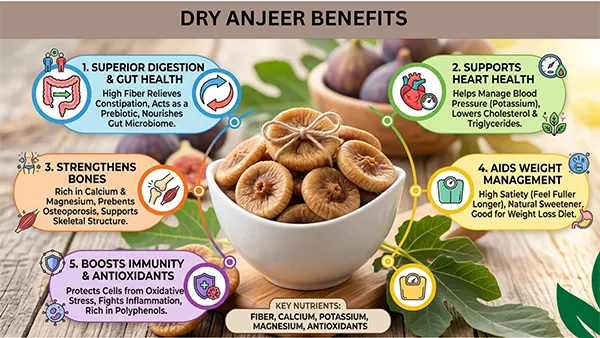
Anjeer is rich in nutrients that make it beneficial for both men and women, addressing various health issues when consumed in adequate amounts. Let’s dig deeper and explore the dry anjeer benefits along with important tips.
Common Benefits of Anjeer
- Weight Management
Dry Anjeer is considered to be high in fiber, which makes it beneficial for people who are looking for weight management and holistic wellness. It is naturally sweet, which helps in controlling sweet cravings and extra calorie intake. People looking for a healthy way of weight loss without giving up on sweets can definitely add anjeer fruit (fresh anjeer) or anjeer dry fruit in their diet for brihamn (strengthening).
Tip-People who want to gain weight can consume up to 4 figs in a day. - Diabetes Management
Contrary to the misconception, Anjeer helps control diabetes. It is good for people with diabetes as it has a low glycemic index and is rich in fibre that helps prevent sugar spikes in the body. Anjeer also contains high potassium content, which helps manage blood pressure, a crucial factor for diabetics, while magnesium supports healthy metabolism.
Tip– If you have diabetes, consult your doctor before consuming anjeer fruit or dry anjeer fruit. In some cases, where a person already has a high sugar level, it can be dangerous to eat. - Bone Health
Phalgu is known to be a rich source of calcium, helping the bones to stay healthy and strong. Usually, in early years till adolescence, parents can add anjeer to their children’s diet to increase the calcium intake. Similarly, the case of adults, especially women with a higher risk of osteoporosis, should add this magical dry fruit to their diet.
Along with calcium, anjeer has other minerals like potassium and magnesium, which help the bones to stay healthy and strong.
- Helps in Improving Vision
Rich in Vitamin C, which is very important for the retina, the innermost part of the eye, adding anjeer to your diet on an everyday basis can be very helpful for your eyes, reducing the chances of weakened muscles.
- Digestive Health
Anjeer is known for its dietary fibre, which helps in preventing constipation. Additionally, the fibre in phalgu works as a prebiotic and helps with the smooth functioning of the gut. People with Vatapittahara are advised to consume the fruit, as it helps in balancing the Vata and Pitta Dosha.Anjeer (figs) can help relieve constipation because it supports balance in the body and has natural laxative properties. As per the Ayurvedic view, it helps calm excess Vata, making it easier for stools to pass comfortably.
- Improves Heart Health
Due to its richness in potassium, anjeer helps in regulating blood pressure and counterbalances the effects of sodium in the body. It also contains antioxidants that are helpful in controlling cholesterol levels and improving heart health.
Tip-People who already have any sort of heart problem must consult a doctor rather than just relying solely on anjeer for required improvements. - Healthy Brain
Anjeer fruit is rich in antioxidants, which are helpful in reducing the chances of Alzheimer’s in later stages of life. It also contains potassium and magnesium, which are helpful in proper brain functioning.
- Boosts Immune System
Anjeer is rich in Vitamin C, which helps boost the immune system. Vitamin C is also helpful in producing White Blood Cells that fight diseases and protect you from falling ill. Regular consumption of Dry anjeer benefits in eliminating allergies and preventing cold and flu.
- Cancer Prevention
The fibre in anjeer is helpful in removing toxins and waste products from the body, which helps in preventing cancer. It cannot cure cancer, but if consumed every day, it can reduce the risk of cancer.
Did You Know?
According to NIM, anjeer leaf contains higher anticancer properties than the fruit itself. - Natural Energy Booster
The anjeer dry fruit naturally contains sugar, which gets into the body in the form of glucose and fructose, which helps in gaining energy without any sugar spike. It is considered to be one of the best snacks for instant energy.
Benefits of Anjeer for Females
Anjeer is considered to be one of the best fruits for women as it helps in controlling hormonal imbalance, increases bone density, reduces morning sickness in pregnant women, and provides better and glowing skin.
- The phytoestrogens present in anjeer help in reducing pain during the menstrual cycle and menopausal discomfort.
- In women, after the age of 40, joint pain and other bone-related issues are commonly spotted. The regular consumption of anjeer from an early age can lower the risk of bone-related issues in the future, as it is helpful in increasing bone density.
- For pregnant women, it is helpful for fetal growth. Also, it contains Vitamin B6, which reduces morning sickness.
- Anjeer contains Vitamin A and C, which are helpful for better glowing skin and protect it from damage and oxidative stress. It also helps in enhancing collagen, which slows down the skin’s ageing.
Anjeer Benefits for Men
Like women, anjeer has a set of benefits for men as well. Some of them are –
- Anjeer contains Aphrodisiac properties that improve sexual health. It enhances the libido and sexual stamina.
- It tends to improve the physical strength of men.
- It is perfect for post-workout snacks as it is rich in potassium and carbs.
Nutritional Value and Ayurvedic Properties of Anjeer
Anjeer is a power pack of nutrients. Both dry and fresh anjeer are safe for consumption. With a low glycemic index, fresh anjeer is more beneficial for diabetic patients.
Let’s take a look at the nutritional value and ayurvedic properties of anjeer elaborated below:
Nutritional Value
| Nutrient | Dried Anjeer | Fresh Anjeer |
| Energy | 249 kcal | 74 kcal |
| Protein | 3.3 g | 0.75 g |
| Fibre | 9.8 g | 2.9 g |
| Sugar | 47.92 g | 16.26 g |
| Calcium | 162 mg | 35 mg |
| Iron | 2.03 mg | 0.37 mg |
| Potassium | 680 mg | 232 mg |
| Vitamin C | 1.2 mg | 2 mg |
| Vitamin K | 15.6 mcg | 4.7 mcg |
Ayurvedic Properties of Anjeer
| Rasa (Taste) | Sweet |
| Guna (Quality) | Guru (Heavy), Snigadh (Moist) |
| Projyang (Parts used) | Fruits, Leaf |
| Veerya (Potency) | Sheeta (Cold) |
| Karma (Action) | Balances Vata and Pitta Dosha |
Read Next: Is Vitamin Water Good for You? Benefits, Risks & Nutrition Guide
Ways to Add Anjeer in Your Diet
You can add it in the summer as well as in your winter diet. The best way of eating dried anjeer is-
- Either directly eat it or soak it in water overnight and eat it in the morning. Soaked anjeer benefits include improved digestion, managing hormones and weight loss.
- Do not forget to remove the water before eating anjeer.
- You can also make smoothies from dry anjeer or pair them with cheese and nuts.
Did You Know?
- Figs can be consumed in both dried and fresh forms.
- People use anjeer to make jams and desserts to reduce calorie intake.
How Many Anjeers Can You Eat Daily?
It is safe to consume around 2-3 anjeer every day. People who want to manage their weight are advised to consume only 2-3 anjeer. Consuming more than this can cause excessive calorie intake and bloating.
Caution
- People who have diabetes are advised to consult their doctor before adding it in your routine.
- For pregnant women, generally, it is safe to eat up to 3 figs every day, but it is still advisable to consult your doctor for the same.
Risks Associated With Consuming Dry Anjeer
In most of the cases, anjeer is considered to be safe for consumption, but there are certain situations when one must avoid eating it. Those are mentioned below:
1. Allergy
An individual can face trouble if he/she is allergic to anjeer. It is especially associated with latex or birch pollen. If you are allergic to figs, you can instantly see its reaction in the form of swelling, itching, or difficulty in breathing. In such cases, one must not panic, but rather seek help from a doctor. If you are already aware of the same, avoid consuming anjeer in any form.
2. Diabetes
People who have symptoms of diabetes can consume anjeer, but it is advisable to seek a doctor before including it in your daily routine.
People with elevated sugar levels are advised not to consume figs. If you want to, it is advisable to consult your doctor for the same.
Caution!
Figs are rich in Vitamin K, which might interact with the medicine and lead to blood thinning if you are under any medication. People who are under any medication are advised to consult their doctor.
3. Digestive Issues
Figs are rich in dietary fibre; therefore, consuming them in excess can cause constipation, diarrhoea, gas, and bloating.
4. Weight Gain
People who are aiming to reduce their body fat or weight are advised to consume only 2-3 figs in a day. Excessive consumption can lead to weight gain.
5. Tooth Decay
Anjeer contains natural sugar that increases the risk of tooth decay if you ignore oral hygiene. Dried figs are sticky, so they easily get stuck in the small spaces and grooves of your teeth. This lets their natural sugars sit on your teeth for longer, which can lead to damage over time.
Conclusion
Anjeer is a superfood that has been consumed in India for generations. There are a number of Dry Anjeer benefits, like improving brain health, boosting immunity, managing weight, etc. It’s great for keeping your skin moisturised and also helps maintain balance in the body’s doshas.
Offering low calories, this fruit can be consumed on an everyday basis. So next time you feel like craving something sweet, just grab two or three of them and enjoy.
FAQs
Q1: Can I eat anjeer in my weight loss journey?
Ans: Yes, you can replace normal sugar with anjeer and add it to your shakes and smoothies. Normally, for people who are trying to lose weight, 2-3 anjeer are enough to consume on an everyday basis.
Q2: What are the benefits of anjeer?
Ans: Anjeer can help you in multiple ways, from weight management to improving digestion and boosting energy. It is also considered good for your brain, bone, and heart health.
Q3: What are the benefits of anjeer for males?
Ans: For men, anjeer can help increase strength and improve sexual health.
Q4: Can I consume anjeer during pregnancy?
Ans: Generally, consuming 2-3 anjeer on an everyday basis is considered to be safe for a pregnant woman, but it is still advisable to consult your doctor before incorporating it in your daily routine.
Q5: Which is more beneficial, dry anjeer or fresh anjeer?
Ans: Both dry and fresh anjeer have health benefits. Dry anjeer is rich in fibre, calcium, and iron, and it also contains more calories, whereas fresh anjeer has fewer calories and is rich in Vitamin C and A; it is also beneficial for people with diabetes.
Q6: What are the benefits of anjeer for females?
Ans: For females, anjeer is beneficial in many ways as it is enriched with phytoestrogens, it helps during the stage of menopause. Apart from this, it is also good for the skin.
Q7: How many anjeer can I eat daily?
Consuming 2-3 anjeer on an everyday basis is considered to be safe. People who are non-diabetic and want to gain weight can eat up to 4 anjeers daily.
Q8: Is anjeer vegetarian or non-vegetarian?
Ans: Anjeer is extracted from a tree and therefore is vegetarian. But in some places, it is considered to be non-vegetarian because of the pollination process; some wasps get trapped and die inside the fruit.