

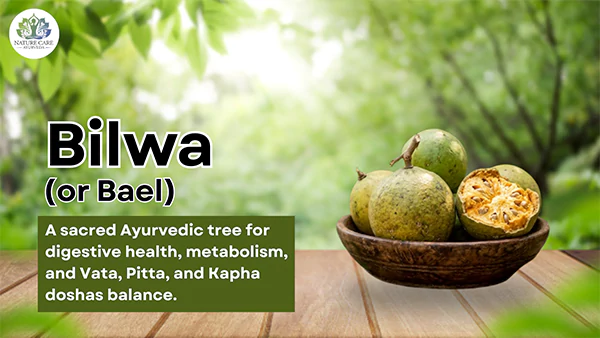
Bael fruit, known as bilwa in Sanskrit, is a highly valued fruit in Ayurvedic medicine. It is considered one of the dashamoola herbs that supports digestion, metabolism, and respiratory health by balancing the tridosha. Apart from its medicinal qualities, the tree also carries spiritual importance in India, mainly used for worshiping Lord Shiva.
Different parts of the bael plant — fruit, leaf, and bark — are traditionally used for different purposes: the fruit is most associated with digestive health, while the leaves have been the focus of most modern clinical research, particularly for blood sugar management
In this article, learn the benefits, Ayurvedic properties, nutritional value, and side effects of this fruit.
Quick Answer
Bilwa (Aegle marmelos), also known as Bael or Bengal quince, is a sacred Ayurvedic tree valued for its fruit, leaves, roots, and bark. In Ayurveda, Bilwa is traditionally used to support digestive health, help manage diarrhea and constipation (depending on fruit ripeness), promote healthy metabolism, and balance the Vata, Pitta, and Kapha doshas. Bilwa leaves are also widely offered in Lord Shiva worship, making the plant important for both medicinal and religious purposes.
Ayurvedic Benefits and Uses of Bilwa
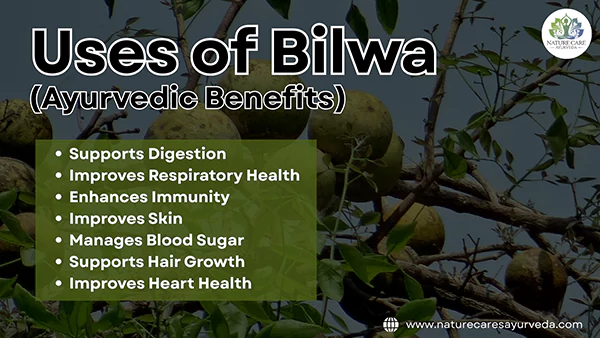
Bael is traditionally found to be highly beneficial for our health, improving skin and hair and supporting heart health. It is revered in many classical texts for its arshoghna, atisara-hara, graahi, and pachana qualities. Let’s see its benefits and uses:
- Supports Digestion
It is a digestive tonic that alleviates many gut issues due to its antifungal and antibacterial properties. Bilwa fruit benefits constipation as a natural laxative with its high fiber content. Conversely, it is also helpful in diarrhoea and dysentery as it binds the stool due to its astringent properties.
- Improves Respiratory Health
Bael has been traditionally used in the treatment of various respiratory problems like asthma, cough, and bronchitis. It pacifies the vata and kapha dosha and loosens mucus. Thanks to compounds like β-caryophyllene found in the bael oil, it has anti-inflammatory and bronchodilatory effects that contribute to overall respiratory health.
- Enhances Immunity
This herb is rich in vitamin C and other antioxidants that help restore immunity naturally. Through this, it acts as a rasayana (rejuvenator) that reduces susceptibility to various illnesses.
- Improves Skin
Bael fruit and leaves contain vitamin C, antioxidants, and antimicrobial compounds, which is why they’re traditionally applied topically for acne, premature aging, and inflammatory skin conditions like eczema and psoriasis.
These uses come primarily from Ayurvedic practice and general knowledge of the plant’s compounds rather than skin-specific clinical trials, so results can vary. Always patch-test any bael-based preparation before applying it more broadly, and see a dermatologist for persistent skin conditions rather than relying on bael alone.
- Manages Blood Sugar
Bilwa benefits in reducing fasting blood sugar levels in people with type 2 diabetes. The leaves are rich in flavonoids and polyphenols, which are effective at improving insulin sensitivity. It also reduces the gastric issues and fatigue that diabetic patients often face. This has a low glycemic index that makes it well suited for both type 1 and type 2 diabetes patients.
- Supports Hair Growth
Bilwa leaf benefits in nourishing and strengthening the hair follicles. They have limonene, a natural oil in citrus fruits that possesses anti-inflammatory, antioxidant, and antimicrobial properties. With this, it strengthens the hair roots and improves hair growth. It also has antimicrobial properties that help with dandruff.
- Improves Heart Health
In Ayurvedic tradition, bael is used to support healthy blood pressure, an effect often attributed to its potassium content, which helps arteries function properly and supports overall cardiovascular health.
This specific benefit is based on traditional use rather than dedicated clinical trials — it hasn’t been studied as directly as bael’s effects on blood sugar. People on blood pressure medication should talk to a doctor before adding bael regularly, since combined effects on blood pressure aren’t well understood.
Ayurvedic Properties of Bael
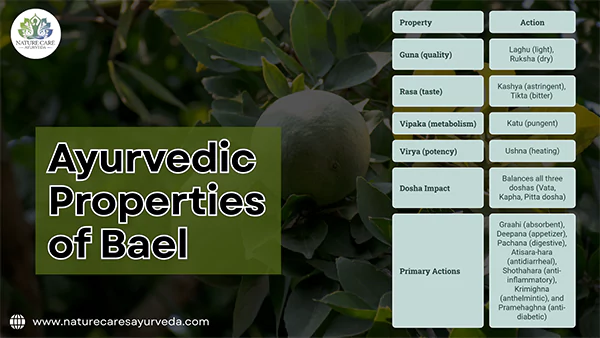
Bilwa in Ayurveda is known for its tridoshic property as it balances all three vata, pitta, and kapha doshas. It has kashya (astringent) and tikta (bitter) tastes and helps to detox the body. Let’s see its Ayurvedic properties below:
| Property | Action |
| Guna (quality) | Laghu (light), Ruksha (dry) |
| Rasa (taste) | Kashya (astringent), Tikta (bitter) |
| Vipaka (metabolism) | Katu (pungent) |
| Virya (potency) | Ushna (heating) |
| Dosha Impact | Balances all three doshas (Vata, Kapha, Pitta dosha) |
| Primary Actions | Graahi (absorbent), Deepana (appetizer), Pachana (digestive), Atisara-hara (antidiarrheal), Shothahara (anti-inflammatory), Krimighna (anthelmintic), and Pramehaghna (anti-diabetic) |
Nutritional Value and Scientific Classification of Bael
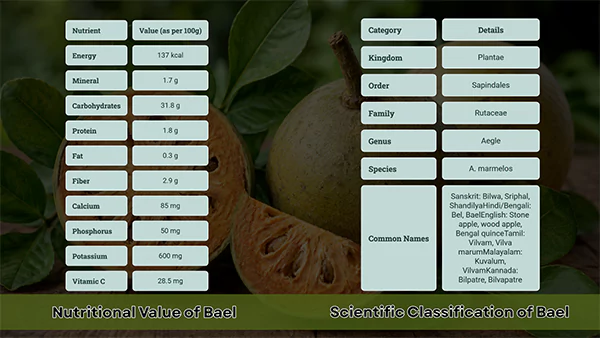
Bael, scientifically known as Aegle marmelos, is loaded with nutrients like protein, fat, carbohydrates, and minerals. Part of the Rutaceae family, it is native to different parts of the Indian subcontinent. Here is its nutritional composition and taxonomical hierarchy:
Nutritional Value of Bael
| Nutrient | Value (as per 100g) |
| Energy | 137 kcal |
| Mineral | 1.7 g |
| Carbohydrates | 31.8 g |
| Protein | 1.8 g |
| Fat | 0.3 g |
| Fiber | 2.9 g |
| Calcium | 85 mg |
| Phosphorus | 50 mg |
| Potassium | 600 mg |
| Vitamic C | 28.5 mg |
Scientific Classification and Common Names of Bael
| Kingdom | Plantae |
| Order | Sapindales |
| Family | Rutaceae |
| Genus | Aegle |
| Species | A. marmelos |
| Common Names |
|
How to Incorporate Bilwa into Daily Life?
Bael is helpful in various health issues, whether you consume it or apply it topically. You can eat the ripe fruit directly or mix the pulp with water for a fresh juice. It could also be applied to the skin for soothing irritation and hair to enhance hair growth.
| Method | Preparation |
Fresh fruit | You can eat the ripe fruits directly. They have a sweet and aromatic flavour. |
Juice (sharbat) | Scoop the pulp of the fresh bael and mash it with water. Strain to create a cooling drink that soothes the stomach. |
Powder (churna)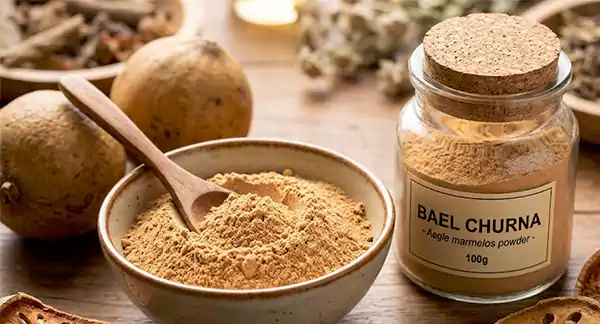 | Mix 3 to 6g of dried fruit powder with warm water or honey. You can also use this powder for culinary applications. |
Leaves Decoction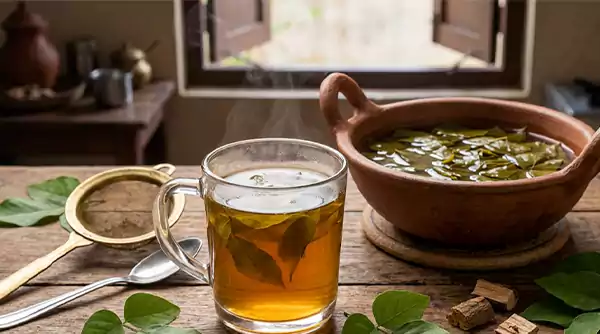 | Boil 20g of bael leaves in two cups of water until it is reduced to the 1 cup. Strain and drink lukewarm. |
Tablet, Capsules, or Candies | Bael tablets and capsules are available in the market and are generally taken with water. Candy form is also available, which helps in digestion. |
Topical Usage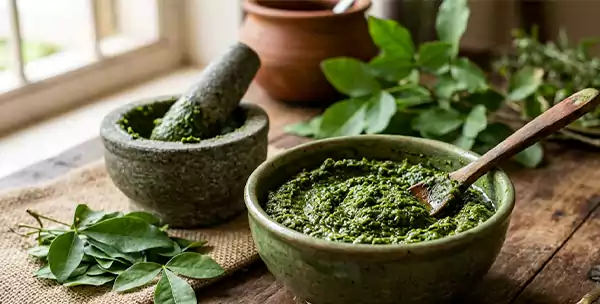 | Apply the fresh leaves paste or pulp externally to soothe skin irritation, burns, and insect bites. You can also mix the powder with coconut oil and apply it to the scalp once a week. |
Note: Always conduct a patch test before applying externally to prevent skin irritation and allergies.
Dosage and Best Time to Consume Bilwa
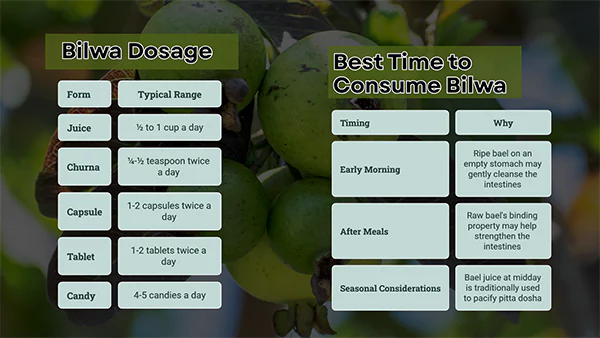
In Ayurveda, moderation is key to seeing long-term benefits. The ranges below are general reference points drawn from common Ayurvedic practice — the right amount for you depends on your constitution (prakriti), health status, and any medications you’re taking. This is especially important given bael’s blood-sugar-lowering effect: anyone on diabetes or blood pressure medication should consult a doctor or Ayurvedic practitioner before starting a regular dose, since combining them can push blood sugar or blood pressure down further than intended.
Right Dosage of Bael
( general reference — confirm with a practitioner)
| Form | Typical Range |
| Juice | ½ to 1 cup a day |
| Churna | ¼-½ teaspoon twice a day |
| Capsule | 1-2 capsules twice a day |
| Tablet | 1-2 tablets twice a day |
| Candy | 4-5 candies a day |
Best Time to Consume Bael
| Timing | Why |
| Early Morning | Ripe bael on an empty stomach may gently cleanse the intestines |
| After Meals | Raw bael’s binding property may help strengthen the intestines |
| Seasonal Considerations | Bael juice at midday is traditionally used to pacify pitta dosha |
Science and Research on Bael Benefits
Scientific studies have explored the health benefits of bael, supporting many of its traditional uses. Research suggests it may help manage type 2 diabetes, stomach ulcers, inflammations, and digestive issues. Here are some key findings from recent research:
Research Box 1
Study Year: 2018
Aim: To evaluate the clinical effectiveness of Aegles marmelos leaf juice as a complementary therapy for people with type 2 diabetes mellitus over the period of 60 days (8 weeks).
Method: A randomized controlled trial was conducted with 60 adults with type 2 diabetes. Participants were divided into an experimental group receiving bael leaf juice and a control group receiving standard treatment for 8 weeks.
Results: The bael juice group showed significant improvements in blood glucose, HbA1c, blood pressure, cholesterol, triglycerides, and antioxidant levels compared to the control group.
Source: ScienceDirect’
Research Box 2
Study Year: 2015
Aim: To investigate the role of Aegle marmelos (Bael) fruit extract in reducing oxidative stress and stomach damage caused by Helicobacter pylori lipopolysaccharides. The study is focused on its antioxidant and anti-ulcer properties.
Method: Bael fruit extract is administered to Sprague- Dawley rats that are exposed to H. pylori lipopolysaccharides. Various oxidative stress markers, antioxidant enzymes, and gastric tissue changes were then evaluated.
Results: The fruit extract has significantly reduced oxidative stress and improved antioxidant defenses in the rats. It also showed protective effects against gastric damage, supporting its potential anti-ulcer and gastroprotective properties.
Side Effects and Precautions of Bilwa
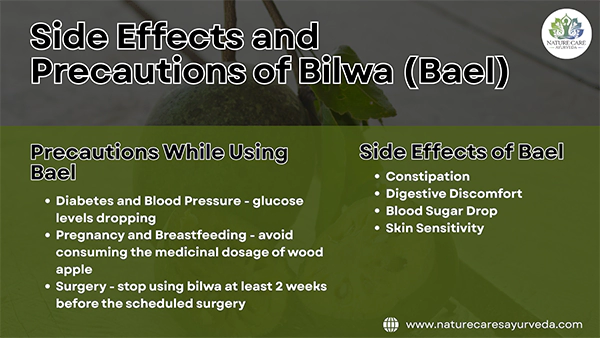
Ayurvedic medicine have side effects too if they are taken in the wrong dosage. When talking about bael, excessive intake can lead to constipation and dangerous blood sugar drops. It’s recommended to talk to a healthcare practitioner before consumption if somebody is on medications for diabetes and blood pressure.
Side Effects of Bael
- Constipation
High intake of unripe fruits or powder can lead to hard stools and constipation due to their high tannin content.
- Digestive Discomfort
Eating too much of the extract can lead to heartburn, stomach upset, and hot flashes.
- Blood Sugar Drop
Due to its hypoglycemic properties, its consumption can lead to excessive drops in blood sugar levels.
- Skin Sensitivity
Topical applications may cause rashes or mild contact dermatitis in sensitive individuals.
Precautions While Using Bael
- Diabetes and Blood Pressure
If you are taking medications for blood pressure, diabetes, or blood thinners, consult a doctor before taking bilwa. It can lead to glucose levels dropping dangerously or increased bleeding risks.
- Pregnancy and Breastfeeding
It’s suggested to avoid consuming the medicinal dosage of wood apple in conditions like pregnancy and breastfeeding due to insufficient reliable information.
- Surgery
It’s recommended to stop using bilwa at least 2 weeks before the scheduled surgery to avoid complications.
Final Words
Ayurveda offers many natural solutions for the modern world’s digestive and stress-related concerns. Bael is one of those powerful remedies that is packed with nutrients. When consumed moderately at the right time, it can support respiration, digestion, skin, and heart health.
It’s suggested to be cautious of the side effects and precautions, and consult an Ayurvedic healthcare practitioner before starting high doses of the fruit or leaves of this tree.
FAQs
Q1: Is bilwa good for chronic diarrhoea?
Ans: Yes! It is known to be effective in dysentery or chronic diarrhoea. This reduces the urgency and intestinal inflammation. You can include it in your daily routine by consulting an Ayurvedic practitioner.
Q2: Can bilwa be taken daily for digestion?
Ans: Yes! In the right dosage, it can reduce ama, improve agni, and stabilize overall digestion.
Q3: Does bilwa help IBS (grahani)?
Ans: Yes! Bilwa is helpful in the management of IBS. Its astringent and digestive properties firm up the stool and reduce colonic motility.
Q4: Who should avoid bilwa?
Ans: Bilwa is generally considered safe when consumed in moderation. However, people who are pregnant, breastfeeding, have underlying medical conditions, or take prescription medications should consult a healthcare professional before using bilwa.
Q5: Is Bilwa useful for diabetes?
Ans: Yes! Modern studies have supported that using bael for decreased blood sugar levels and improve insulin sensitivity.
Sources: