

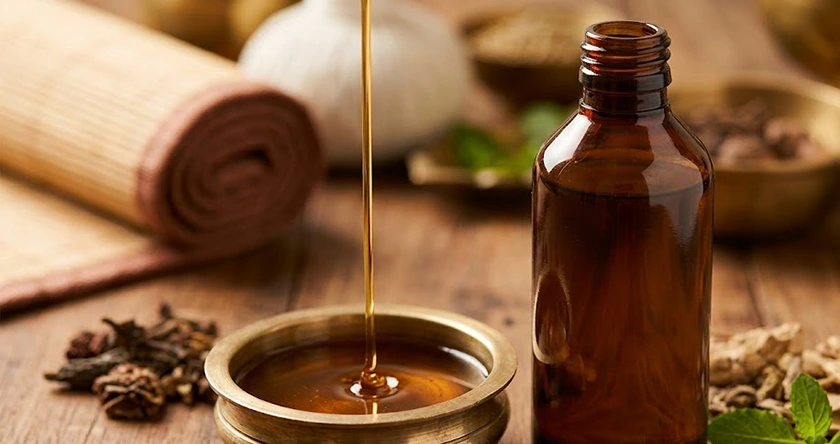
Maha narayana thailam is a widely used medicated oil in Ayurveda due to its vata-balancing property. This is a rejuvenating and pain-relieving herbal oil that helps with arthritis, muscle weakness, joint stiffness, and body pain.
This article provides comprehensive information about this revered oil, including its ingredients, preparation method, benefits, and safety guidelines for those seeking natural body care.
Quick Answer
Maha narayana thailam is an herbal formulation containing 57 natural ingredients. It benefits issues like chronic joint pain, lower back pain, inflammation, and post-stroke rehabilitation. This medicated oil is used for pre-bath body massage or localized application. The application may cause some side effects like skin irritation, heat sensation, or discomfort, so practising caution is suggested.
- What is Maha Narayana Thailam?
- 10 Best Mahanarayana Thailam Benefits
- Ingredients in Mahanarayan Oil
- Preparation of Mahanarayan Oil (Taila Paka Vidhi)
- Ayurvedic Properties of Mahanarayana Oil
- How to Use Mahanarayana Taila
- Quantity and Frequency of Using Maha Narayan Tail
- Side Effects and Precautions for Mahanarayana Tail
- Final Words
- FAQs
What is Maha Narayana Thailam?
Maha narayana thailam literally translates to “great oil of Narayana,” where Narayana refers to Lord Vishnu. It symbolizes strength, protection, and preservation, indicating the oil’s restorative nature.
This herbal formulation is specifically helpful in vata-related disorders in bones, joints, muscles, nerves, and spines. This oil is prepared through the taila kalpana, processing a large number of potent herbs in the base of gingelly oil and milk.
Classical Reference
Bhaishajya Ratnavali is known to be the primary cited source for mahanarayana thailam. This oil appears in the text’s vatavyadhi rogadhikara chapter (the section on vata-related patterns). It provides the ingredients list, proportions, and preparation for the oil formulation.
10 Best Mahanarayana Thailam Benefits
Formulated with a rich blend of herbs and oils, mahanarayana oil benefits chronic joint pain, strengthens muscles, and eases lower back pain. It is used in pakshaghata therapies for post-stroke rehabilitation and age-related degeneration.
Here are the benefits of Maha Narayana Thailam for our health:
1. Relieves Arthritis and Chronic Joint Pain
Chronic joint pain is generally caused by conditions like rheumatoid arthritis and osteoarthritis. Ayurveda associates it with aggravated vata dosha, leading to dryness and degeneration in the joints. Due to its ushna (warming) and snigdha (unctuous) properties, Mahanarayan oil benefits in reducing morning stiffness, swelling, and pain.
2. Strengthens Muscles
Muscle weakness is caused by prolonged illness, nerve damage, aging, and lack of movement. This herbal formulation contains bala, ashwagandha, and shatavari which lead to the nourishment of mamsa dhatu (muscle tissue). When used on a regular basis, this may improve muscle tone, tissue regeneration, and, as a result, restore strength.
3. Improves Nerve Health
Nerve health issues like burning sensations, numbness, tingling, and weakness are usually caused by disturbed majja dhatu (nervous tissue). Mahanarayan oil here helps by nourishing the nerve endings and calming an overactive nervous system. By restoring the vata balance, it enhances nerve resilience and manages peripheral neuropathy and nerve degeneration.
4. Eases Lower Back Pain
Ayurveda views lower back pain as a vata disorder in the lumbar region. Over time, this causes spinal stiffness, tightness, and restricted movement. Sometimes this discomfort extends from the lower back to the leg and is referred to as gridhrasi (sciatica). The medicated oil is effective in this condition as it reduces inflammation and relaxes the tight muscles. Its ushna potency enhances blood circulation and relieves the pain.
5. Supports Joint Mobility
The ama (toxin accumulation) and dryness in joints lead to joint cracking and stiffness. The therapeutic penetrating herbs in the maha narayan tail help in dissolving the toxins, lubricating joint capsules, and increasing the elasticity in tendons and ligaments. When used regularly, it improves joint mobility, increases flexibility, and makes movement smoother.
6. Aids Post-Stroke Rehabilitation
Stroke is known as pakshaghata in Ayurveda that is a vata disorder that influences movement and muscle control on one side of the body. As part of the pakshaghata therapies, mahanarayana thailam uses help with post-stroke rehabilitation. The massage with this oil is believed to strengthen the weak muscles and enhance nerve regeneration.
7. Decreases Inflammation
The toxin buildup and vata and kapha imbalance cause inflammation and swelling in the joints, muscles, and tendons. Due to the anti-inflammatory herbs like giloy and dashamoola, the application of this oil calms the inflammation. It is believed to reduce swelling, tenderness, and enhance the healing of the tissues.
8. Helps in Recovery from Sports Injuries
Athletes often suffer from joint stress, ligament injuries, and muscle strain. This oil enhances recovery by improving blood flow and nourishing the injured tissues. It has rejuvenating and strengthening properties that reduce stiffness, support flexibility, and restore the muscles.
9. Helps in Age-Related Degeneration
As we age, vata aggravates naturally, causing weaker bones, muscle weakness, and reduced mobility. In jara chikitsa (geriatric care), reducing dryness and promoting joint health. Regular massage improves physical stability, enhances balance, and reduces the risk of falls in elderly people.
10. Promotes Physical Relaxation
Mahanarayana taila uses lead to have a calming effect on the mind and nervous system. It is considered helpful in issues like mental fatigue, poor sleep, anxiety, and restlessness. Abhyanga with this oil is found helpful in relaxing tense muscles and promoting relaxation. As a result, it helps improve sleep quality and reduce stress levels.
Ingredients in Mahanarayan Oil
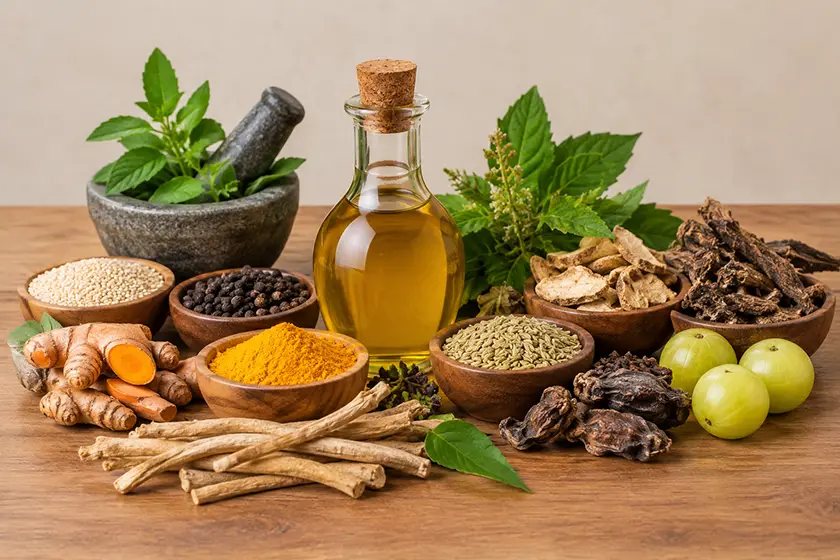
Traditionally, this oil is prepared with the combination of 57 ingredients. The main ingredients are the dashmoola group, ashwagandha, shatavari swarasa, devadaru, bala, and karpura. The whole process follows a complex three-layer structure.
Let’s see the ingredients used for making mahanarayana thailam:
The Base Ingredients
The three base ingredients, including sesame oil, goat’s milk, and shatavari, are the liquid media in this medicated oil.
- Tila Taila (sesame oil): A deeply nourishing oil that acts as the primary carrier. It helps to extract both the water-soluble and oil-soluble plant constituents during the cooking procedure.
- Aja Kshira (goat’s milk): Has a tissue-building and cooling effect, acting as the second medium. In the formulation, it helps extract the water-soluble constituents and adds nourishment. As goat’s milk is comparatively lighter, it balances the vata dosha.
- Shatavari swarasa (shatavari juice): Nourishing and rejuvenating juice that adds extractive power.
First Layer of Decoction Herbs (Kwatha Dravya)
Thirteen herbs are used for making a kwatha (decoction). They are boiled in water on low flame until it is reduced to one-quarter of the original quantity.
- Dashamoola herbs: These herbs work as a backbone of the formulation, balancing vata and reducing inflammation. The 10 herbs are:
- Bilwa (Bael tree root)
- Agnimantha (Headache tree root)
- Shyonaka (Indian trumpet tree root)
- Kashmari (Beechwood root)
- Patala (Trumpet flower root)
- Brihati (Indian nightshade root)
- Kantakari (Yellow-berried nightshade root)
- Shalaparni (Sal-leaved desmodium root)
- Prishniparni (Painted-leaved uraria root)
- Gokshura (Puncture vine root)
- Additional herbs: The other herbs that are included are ashwagandha (Indian ginseng) for adaptogens, bala (country mallow) for nourishment, and punarnava (hogweed) for the cleansing process.
Second Layer of the Paste Herbs (Kalka Dravya)
Thirty-eight herbs are ground into a paste and included in the oil during the cooking process. Some of the herbs are:
- Ashtavarga herbs: Eight Himalayan herbs that make the oil distinguished among other medicated oils. As these herbs are rare, some commercial formulations substitute them with easily available herbs. The herbs include:
- Jivaka (Malaxis acuminata)
- Rishabhaka (Malaxis muscifera)
- Meda (Polygonatum verticillatum)
- Mahameda (Polygonatum cirrhifolium)
- Kakoli (Fritillaria roylei)
- Ksheera Kakoli (Lilium polyphyllum)
- Riddhi (Habenaria intermedia)
- Vriddhi (Habenaria edgeworthii)
- Nervine and calming herbs: Tagara (Indian valerian).
- Warming and cleansing herbs: Haridra (turmeric), daruharidra (Indian barberry), and manjishta (Indian madder).
- Rejuvenative herbs: Yashtimadhu (Licorice), shatavari (Wild asparagus), mudgaparni (Wild green gram), and mashaparni (Wild black gram).
- Aromatic and warming herbs: Devadaru (Himalayan cedar), elaichi (cardamom), and twak (cinnamon).
Third Layer of Final Aromatic Additions (Prakshepa Dravya)
After the oil is cooked properly, three more natural ingredients are added to it. They are added when the oil begins to cool down to preserve their volatile aromatic compounds.
- Karpura (Camphor): Added for a penetrating and cooling effect and pleasant aroma.
- Kumkuma (Saffron): Adds a golden colour and rejuvenating property.
- Kasturi (Musk): Included for its penetrating and stabilizing property.
Preparation of Mahanarayan Oil (Taila Paka Vidhi)
Preparation of this oil is a multi-day process that transforms the 57 ingredients into the potent Mahanarayana thailam. The base ingredients are added in a large vessel, followed by 38 herbs and the decoction of 13 herbs. The mixture is cooked on a controlled flame to extract the oil:
- Mrudu Paka: Initially, the mixture is heated on a gentle flame. This is done for hours, and the water begins to evaporate from the milk and juice.
- Madhyama Paka: As the temperature rises, more water evaporates, and the paste begins to dry. This is a critical stage that requires constant attention to ensure complete extraction.
- Khara Paka: At last, all the water evaporates, and the paste becomes dry. As the oil has absorbed the extracted constituents, it is filtered carefully to remove the herbal matter.
Classical Reference
Mahanarayana taila also appears in the South Indian traditions, mentioned in the text Sahasrayogam. It highlights the meticulous attention to the herbs’ quality, proper heat management through the cooking process, and the use of a copper vessel for preparation of the oil.
Ayurvedic Properties of Mahanarayana Oil
The Ayurvedic formulation is revered traditionally due to its vata-balancing nature and ushna potency. It supports the 5 tissue layers, including rakta dhatu, majja dhatu, rasa dhatu, mamsa dhatu, and asthi dhatu.
Let’s see the Ayurvedic properties of this herbal oil:
| Dosha Effect | Primarily pacifies vata dosha |
| Rasa (taste) | Madhura (sweet), tikta (bitter), and kashaya (astringent) |
| Virya (potency) | Ushna (warming) |
| Vipaka (post-digestive effect) | Madhura (sweet) |
| Dhatu Support | Supports rasa dhatu (plasma/lymph), rakta dhatu (blood), mamsa dhatu (muscle tissue), asthi dhatu (bone tissue), and majja dhatu (marrow and nerve tissue) |
| Karma (action) | Vedanasthapana (pain-relieving), balya (strengthening), shothahara (anti-inflammatory), and rasayana (rejuvenating) |
How to Use Mahanarayana Taila
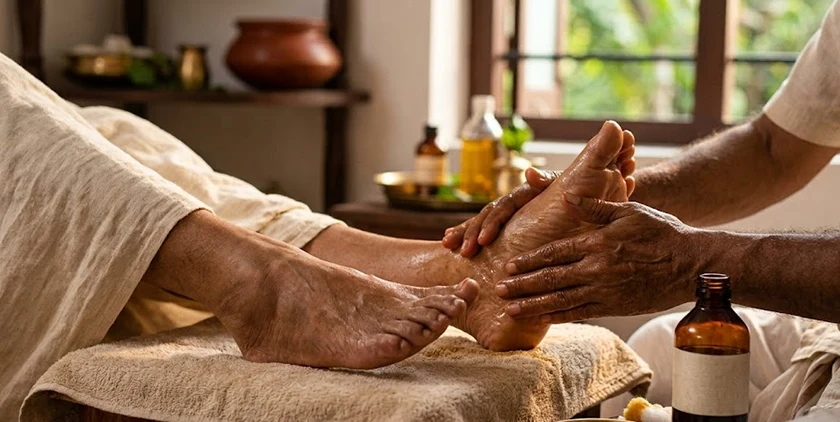
The oil can be used for abhyanga on the whole body or on the affected area, like shoulders, feet, or knees. Warm the oil and apply it in smooth strokes on the skin. It can be applied in the morning, evening, or as a pre-bath ritual. The oil is considered most effective in the vata season of autumn and winter.
Application Method
- Warm the oil for 5-10 minutes, as vata responds best to warmth. The oil should be comfortably warm; check the temperature on the inner wrist.
- Apply the oil to the affected area by massaging with smooth, flowing strokes. When applying to joints, use circular motions. When massaging long bones, use lengthwise strokes. Leave the oil on the skin for about 15 to 45 minutes.
- Follow with a warm water bath or steam for enhanced absorption and removal of toxins.
Note: The oil is also used for internal use, but it should be strictly done under the guidance of a qualified practitioner.
Safety Tip
Always conduct a patch test by applying the oil on the inner forearm for a few hours to assess sensitivity before the first use.
Best Time to Use
| Morning | Preferred time traditionally. Use before bathing for grounding energy throughout the day. |
| Evening | It is a suitable time to promote restful sleep and relaxation. |
| Pre-bath | Traditionally, the oil massage is followed by a bath. |
Seasonal Considerations
- Autumn and Winter (Vata season): Can be used more frequently, and the focus should be on warming and grounding.
- Spring (Kapha season): The frequency should be reduced with lighter application.
- Summer (Pitta season): Should be used least frequently. Apply the oil at room temperature rather than warmed, or switch to lighter oils.
Safety Tip
Avoid applying the oil on broken skin such as open wounds and cuts. Also, avoid eye contact with eyes. If it occurs, wash with cool water immediately.
Quantity and Frequency of Using Maha Narayan Tail
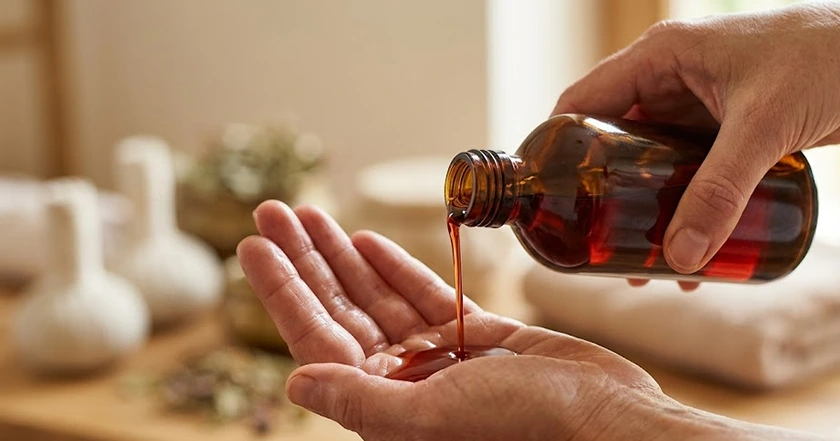
The quantity of the oil depends on the health condition and targeted area. For full-body abhyanga, use 60-100 ml of oil, and for localized application, 10-30 ml of the oil is considered sufficient. You can massage with the oil daily, 2-3 times a week, or weekly based on your constitution.
Quantity of Oil
- For full-body abhyanga: 60-100 ml of oil for proper coverage.
- For localized application: 10-30 ml of oil depending on the area, whether it’s knees, lower back, feet, or shoulders.
Frequency of Oil
| Daily | Best for those with a strong Vata constitution. |
| 2-3 times a week | Balanced usage in daily routine. |
| Weekly | This is the minimum frequency to see the results. Works well for those with predominant kapha and pitta dosha constitutions. |
Note: In cases of uncertain constitutional type, consult an Ayurvedic practitioner to learn about your dosha type and the right oil selection.
Side Effects and Precautions for Mahanarayana Tail
Though the external application of the oil is considered generally safe, it can still cause some side effects like skin irritation, heaviness, and increased discomfort. People who are already on medication, pregnant, or lactating mothers should talk to a doctor before including this oil in their daily routine.
Here are the possible side effects and precautions for maha narayana thailam uses:
Side Effects of Mahanarayana Oil
- Skin Irritation: Some people may experience mild irritation on the skin, causing redness and itching, especially if they are allergic to herbs.
- Temporary Heaviness: If the oil is overused, it can lead to heaviness or sluggishness, especially after a full-body massage.
- Heat Sensation: As the oil is generally applied warm, some people may notice warmth or heat on the skin.
- Increased Discomfort: If the joint is already inflamed, using the oil aggressively on it may elevate the discomfort.
Precautions for Mahanarayana Oil
- Pregnant and Lactating Mothers: Pregnant and breastfeeding women should seek professional advice before using the oil, as some herbs may have contraindications.
- Children: For children, go for simpler and milder oils like ksheerabala.
- Medication Interactions: If you are already on medications for certain health conditions, consult your healthcare practitioner before using this oil. The oil contains herbs and causes biological activity.
Final Words
Maha narayana thailam is representative of the sophisticated, centuries-old Ayurvedic practice. It is a timeless formulation of more than 50 natural ingredients, relieving pain and improving neuromuscular disorders.
If you are looking for a natural solution for chronic conditions like arthritis or a simple post-workout muscle recovery option, this is the go-to medicated oil for you. Include this oil in your pre-bath ritual to let nature’s healing wisdom bring balance and comfort in your life.
FAQs
Q1: Is Mahanarayan Thailam good for arthritis?
Ans: Yes! It is a commonly prescribed oil in Ayurveda for arthritis and other joint disorders.
Q2: Can Mahanarayan oil be used on the head or face?
Ans: No! The use is heavy and warming and generally used on joints and muscles. Avoid using it on the face or head.
Q3: Can I use Mahanarayan oil daily?
Ans: Yes! The oil can be applied daily, especially for people with a predominant vata constitution, for pain relief and relaxation.
Q4: Can pregnant women use Mahanarayan Thailam?
Ans: The oil should be used under medical supervision in conditions like pregnancy and breastfeeding.
Q5: Does Mahanarayan Thailam have any side effects?
Ans: The external application is usually considered safe, but it can still lead to some side effects like skin irritation, increased discomfort, and heaviness.
Sources: