

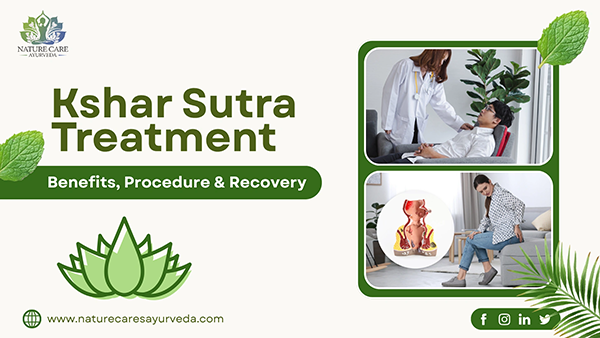
People with problems like piles, fistulas, fissures, and pilonidal sinuses often spend their lives with health complications like swelling, pain, discharge, and extreme discomfort during daily activities. Though surgery looks like the only remedy, it is a highly invasive option.
Little did many people know that there is an Ayurvedic solution that is popular for treating anorectal conditions, known as Kshar Sutra treatment.
Kshar Sutra is a specialized treatment that uses medicated herbal thread to remove unhealthy tissues and promote natural healing. It has been described in the ancient Sushruta Samhita for treating fistula-in-ano and piles.
Let’s discuss what Kshar Sutra treatment is, how it is prepared, its benefits, conditions it treats, procedures, and clinical evidence.
Quick Answer
Kshar Sutra treatment is an Ayurvedic parasurgical procedure that uses a medicated herbal thread to treat fistula, piles, fissures, and pilonidal sinus. It promotes gradual healing, has a success rate of up to 98%, and usually requires minimal hospitalization.
- What is Kshar Sutra Treatment
- How to Prepare Kshar Sutra
- Benefits of Kshar Sutra Treatment
- Conditions Treated with Kshar Sutra
- Who Can Take Kshar Sutra Treatment?
- Kshar Sutra Treatment Procedure: Step-by-Step
- Success Rate of Kshar Sutra Treatment
- Clinical Evidence and Research on Kshar Sutra
- Recovery Time for Kshar Sutra Treatment
- Instructions for Patients After Kshar Sutra Surgery
- Precautions Before and After Kshar Sutra Treatment
- Conclusion
- FAQs
What is Kshar Sutra Treatment
Kshar Sutra treatment is an Ayurvedic parasurgical procedure used to treat anorectal disorders like piles, fistula-in-ano, and pilonidal sinuses.
The thread uses a thread coated with herbal alkaline substances, which is placed carefully in the affected tract or tissue. The thread cuts through the unhealthy tissue and stimulates healing and prevents infection.
The Ayurvedic text of Sushruta Samhita describes it as having surgical and para-surgical techniques for treating several complex diseases.
Kstra Sutra treatment targets infected and unhealthy tissue without causing any extensive damage to surrounding healthy structures. The medicinal coatings available in the threads possess cleansing, antibacterial, and healing properties. It overall helps reduce infection and support tissue repair.
The effectiveness of this treatment is documented as it highly promotes less discomfort, minimal hospitalization, and fewer chances of occurrence.
How to Prepare Kshar Sutra
To prepare Kshar Sutra, a standardized process that includes surgical linen thread with multiple layers of medicinal properties. The goal is to create a thread that possesses cutting, healing, antimicrobial, and tissue-regenerating properties.
Ingredients Used in Kshar Sutra
The traditional preparation of Kshar Sutra includes the following:
- Surgical linen thread (Barbour surgical thread No. 20): A powerful, strong, and sterile medical-grade linen thread that is used as the base material.
- Snuhi latex (Euphorbia neriifolia): The milky latex of the Snuhi plant, used as a binding and coating agent on the thread.
- Apamarga Kshara (Achyranthes aspera): An alkaline ash preparation that is derived from the Apamarga plant, as it offers cauterizing and tissue-debriding properties.
- Haridra powder (Curcuma longa): A finely powdered turmeric that is applied for its antimicrobial and wound-healing properties.
Every ingredient serves a unique therapeutic purpose. Here are the steps used to prepare Kshar Sutra.
Step-by-Step Preparation Purpose:
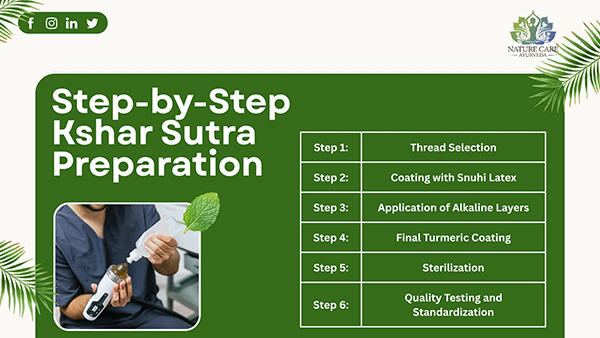
Step 1: Thread Selection
A sterile surgical linen thread is selected for the base material. The thread must possess adequate tensile strength, flexibility, and proper thickness to stay intact in the prolonged placement in the fistulous track without breaking or being damaged.
Step 2: Coating with Snuhi Latex
The selected thread is uniformly and properly coated with the fresh Snuhi Euphorbia neriifolia latex and dried in a dust-free and contamination-free environment. Several coatings are applied to stay strong, with an adhesive base included. This ensures the attachment of other medicinal layers.
Step 3: Application of Alkaline Layers
The coating of Snuhi latex is followed by the application of Achyranthes aspera Kshara (alkaline ash). This provides cauterizing, debriding, and tissue-dissolving properties, which help in gradual cutting and healing of the fistulous tract.
Step 4: Final Turmeric Coating
The outermost layers are prepared by coating the thread with finely powdered Harida (Curcuma longa). It consists of antimicrobial, anti-inflammatory, and wound-healing properties and reduces local irritation and risk of infection.
Step 5: Sterilization
After all the coatings are applied and adequately dried, Kshar Sutra is sterilized intensively using ultraviolet radiation and other clinically approved sterilization techniques. This removes any type of contamination and ensures safety.
Step 6: Quality Testing and Standardization
The finished and prepared Kshar Sutra undergoes rigorous quality-control testing, such as tensile strength, uniformity in coating, sterility, pH level, and consistency of the layers.
After all these steps, only threads meeting clinical standards are approved for therapeutic use and Kshar Sutra treatment. A traditionally prepared Kshar Sutra consists of approximately 21 coatings.
Benefits of Kshar Sutra Treatment
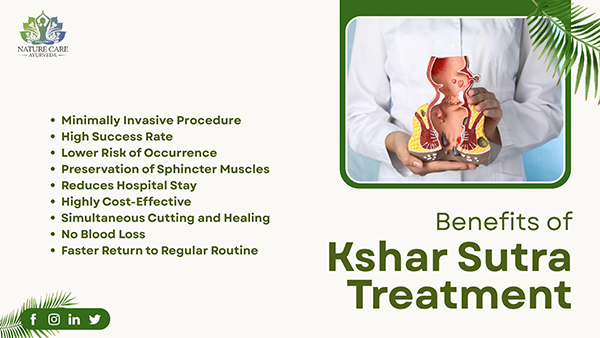
Kshar Sutra offers several benefits over conventional surgical procedures, mainly for anorectal disorders, anal fistulas, and fissures. Kshar Sutra is a special thread that is used in this therapy to cut, clean and heal the affected area.
It includes advantages like:
- Is a Minimally Invasive Procedure
The treatment doesn’t include any extensive surgical incisions, reducing trauma to the surrounding tissues.
- Has a High Success Rate
Various clinical studies have revealed a success rate of 90–98% in fistula management. It can depend on the complexity of the tract and compliance.
- Includes Lower Risk of Occurrence
The medicated thread has the ability to destroy residual infected tissues, providing lower chances of occurrence when compared to conventional techniques.
- Ensures Preservation of Sphincter Muscles
Unlike other surgical procedures, Kshar Sutra reduces the damage to anal sphincter muscles, lowering the risk of incontinence (leakage of urine).
- Reduces Hospital Stay
Most surgical processes or procedures require prolonged hospitalization. But Kshar Sutra treatment is performed on a daycare basis.
- Is Highly Cost-Effective
The overall treatment cost is quite lower than the other advanced fistula surgeries and laser procedures.
- Offers Simultaneous Cutting and Healing
The medicinal thread gradually cuts through the unhealthy tissues while promoting continuous healing.
- No Blood Loss
The cauterizing action of Kshara Sutra reduces bleeding during the treatment.
- Ensures Faster Return to Regular Routine
Most patients can normally resume their daily routine activities within a few days of surgery.
Conditions Treated with Kshar Sutra
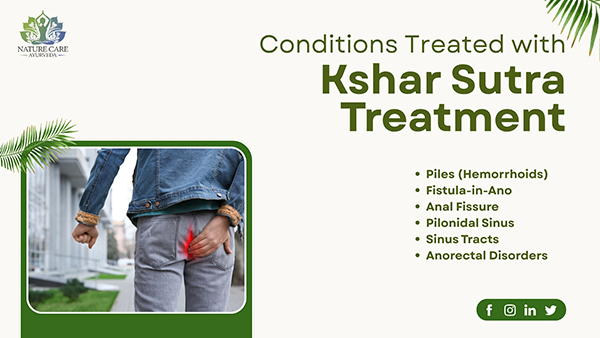
Kshar Sutra is an effective traditional Ayurvedic therapy that helps treat conditions like Piles, anal fissure, pilonidal sinus and more. Here is a brief of conditions treated with kshar sutra:
– Piles (Hemorrhoids)
Kshar Sutra can treat a certain type of pile by gradually reducing and removing the swollen tissues.
– Fistula-in-Ano
This treatment is used to treat anal fistulas by helping the tract heal slowly and effectively.
– Anal Fissure
In chronic anal fissures, Kshar Sutra can help remove damaged tissues and support healing.
– Pilonidal Sinus
It can treat the pilonidal sinus by clearing the sinus tract and promoting tissue healing.
– Sinus Tracts
The chronic sinus tract issues can be cured by removing the unhealthy tissues and helping the area to heal.
– Anorectal Disorders
Kshar Sutra is the best Ayurvedic treatment for anorectal problems because it can reduce the chances of recurrence.
Who Can Take Kshar Sutra Treatment?
Kshar Sutra therapy is usually recommended for people suffering from anorectal disorders, mainly for patients expecting long-term healing and a lower recurrence rate.
Ideal candidates are:
- Patients with fistula-in-ano
- Individuals with recurrent fistulas
- People with internal or external hemorrhoids
- Chronic fissures cases
- Pilonidal sinus sufferer
- Those who seek a minimally invasive treatment option
- Persons who wish to avoid major surgery
Important Note: Treatment suitability must be discussed with a qualified Ayurvedic surgeon or colorectal specialist after a thorough medical or clinical evaluation.
Kshar Sutra Treatment Procedure: Step-by-Step
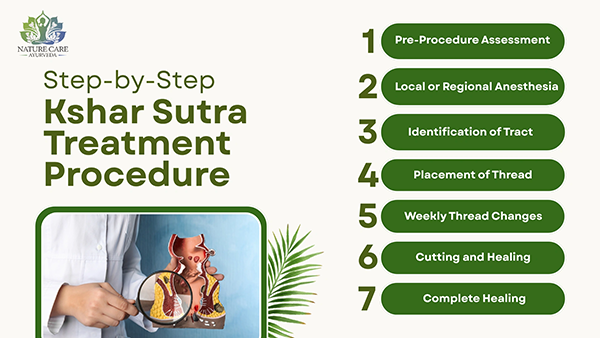
The procedure involves placing a specially prepared medicated thread in the affected tract or tissue. Here is the treatment procedure to be followed:
– Pre-Procedure Assessment
The medical practitioner will check the conditions thoroughly using physical examination, proctoscopy, imaging studies, and laboratory investigations.
– Local or Regional Anesthesia
Some conditions require local or regional anesthesia; this is also determined by the physician.
– Identification of Tract
The diseased tract is carefully examined and mapped to place the medicinal thread.
– Placement of Thread
The medicated Kshar Sutra thread is then passed through the tract and tied securely to the affected area for removing affected tissues.
– Weekly Thread Changes
The thread is replaced at regular intervals, usually after 7 days. It is important to prevent any infection from happening.
– Cutting and Healing
The medicated thread slowly cuts through the diseased tissue while promoting the formation of new and healthy tissues.
– Complete Healing
The continuous treatment ensures that the entire tract is healed and replaced with healthy tissues.
Success Rate of Kshar Sutra Treatment
One of the most prominent reasons for the popularity of Kshar Sutra therapy is the rate of success it provides.
- Fistula-in-ano: 90–98%
- Piles (Hemorrhoids): 85–95%
- Pilonidal sinus: 80–95%
- Recurrence rate: Generally below 10% in properly managed cases
- Patient satisfaction: Frequently reported above 90%
Clinical Evidence and Research on Kshar Sutra
Research References of Kshar Sutra Treatment Success:
- Clinical Evaluation of Kshara Sutra Therapy in the Management of Bhagandara (Fistula-in-Ano)
A prospective study involved 50 patients treated with Kshar Sutra and reported an overall recurrence rate as low as 5.88%. This indicated the success rate to be more than 94% in the appropriately selected cases. This study also found very minimal impairment of sphincter function and low complication rates.
- The Efficacy of Ksharsutra, Fistulectomy and LIFT Procedure in Management of Fistula-in-Ano (BMC Surgery, 2023)
Another observational study compared three treatments for complex fistula-in-ano, namely Ksharsutra, fistulectomy, and LIFT, in 60 patients. It is found that the LIFT procedure had the lowest recurrence rate, and there weren’t major differences in the recurrence rate in LIFT and Kshar Sutra. This shows that all the treatments are viable options depending on the conditions and medical requirements of the patient.
- Critical Analysis on Kshar Sutra – An Indian Surgical Procedure of Anorectal Surgery
The article discusses that Kshar Sutra is an effective treatment, as it offers reported advantages over conventional surgeries like minimal hospitalization, preservation of anal sphincter function, lower risk of incontinence, reduced postoperative complications, and lower recurrence rates in properly managed cases. It further discussed the standardization of Kshar Sutra preparation by the Indian government and research institutions.
Recovery Time for Kshar Sutra Treatment
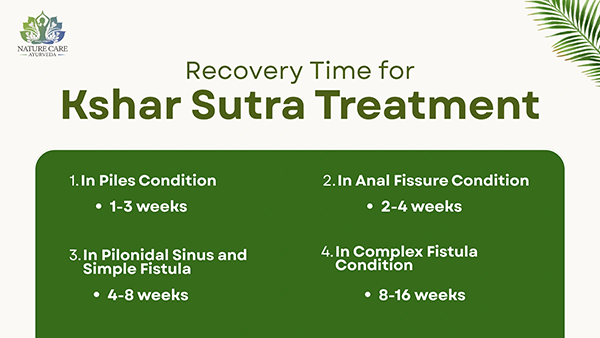
Recovery time varies depending on the severity of the condition and the extent of tissue involvement.
Here are the details of the recovery time for Kshar Sutra treatment for each related condition
| Condition | Average Recovery Time |
| Piles | 1-3 weeks |
| Anal Fissure | 2-4 weeks |
| Pilonidal Sinus | 4-8 weeks |
| Simple Fistula | 4-8 weeks |
| Complex Fistula | 8-16 weeks |
Here are some after-effects most of the patients encounter:
- Walk immediately after treatment
- Resume office work within 1-3 days
- Perform light activities within a week
- Return to normal lifestyle gradually during recovery
Instructions for Patients After Kshar Sutra Surgery
Proper care after surgery is crucial to ensure smooth recovery, reduced discomfort, and improved treatment outcomes.
- Follow Sitz Bath Instructions
It is suggested to take warm water sitz baths as advised by the physician, usually several times a day. This reduces pain, improves blood circulation, and keeps the area clean.
- Maintain Local Hygiene
Keep the treated area clean and dry all the time. The proper hygiene maintenance can help prevent infection and support faster recovery.
- Follow Prescribed Medications
Take all the prescribed medications such as pain relievers, antibiotics, and other supportive treatments, as directed by the physician.
- Stay Hydrated
Try to drink plenty of water throughout the day to maintain hydration and keep the bowel movements soft and regular.
- Eat a High-Fiber Diet
Eat fruits, vegetables, whole grains, and other fiber-rich foods in your diet. This will help prevent constipation and reduce pressure on the treated area.
- Attend Weekly Follow-Ups
Regular follow-ups are important to tracking the healing and thread changes. Missing these appointments can lead to delayed recovery.
- Avoid Straining
Avoid excessive straining during bowel movements, such as heavy lifting, or activities that can pressurize the affected area, as these may interfere with the healing process.
Precautions Before and After Kshar Sutra Treatment
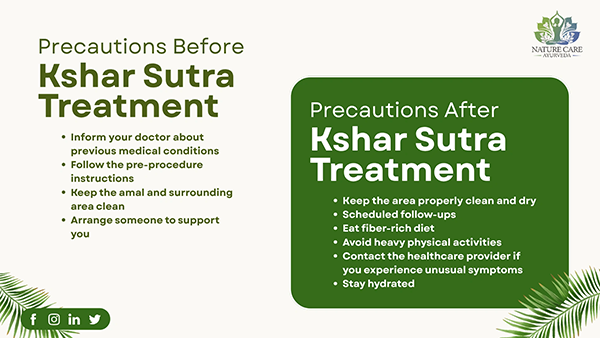
Follow the below-given precautions before and after Kshar Sutra treatment to ensure a smoother procedure, faster recovery, and better results.
Before Treatment
- Inform your doctor about the medical conditions you have and the medications you have been taking to manage them.
- Follow the pre-procedure instructions related to dietary restrictions, bowel preparation, or medical guidelines given by the doctor.
- Keep the amal and surrounding area clean before treatment to help reduce the risk of infection.
- Arrange someone to support you on the day of the procedure, especially when anesthesia is used.
After Treatment
- Keep the area properly clean and dry. Follow the doctor’s instructions regarding wound care and cleaning routines.
- Scheduled follow-ups are important for monitoring healing and replacing the Kshar Sutra thread.
- Eating a fiber-rich diet is important; drink plenty of water and use the stool softener.
- Avoid heavy physical activities like heavy lifting and activities that increase pressure on the thread.
- Contact the healthcare provider if you experience excessive pain, bleeding, fever, swelling, foul-smelling discharge, or unusual symptoms.
- Maintain healthy eating habits, stay hydrated, and follow every piece of medical advice given by the medical practitioner.
Conclusion
Kshar Sutra treatment is a unique traditional Ayurvedic wisdom and modern clinical applicability. It has continuously emerged as one of the effective and non-conventional therapies for managing fistula-in-ano, piles, fissures, pilonidal sinus, and other anorectal disorders.
With the whopping success rate of 98% low recurrence rates, along with unhealthy sphincter function and minimal hospitalization. But it is suggested to follow postoperative care, ensure safety, and maintain hygiene.
FAQs
Q1: Is Kshar Sutra Treatment Painful?
Ans: Patients may experience mild discomfort, mainly after the initial stage after thread replacement. However, pain can be managed through medications and sitz baths.
Q2: What is the success rate of Kshar Sutra treatment?
Ans: Clinical studies report success rates ranging from 90% to 98% for fistula treatment, depending on the complexity of the condition.
Q3: How long does Kshar Sutra treatment take?
Ans: Treatment duration varies from 4 to 16 weeks depending on the length and complexity of the tract being treated.
Q4: Is hospitalization required for Kshar Sutra therapy?
Ans: Most patients undergo the procedure on an outpatient basis and return home on the same day.
Q5: How often is the Kshar Sutra thread changed?
Ans: The medicated thread must be changed every 7 days, although the schedule may vary based on the individual healing process.
Sources: