

नासा हि शिरसो द्वारम्।
Nāsā hi śiraso dvāram.
Meaning: “The nose is indeed the doorway to the head.”
नस्यं महागुणमुशन्त्यणुतैलमेतत्।
Nasyaṃ mahāguṇamuśantyaṇutailam etat.
Meaning: “This Anu Taila, used as nasal medication, is said to possess great virtues (benefits).”
These classical Sanskrit references seem to emphasize the Nasya Therapy tradition, for which Anu Taila is the most well-known herbal oil. In this therapeutic practice, a medicated oil like Anu Taila is administered through the nose. Nose being the gateway to the brain in Ayurveda, Nasya can nourish and rejuvenate the head, senses, and nervous system.
The Ayurvedic texts, such as Charaka Samhita and Ashtanga Hridaya, describe the preparation of Anu taila using multiple herbs processed in sesame oil. It is also called “Mahaguna” (highly virtuous) oil for the head and senses.
Being effective in sinus congestion, headaches, allergies, stress, dry nasal passages, and overall mental clarity, Anu Taila has become part of modern wellness routines.
- What is Anu Taila?
- Uses of Anu Taila
- Benefits of Anu Taila
- Ingredients of Anu Taila
- Ayurvedic Properties of Anu Taila
- Preparation of Anu thailam As Per Charaka Samhita
- How to Use Anu Taila Safely and Properly
- Recommended Usage of Anu Taila
- Traditional and Scripture References of Anu Taila
- Side Effects, Common Mistakes, and Precautions of Anu Taila
- Myths Related to Anu Taila
- Conclusion
- FAQs:
What is Anu Taila?
Anu Taila is a classical Ayurvedic medicated oil used in Nasya Karma, one of the five detoxification therapies described in Panchakarma. The term “Taila” means oil, and “Anu” refers to the subtle penetrating nature of the particles of the oil, due to which it reaches the deeper tissues for better recovery.
In simple words, Anu Taila means “subtle oil”, an oil that is capable of penetrating the subtle channels of the head and senses.
Composition of Anu Taila:
- Base: Usually Sesame oil (Tila Taila).
- Herbal ingredients: A mixture of potent herbs like Bala, Yashtimadhu, Haritaki, Shatavari, and others, depending on the classical formulation.
- It can also consist of some powerful medicated juices and powders for enhanced therapeutic effects.
Anu Taila can be applied externally or instilled into each nostril after warming the oil.
Uses of Anu Taila
Anu Taila is used for Nasya therapy to enhance sensory function, improve mentality, relieve headaches, and fix Vata from the Tridosha.
- Relief from Nasal Congestion
Anu Taila is used to clear blocked nasal passages and improve breathing. It lubricates dry nasal tissues and reduces irritation that occurs due to dust and pollution.
- Sinus Support
People who experience sinus discomfort usually benefit from Anu Taila. It helps in reducing heaviness around the forehead and improving sinus drainage.
- Stress and Mental Fatigue
Nasya therapy is considered beneficial to calm the mind, and thus regular use of it can improve relaxation and reduce mental exhaustion.
- Headache and Migraine Support
Anu Taila is used to manage headaches happening due to dryness, sinus issues, and Vata imbalance.
- Better Sleep Quality
The calming effect of this oil can calm the nervous system, resulting in sound and restful sleep.
- Hair and Scalp Nourishment
Nasya therapy can offer nourishment to the scalp and hair roots. It supports hair health and reduces premature greying.
- Voice and Throat Care
Singers and speakers often use Nasya practices to support throat clarity and voice quality.
Benefits of Anu Taila
Anu Taila is a revered Ayurvedic formulation that offers respiratory comfort, mental clarity, and nourishment for subtle body channels.
Respiratory Benefits of Anu Taila:
- Helps maintain clear and healthy nasal passages by supporting natural cleansing mechanisms.
- Promotes smoother and more comfortable breathing through proper nasal lubrication.
- Provides relief from the nasal dryness and sinus discomfort caused by seasonal changes and environmental factors.
- Can reduce irritation associated with dust, pollen, and other allergens.
Nervous System Benefits of Anu Taila:
- Encourages a sense of calm and relaxation by reducing mental tension.
- Supports concentration, focus, and alertness during regular activities.
- Used to enhance memory, cognitive function, and mental clarity.
- Can enhance memory and cognitive function and reduce mental fatigue and excessive strain on the mind.
- Helps in reducing the effects of stress in the long term.
Sense Organ-Related Benefits of Anu Taila:
- Offers healthy functioning of the nose, eyes, ears, and throat.
- Strengthen the sensory organs’ perception and maintain vitality.
- Keeps the nasal passage lubricated, leading to overall sensory comfort and well-being.
Daily Wellness Benefits of Anu Taila:
- Helps balance Vata and Kapha doshas, promoting harmony and stability.
- Supports rejuvenation (rasayana) and helps maintain vitality and resilience.
- Encourages healthy self-care practices to contribute to long-term wellness.
- Anu Taila improves overall quality of life by supporting respiratory, mental, and sensory well-being.
Ingredients of Anu Taila
The herbs described below are handpicked and then blended in a balanced manner. Some provide calming, soothing, and cooling effects, whereas others offer warming and clearing actions.
Most of these herbs consist of nourishing and rejuvenating properties, and all these herbs, when infused in sesame oil, create a perfect oil for nasal therapy.
| Ingredient | Ayurvedic Name | Key Properties | Main Role in Anu Taila |
| Sesame oil | Tila Taila | Nourishing, penetrating, Vata-balancing | Work as a base oil that carries herbal action deep into tissues. |
| Sandalwood | Chandana | Cooling, calming, soothing | Reduces heat, promotes mental calmness. |
| Cinnamon | Tvak | Warming, stimulating | Improves circulation, helping to clear nasal blockage. |
| Cardamom | Ela | Aromatic, mild decongestant | Supports breathing and refreshes the nasal passage. |
| Licorice | Yashtimadhu | Soothing, demulcent, healing | Moisturizes and protects the nasal and throat lining. |
| Bala | Sida cordifolia | Strengthening, nourishing | Supports nerves and head-region tissues. |
| Daruharidra | Berberis aristata | Cleansing, antimicrobial | Helps maintain clear nasal passages. |
| Jivanti | Leptadenia reticulata | Rejuvenating, nourishing | Supports vitality and tissue nourishment. |
| Devadaru | Cedrus deodara | Decongestant, Kapha-reducing | Helps relieve sinus congestion. |
| Agaru | Aquilaria agallocha | Aromatic, calming | Supports relaxation and sensory balance. |
| Lotus | Kamala | Cooling, stabilizing | Calms the mind and supports emotional well-being. |
| Yashtimadhu (repeated in some formulations) | Glycyrrhiza glabra | Soothing, restorative | Enhances healing and mucosal protection. |
Ayurvedic Properties of Anu Taila
Anu Taila is an ideal instrument for tridosha-balancing. It offers Vata-pacifying and Kapha-clearing properties. It is considered both cleansing (Shodhana) and nourishing (Brimhana/Rasayana) depending on its way of usage.
- Dosha Effect
Dosha Effects of Anu Taila Vata Pacifies Vata, especially in the head and nervous system. Kapha Reduces excess Kapha and helps clear congestion and mucus. Pitta Mild cooling ingredients to keep Pitta balanced locally. - Panchamahabhuta (Five Elements)
Mahabhuta Expression in Anu Taila Prithvi (Earth) Nourishing, stabilizing effect on tissues. Jala (Water) Lubrication of the nasal passages and mucosa. Tejas (Fire) Mild stimulation improves circulation and clarity. Vayu (Air) Supports movement and clearing of channels. Akasha (Space) Helps open blocked channels in the head region. - Ayurvedic Actions (Karma)
- Shodhana (Cleansing): Clears nasal passages and head channels.
- Brimhana (Nourishing): Strengthens nerves and sensory tissues.
- Srotoshodhana: Purifies subtle channels (especially in the head and neck).
- Vatanulomana: Normalize Vata movement in the head region.
- Indriya Prasadana: Enhance the clarity of sense organs.
- Rasayana (Rejuvenative): Supports long-term vitality and resistance to fatigue.
- Rasa, Guna, Virya, Vipaka (Classical Properties)
Property Description Rasa (Taste) Mixed: Madhura (sweet), Tikta (bitter), Katu (pungent) Guna (Quality) Snigdha (unctuous), Sukshma (subtle), Vyavayi (spreads quickly) Virya (Potency) Ushna (mildly warm) with cooling balance from herbs Vipaka (Post-digestive effect) Mostly Madhura (sweet and nourishing effect) - Functional Ayurvedic Outcome
When used in Nasya, Anu Taila is traditionally believed to:
- Open and cleanse Shiras (head channels).
- Improve Prana flow (life-energy movement in the head region)
- Support Manas (mind clarity and calmness)
- Strengthen Indriyas (sense organs)
- Maintain healthy lubrication and protection of the nasal mucosa.
Preparation of Anu thailam As Per Charaka Samhita
The classical preparation of Anu Taila is detailed in Ayurvedic texts like Charaka Samhita. The preparation involves repeated processing of herbs in sesame oil.
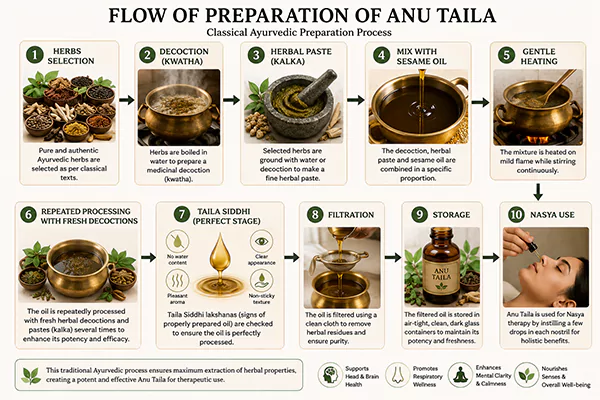
Step 1: Selection of Herbs
First is to select the group of medicinal herbs for the concoction based on their properties. The herbs are cleaned and prepared according to guidelines.
Step 2: Preparation of Herbal Decoration (Kwatha)
The herbs are coarsely powdered and boiled in water until the water is reduced to the prescribed quantity. This concentrated herbal decoration creates the primary liquid required in the processing of the oil.
Step 3: Preparation of Herbal Paste (Kalka)
The same selected herbs are finally ground into a smooth paste using water or herbal liquids. This paste transfers the active constituents of the herbs into the oil during cooking.
Step 4: Mixing with Sesame Oil
The pure sesame oil is taken into a vessel and mixed with:
- Herbal decoction (kwatha)
- Herbal paste (Kalka)
Both forms of herbs are combined into classical proportions prescribed for medicated oil preparation.
Step 5: Gentle Heating
The mixture is heated on a mild fire while being stirred continuously. Slow heating allows the water to evaporate and enables the oil to absorb all the medicinal properties of the herbs.
Step 6: Repeated Processing
A distinctive feature of Anu Tailam is that the oil is processed repeatedly with herbal decorations. After one cycle of cooking is completed, additional decorations are added, and the process is repeated multiple times. This repeated impregnation enhances the potency and penetrative nature of the oil.
Step 7: Attainment of Taila Siddhi (Completion Stage)
Continuous heating until the classic signs of medicated oil being properly prepared appear. They will look like this:
- Complete evaporation of moisture
- Desired aroma, color, and consistency
- Properly cooked herbal paste
- Absence of frothing caused by water content
Step 8: Filtration
Once the oil is prepared, it is filtered through a clean cloth while still warm to remove any residue and obtain a clear medicated oil.
Step 9: Cooling and Storage
The final product is allowed to cool naturally and then is stored in clean, airtight containers to protect it from moisture and direct sunlight.
Step 10: Use as Nasya
The finished Anu Tailam is administered into the nostril as Nasya; it acts as a therapeutic oil to support the health of the head, neck, respiratory passage, and sense organs.
How to Use Anu Taila Safely and Properly
Using Anu Tiala correctly can maximize the benefits of this medicinal oil. Follow these simple steps:
Step 1: Use the right time. Morning is advised by most of the Ayurvedic practitioners. Avoid using it immediately after meals or before sleeping.
Step 2: Prepare the oil by warming it by placing it in warm water for a few minutes. The oil should be warm and not hot.
Step 3: Clean the nasal passage. Just gently blow the nose to remove mucus or blockages. This allows oil to reach the nasal tissue effectively.
Step 4: Position yourself correctly by tilting your head backwards while sitting. This helps the oil flow properly into the nasal passages.
Step 5: Apply 2-3 drops of Anu Taila into each nostril and inhale gently to help distribute the oil. Avoid forceful sniffing.
Step 6: Lightly massage the sides of the nose, cheeks, and forehead. Rest for a few minutes and then breathe normally.
Step 7: Follow the aftercare, such as avoiding exposure to cold air immediately after use. Spit the oil out before it reaches the throat.
Recommended Usage of Anu Taila
| Age Group | Typical Daily Dosage |
| Adults | 2-6 drops in each nostril |
| Children above 5 years | About half the adult dose |
| Elderly individuals | Start with 1-2 drops |
Tip: Always start with lower dosages and increase only if comfortable.
Traditional and Scripture References of Anu Taila
| Classical Shaloka from Charaka Samhita: चन्दनागुरुणी पत्रं दार्वीत्वङ्मधुकं बलाम्। प्रपौण्डरीकं सूक्ष्मैलां विडङ्गं बिल्वमुत्पलम्।। ह्रीबेरमभयं वन्यं त्वङ्मुस्तं सारिवां स्थिराम्। जीवन्तीं पृश्निपर्णीं च सुरदारु शतावरीम्।। हरेणुं बृहतीं व्याघ्रीं सुरभीं पद्मकेशरम्। समस्तमेतद् द्विगुणं तैलात् क्षीरं चतुर्गुणम्।। तैलमेवं विधानेन नस्येऽस्मिन् साधितं हितम्। — अष्टाङ्गहृदय, सूत्रस्थान २०/३७-३९ (Ashtanga Hridaya Sutrasthana 20/37-39) Transliteration (Pronunciation Key): Candānāgurūṇī patraṁ dārvī-tvaṅ-madhukaṁ balām, Prapauṇḍarīkaṁ sūkṣmailāṁ viḍaṅgaṁ bilvam utpalam. Hrīberam-abhayaṁ vanyaṁ tvaṅ-mustaṁ sārivāṁ sthirām, Jīvantīṁ pṛśniparṇīṁ ca suradāru śatāvarīm. Hareṇuṁ bṛhatīṁ vyāghrīṁ surabhīṁ padmakeśaram, Samastametad dviguṇaṁ tailāt kṣīraṁ caturguṇam. Tailamevaṁ vidhānena nasye’smin sādhitaṁ hitam. English Meaning: “Sandalwood, Aguru, Patra (Tejpatra), Daruharidra, Cinnamon, Mulethi, Bala, Prapaundarika, Sukshmaila (Cardamom), Vidanga, Bilva, Utpala (Blue water lily), Hrivera, Abhaya (Haritaki), Vanya, Musta, Sariva, Sthira, Jivanti, Prishnaparni, Devadaru, Shatavari, Harenu, Brihati, Vyaghri, Surabhi, and Padma Kesara (Lotus stamen). All these herbs are made into a paste, which is double the quantity of the oil, and four times goat’s milk. The oil is processed in this manner to create this highly beneficial formulation meant for nasal administration (Nasya).” |
| Classical Shaloka from Ashtanga Hridaya Sutrasthana: जीवन्तीं जलदं देवदारु जलदं त्वचं सेव्यं गोपीं हिमम्। दरुत्वचं मधुकं मुस्तं प्रपौण्डरीकमुत्पलं धावन्यं विडङ्गम्।। बिल्वं शतावरीं व्याघ्रीं सुरभीं पद्मकेसरम्। पिष्टैरेभिः समैस्तैलं तिलानां साधयेत् भिषक्।। शतगुणे गङ्गाजलमम्भसि प्रपचेत् समम्। दशकृत्वः पचेत्तैलं प्रपचेत् क्षीरमुत्तमम्।। तैलमेवं विधानेन नस्येऽस्मिन् साधितं हितम्। — अष्टाङ्गहृदय, सूत्रस्थान २०/३६-३९ (Ashtanga Hridaya Sutrasthana 20/36-39) Transliteration (Pronunciation Key): Jīvantīṁ jaladaṁ devadāru jaladaṁ tvacaṁ sevyaṁ gopīṁ himam, Darutvacaṁ madhukaṁ mustaṁ prapauṇḍarīkamutpalaṁ dhāvanyaṁ viḍaṅgam. Bilvaṁ śatāvarīṁ vyāghrīṁ surabhīṁ padmakeśaram, Piṣṭairebhiḥ samaistailaṁ tilānāṁ sādhayet bhiṣak. Śataguṇe gaṅgājalambhasi prapacet samam, Daśakrtvaḥ pacettailaṁ prapacet kṣīramuttamam. Tailamevaṁ vidhānena nasye’smin sādhitaṁ hitam. English Meaning: The physician should prepare a fine paste using equal parts of Jivanti, Hrivera, Devadaru, Jalada, Tvak, Sevya, Gopi, Hima, Darutvak, Madhuka, Musta, Prapaundarika, Utpala, Dhavani, Vidanga, Bilva, Shatavari, Vyaghri, Surabhi, and Padmakesara. This herbal paste must be cooked together with an equal quantity of pure sesame oil. The mixture is then sequentially boiled and evaporated ten separate times using a total of one hundred parts of pure rainwater or river water. In the final stage of boiling, an excellent quality of goat’s milk is thoroughly processed into the mixture. An oil successfully prepared in this exact manner yields a highly beneficial formula designed specifically for nasal drop administration. |
Side Effects, Common Mistakes, and Precautions of Anu Taila
Anu Taila is generally safe when used correctly, but improper usage may lead to a certain level of discomfort:
Possible Side Effects:
- Mild throat irritation
- Sneezing
- Temporary coughing
- Heaviness in the head if excessive oil is used.
Precautions:
- Avoid using it immediately after meals.
- Do not use during fever, severe cold, or indigestion
- Avoid excessive dosage
- Use cautiously in children and elderly individuals
- Pregnant women should first consult the Ayurvedic practitioner before using
Common Mistakes to Avoid:
- Using too much oil
- Performing Nasya late at night
- Using cold oil directly
Myths Related to Anu Taila
Myth 1: Anu Taila is only used for sinus problems
Fact: Anu Taila is also used in wellness, stress reduction, and sensory nourishment.
Myth 2: Daily use is harmful
Fact: Mild daily use of Nasya is traditionally recommended in Ayurveda for suitable individuals.
Myth 3: Putting oil in the nose is unsafe
Fact: Nasya therapy has been practiced in Ayurveda for centuries; just the correct administration should be practiced.
Myth 4: Anu Taila works instantly
Fact: Consistent usage and proper routine should be combined with Nasya for noticeable benefits.
Conclusion
Anu Taila is a classical Ayurvedic herbal oil that has been valued for centuries for its role in Nasya therapy and overall wellness. Used for respiratory support, mental clarity, stress management, and sensory nourishment, it continues to be widely used in Ayurvedic self-care routines.
It can balance Vata and Kapha doshas in the head and neck, but moderation and proper usage are the key.
FAQs:
Q1: What is the best time to use Anu Taila?
Ans: Mornings are usually considered the safest and best time for using Anu Taila right after brushing and cleansing routines.
Q2: How to Use Anu Taila in the Nose?
Ans: Lie down comfortably, tilt the head slightly backward, and place 2-2 drops in each nostril.
Q3: Can Anu Tailam be used daily?
Ans: Yes, mild daily usage is traditionally recommended in Ayurveda.
Q4: What are the Anu taila ingredients?
Ans: The common ingredients of Anu Taila are:
Sesame oil, sandalwood, licorice, cinnamon, cardamom, bala, and other Ayurvedic herbs.
Q5: Is it safe for children?
Ans: It may be used in children, but in very small quantities, and expert supervision is required.
Sources: