


Every few months, somebody in the family would complain of the same thing: bloating after meals, a burning sensation creeping up the chest or that unpredictable urgency that IBS sufferers know far too well. The antacid shelf in most of the Indian homes is never empty. And still, the problem never really goes away; it just gets quieter for a while and then pops up again.
After writing about Ayurvedic health for years, the most common question I receive from readers is some variation of: why does my digestion keep failing me, even when I eat carefully?
According to Ayurveda, the answer is that most people are treating symptoms. The root has been untouched.
Note: About 1 in 8 people may develop symptoms of IBS. These symptoms include abdominal pain, bloating, constipation or diarrhoea.
Quick Answer
Natural remedies for gas, acidity and IBS include eating warm, freshly cooked meals, avoiding processed and cold foods, consuming green moong dal, A2 cow ghee and barnyard millet, managing stress and using Ayurvedic formulations like Bilvasava under professional guidance.
What Ayurveda Says About Your Gut Health?
In Ayurvedic medicine, your metabolic fire, Agni, is the force behind your digestive system. It is the power that breaks down food, transmuting it into nourishment, and separates the usable from the waste. When Agni is balanced and digestion is strong, absorption is complete, and nothing is left over.
When Agni is weak due to irregular eating, stress, cold or heavy foods, or eating before the previous meal has cleared, food does not digest completely. What remains is Ama, a sticky toxic residue lining the gut and blocking channels, creating the conditions for gas, bloating, acidity and irregular bowels. Ama is the real culprit, but no one believes it.
Specifically, Ayurvedic texts refer to IBS as Grahani Roga, a disease of the organ that holds food for digestion. When Agni is so disturbed that the gut loses its ability to regulate itself, Grahani Roga occurs.
Food moves too fast (loose stools, urgency) or too slow (bloating, constipation), sometimes switching from one to the other in the same person.
In IBS, the three doshas, Vata, Kapha, and Pitta dosha are each manifested in different ways:
- Vata-type IBS is characterized by gas, bloating, constipation, anxiety, and variable digestion. This is the commonest type and results from irregularity, cold and dryness.
- Pitta-type IBS causes burning, loose or frequent stools, acidity and inflammation. So the aggravating factor here is heat.
- Kapha-type IBS presents as heaviness, mucus in stools, sluggishness and feeling “stuck”. It gets worse with cold, wet, heavy foods.
The point is that no one remedy works for everyone, which is why the antacid-for-everything approach ultimately fails.
Four Foods that Aggravate IBS, Gas and Acidity
Before we get into what helps, it’s important to address what is actively making things worse. There are several foods that are widely eaten that are at the root of chronic digestive complaints, and their harm is consistent enough to be treated as rules rather than suggestions.
1. Raw Salads and Cold Food
Ayurveda has always been suspicious of cold, raw food, and for good reason. Raw vegetables, especially cruciferous ones like cabbage, broccoli, cauliflower and kale, are full of insoluble fibre and gas-producing compounds called FODMAPs. Agni is already weak, and the gut is not able to digest these properly. Then there’s fermentation, gas and bloating.
Cold water, cold smoothies and refrigerated foods make the problem worse. Cold alone restrains Agni. It is like pouring water on a cooking flame mid-meal. For this reason, ancient Ayurvedic texts specifically warn against drinking cold water during or after meals.
If you like vegetables, eat them cooked, warm and well-spiced. The same vegetables that cause bloating raw are easily digestible and nourishing when sautéed with a little ghee, cumin and asafoetida (hing).
2. Dairy, The Bad Kind at the Wrong Time
Dairy is an extremely complex topic in Ayurveda. Fresh, whole, warm milk, taken at the right time with the right digestive spices, is considered to be deeply nourishing. Today, though, dairy consumption is mostly nothing like that.
Cold milk from the fridge, curd (yogurt) eaten at night, and large quantities of paneer aggravate Kapha and Pitta and produce Ama. Curd is specifically contraindicated at night in classical texts. It is heavy and sour, and retards digestion and, if taken improperly, can lead to mucus formation and acidity.
Those with IBS or chronic acidity may have curd only at lunch in the form of buttermilk (chaas) with roasted cumin, rock salt and ginger. This form, takra, is actually good for the gut in Ayurveda.
3. Processed, Packaged and Refined Foods
Maida (refined white flour), packaged snacks, commercially made biscuits, instant noodles and most ready-to-eat foods have a few things in common that are particularly damaging to a sensitive gut. They are stripped of fibre, loaded with additives, often cold-stored and offer nothing that Agni can meaningfully work with.
This results in slow, incomplete digestion and rapid accumulation of Ama. People with IBS who are still eating these foods, even though they are ‘eating clean’ at home, often wonder why they are not getting any better. Packaging is nearly always the answer you can’t see.
4. Legumes and Pulses, Not Prepared Correctly
Large lentils like rajma, chana and urad dal are among the top gas producers when not cooked properly. They contain complex sugars (oligosaccharides) that the human gut cannot break down itself, and so ferment in the colon.
All pulses are soaked, cooked properly and spiced as per Ayurveda for a long time. Hing (asafoetida), cumin, ginger and turmeric are not just for flavour; they are digestive agents that chemically break down the gas-forming compounds and make the proteins accessible.
Heavy legumes should be completely avoided during flare-ups, especially in active IBS and should be replaced with split green moong dal, which is the only legume that Ayurveda considers safe for even a weak digestive system. It is light, easy to digest and specifically recommended in Grahani Roga management.
What to Eat Instead: The Ayurvedic IBS Diet
Half the answer is knowing what to take away. The other half is designing a diet that proactively heals the gut lining, reduces ama, and restores agni.
1. Samak (Kutmali) / Vrat ka Chawal
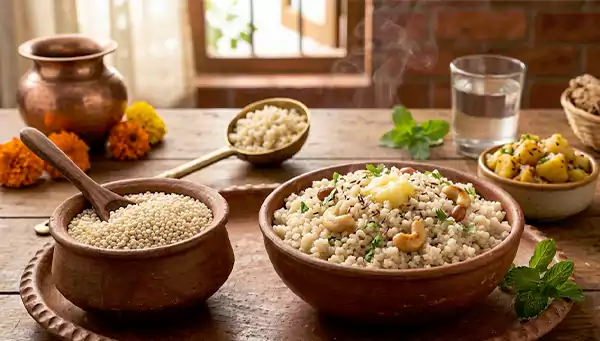
Of all the grains available, barnyard millet is the one that stands out for digestive healing. Ayurvedic texts describe it as laghu (light) and grahi (binding, in the sense of therapy), meaning it helps firm and regulate loose bowels without causing heaviness or constipation. It is easily digestible, low glycemic and does not cause the same kind of fermentation that wheat and even regular rice can in IBS patients.
For someone who suffers from chronic loose stools, alternating bowels or post-meal urgency, replacing one or two meals with barnyard millet khichdi, cooked soft with green moong dal, a small amount of ghee, cumin and rock salt, can bring meaningful relief within days.
2. Green Moong Dal
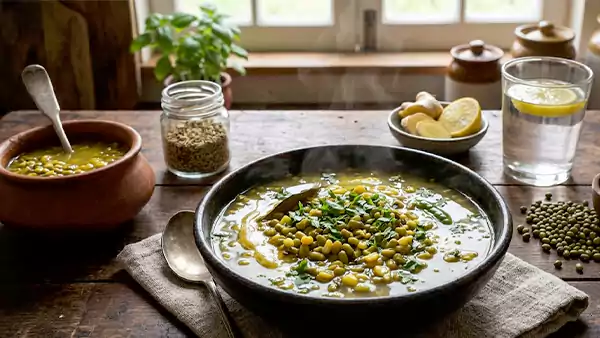
Green moong, whole or split, is the safest protein source during any gut healing protocol. Unlike the heavier legumes, moong is easy on the gut lining, does not produce gas and actually nourishes the intestinal tissue. It is prepared as a thin soup (moong dal soup with ginger, turmeric and hing) or as khichdi — the most similar thing Ayurveda has to a gut reset meal.
3. Semi Brown Rice (Sela Chawal)
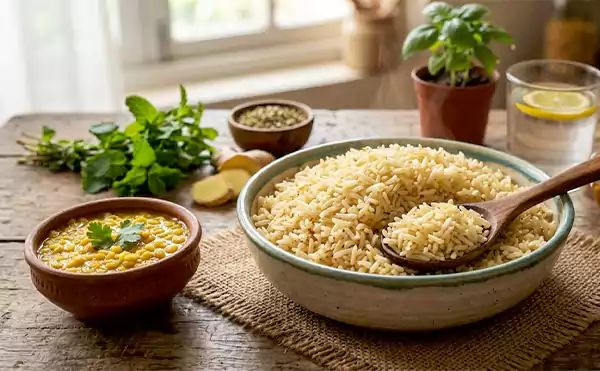
White rice is easy to digest, but when completely polished, it has lost most of its fibre and micronutrients. Brown rice, however, may be too heavy and fibrous for an inflamed IBS gut.
Semi-brown rice, which is not fully milled, is the perfect compromise. It still contains some bran, but it has been stripped of the full abrasiveness of whole grain. It’s easy to digest, gives steady energy and doesn’t upset a sensitive gut.”
4. A2 Cow’s Ghee

In Ayurvedic medicine, pure A2 cow ghee is one of the most cherished substances for gut health. It is regarded as a direct nourisher of the walls of the intestines (especially the colon), a vehicle for digestive herbs and a gentle stimulant of Agni when taken in proper quantities. Ghee is medicine, not indulgence. Add a teaspoon of ghee to your hot rice or khichdi at mealtime.
Ghee also lubricates the gut, which is especially useful in Vata-type IBS where dryness, irregularity and constipation are the chief complaints. It is also believed to be one of the best foods for rapid weight gain.
Bilvasava: The Ayurvedic Supplement That Treats IBS from the Root
Among the many classical Ayurveda formulations for gut disorders, Bilvasava deserves specific attention for IBS, gas and chronic loose stools.
Bilvasava is a fermented Ayurvedic tonic with Bael (Bilva or Aegle marmelos) as the main ingredient. In Ayurveda, Bael has been used for thousands of years as a specific cure for Grahani Roga. It is binding and astringent, so it helps to regulate loose stools. It soothes Vata and Pitta in the colon. It also has important antimicrobial properties that help to address gut dysbiosis, an imbalance of gut bacteria that underlies much of chronic IBS.
Bilvasava is a compound formulation unlike the single-herb preparations. The fermentation process increases the bioavailability and makes the herbs more potent at lower doses. It is one of the most recommended Ayurvedic interventions for people with chronic Grahani or IBS, usually taken after meals, diluted with equal parts water, around 15- 20 ml twice daily.
A 2021 study in the Research Journal of Pharmacology and Pharmacodynamics reports that Aegle marmelos exhibits antimicrobial, antioxidant, antidiabetic, antipyretic, and anti-inflammatory activity and can provide relief from various diseases.
It is worth mentioning that Bilvasava is especially effective for the Vata-Pitta pattern: loose stools or urgency, gas, bloating and burning, which is the commonest IBS presentation seen in clinical practice.
Daily Habits to Strengthen the Digestive System Again
It is not just the daily routine that makes Agni work against us, for diet alone will not solve chronic digestive disorders. These are easy practices, but they have a big cumulative effect on gut health.
Eat at normal times. Agni has a circadian rhythm. Irregular meal times, irregular breakfast, dinner at 10 pm, snacks at irregular intervals constantly interrupt its cycle and keep it in a weakened state. Lunch should be the biggest meal of the day, eaten between 12 pm and 1:30 pm when the digestive fire is naturally at its highest.
Walk after eating. According to Ayurveda, the practice of Shatapawali, which is a slow 15-minute walk after eating, greatly enhances gastric motility. It is one of the easiest and most underutilized tools there is for gut health.
Cold water restrains Agni; warm water stimulates him. A cup of plain warm water, taken 30 minutes before a meal, gently conditions the gut. Drinking warm water between meals helps to move Ama along and keeps the digestive channel clear.
Eat until you are three-quarters full. Ayurveda recommends filling the stomach in thirds: one third food, one third liquid, one third empty space. The most direct way to extinguish Agni is to overeat. The digestive fire literally can not deal with the excess, fermentation and gas result.
Prioritize stress management. The gut-brain axis isn’t a metaphor; it’s physiology. Chronic stress can directly inhibit digestive enzyme secretion, alter gut motility and change the stability of gut bacteria. This link has always been known in Ayurveda, which explains how emotions such as fear, grief and worry are stored in the gut. Pranayama (especially Anulom Vilom and Bhramari), a regular sleep schedule, and even short periods of stillness during the day have measurable effects on IBS symptoms over time.
A Note About Patience
Ayurveda doesn’t provide the same immediate relief that an antacid does. It provides something the antacid cannot: a genuine reversal of the conditions that caused the problem.
The gut needs time to heal. Ama that is built up over the months doesn’t clear in three days. It’s Agni suppressed for years; it’s not relighting overnight. Those who give this approach four to six weeks of consistent effort. They eat the right foods, at the right time, take bilvasava, and focus on their daily habits, universally report a quality of change that is qualitatively different from anything they got from medication. The urgency abates. The bloat goes away. The alternating bowels start to find a rhythm.
That rhythm is what Ayurveda calls sama Agni, balanced digestive fire. It isn’t a drama. It’s the body doing what it was created to do in the circumstances in which it needs to do it. The work is easy. It’s mostly about stopping what’s hurting and starting what helps heal and letting time do its thing.
Final Words
Stomach issues can affect one’s life for years if unresolved. It’s best to avoid consuming raw salads, dairy and packaged food that worsen the acidity and IBS condition.
Instead, embrace the natural solutions like A2 ghee, green moong dal and sela chawal, which can provide relief by being easier to digest in Ayurveda for beginners. You can also try bilvasava, which is a great Ayurvedic supplement for managing IBS symptoms.
FAQs
Q1: Are there foods I should completely avoid with stomach issues?
Ans: You should avoid the consumption of raw salads, cold food, dairy and processed or packaged food. These can worsen gas, acidity or IBS conditions.
Q2: Does stress affect gas and acidity?
Ans: Yes! Stress affects stomach issues by triggering IBS spasms, bloating and excess acid production. That’s why people do stress reduction techniques like yoga, breathing exercises and meditation.
Q3: When should I see a doctor instead of using home remedies?
Ans: While natural remedies are effective in managing mild symptoms. It’s suggested to see a healthcare practitioner in case of worsening symptoms.
Q4: What are some of the best remedies for an Ayurvedic IBS diet?
Ans: The most effective remedies for the IBS diet include A2 cow’s ghee, semi-brown rice (Sela Chawal) and vrat ka chawal.
Sources: