

“Your hormones are not your enemies; they are the rhythmic language of your body. When you feed them well, they speak the language of vitality.”
Do you ever feel like your body is a radio playing nothing but static? One day you’re on top of the world, and the next you’re battling brain fog, erratic moods, and a battery-low warning that won’t go away.
Well, you’re not alone, PMS, perimenopause, and general hormonal fluctuation affect the vast majority of women at some point in their reproductive lives.
While we often reach for caffeine or sheer willpower to push through, Ayurveda offers a different lens. In this guide, we’re going to dive into the culinary foundation of hormonal balance such as the foods, herbs, and dosha-aware habits that current research and centuries of Ayurvedic practice both point to.
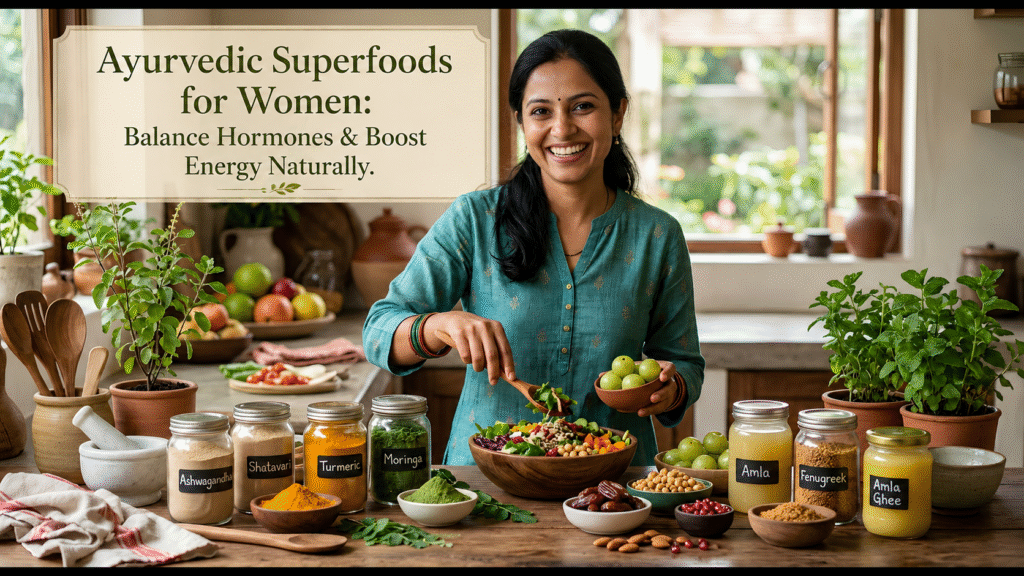
- Ayurvedic Superfoods for Women: Balance Hormones & Boost Energy Naturally
- Understanding the Connection Between Nutrition, Hormones, and Doshas
- Adaptogenic Superfoods for Stress and Energy Management
- Omega-3 Rich Foods for Inflammation and Hormone Production
- Phytoestrogen-Rich Foods for Hormonal Balance
- Nutrient-Dense Greens and Cruciferous Vegetables
- Magnesium-Rich Foods for PMS and Mood
- Antioxidant-Rich Berries and Colorful Produce
- A Sample Day of Ayurvedic Eating, By Dosha
- Using Adaptogens Safely
- Conclusion
- FAQ’s
Quick Answer
- Fuel with healthy fats for optimal hormone production.
- Consume cruciferous greens to support the body’s natural estrogen clearance.
- Use adaptogenic herbs — chosen by dosha — to lower stress and support cortisol balance.
- Magnesium and omega-3s are two of the best-evidenced nutrients for PMS relief.
- Match your foods to your dominant dosha rather than following one-size-fits-all rules.
Understanding the Connection Between Nutrition, Hormones, and Doshas
As the saying goes, “Let food be thy medicine and medicine be thy food.”
Think of your hormones as chemical messengers, they tell your heart and metabolism when to beat and when to fire up. When you fuel yourself with processed sugars, those messages get scrambled. In Ayurveda, hormonal static most often shows up as a Vata-Pitta imbalance: Vata’s erratic, “windy” quality driving anxiety and irregular cycles, and Pitta’s heat fueling irritability, inflammation, and hot flashes.
By choosing the right superfoods, you supply the raw materials such as healthy fats, amino acids, and dosha-appropriate nutrients that your glands need to manufacture hormones correctly and it helps pacify whichever dosha is aggravated.
Suggested Read – Tridosha in Ayurveda: Vata, Pitta & Kapha Balance Explained
| Gut Hormone Axis | A healthy microbiome helps ensure excess estrogen is metabolized instead of recirculated. |
| Blood Sugar Stability | Fiber-rich foods help prevent insulin spikes that can worsen symptoms of PCOS and metabolic imbalances. |
Adaptogenic Superfoods for Stress and Energy Management
If your adrenal glands are constantly stuck in “fight or flight,” adaptogens are your best friends. These herbs read the needs of your body, if you’re too high, they bring you down; if you’re too low, they lift you up. In Ayurveda, they’ve been used for centuries to restore this kind of balance.
Ashwagandh
A randomized, double-blind, placebo-controlled study found that a standardized Ashwagandha root extract produced significantly greater reductions in morning cortisol compared to placebo in chronically stressed adults, alongside reduced anxiety scores (Lopresti et al., 2019).
More recent clinical research specifically in women found that Ashwagandha root extract improved Menopause Rating Scale scores along with measured hormonal parameters over 56 days (Vani et al., 2025).
In dosha terms, it’s grounding for Vata-type hormonal disruption, the kind marked by anxiety, insomnia, and irregular cycles. We carry a pure Ashwagandha supplement if you’d like to try it as part of your routine.
Shatavari
Ayurveda’s classical “queen of herbs” for women’s health. A multicenter, double-blind, randomized controlled trial found Shatavari root extract produced a significant reduction in hot flashes, night sweats, insomnia, and anxiety compared to placebo in menopausal women, with no significant adverse events (Gudise et al., 2024). It’s considered especially balancing for aggravated Pitta, given its cooling, nourishing quality.
Maca Root
A Peruvian adaptogen traditionally used for hormonal balance and energy. A clinical study found that standardized maca supplementation in early-postmenopausal women significantly reduced the frequency and severity of hot flashes and night sweats compared to placebo (Meissner et al.). As with any adaptogen, source it from a supplier you trust and start with a small dose to see how your body responds.
Amalaki (Indian Gooseberry)
A rich source of Vitamin C that helps pacify Pitta dosha and supports healthy adrenal function particularly useful for women whose hormonal symptoms lean toward heat, irritability, or inflammation.
Suggested Read – Benefits of Indian Gooseberry (Amalaki)
Reishi Mushrooms
A calming choice for evening tea, signaling to the body that it’s time to rest, well suited to aggravated Vata or Pitta at day’s end.
If you’re just starting out with Ayurveda for beginners, understanding how these herbs interact with your unique constitution is a good first step before adding anything new to your routine.
Omega-3 Rich Foods for Inflammation and Hormone Production
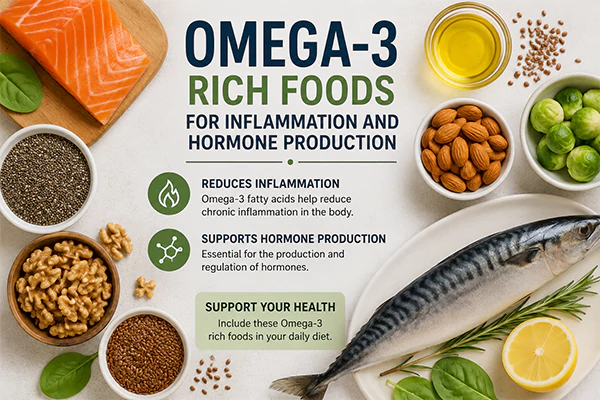
Every hormone in your body is made from either lipids (fats) or amino acids. If you’re on a low-fat diet, you may be starving your hormones. Omega-3 fatty acids also reduce the inflammation that can interfere with hormone receptor function.
A randomized clinical trial in reproductive-age women found that daily fish oil supplementation significantly reduced most premenstrual symptoms and improved quality of life compared to placebo over three menstrual cycles (Rezaei Kelishadi et al., 2017).
- Walnuts: An excellent brain food that also helps stabilize progesterone.
- Chia and Flax Seeds: Small seeds, mighty sources of alpha-linolenic acid.
- Wild-Caught Salmon: Provides the Vitamin D and Omega-3s essential for menstrual regularity.
Phytoestrogen-Rich Foods for Hormonal Balance
“Phytoestrogen” may sound like a lab-grown chemical, but these are plant-based compounds that gently mimic estrogen, occupying estrogen receptors so “bad” estrogen has less room to take hold. A systematic review and meta-analysis of randomized controlled trials found that soy isoflavone supplements meaningfully reduced both the frequency and severity of hot flashes compared to placebo, with higher-genistein formulations showing greater benefit (Taku et al., 2012).
- Sesame Seeds: Rich in lignans that help balance estrogen across different phases of your cycle.
- Organic Soy (Edamame/Tempeh): Helps manage hot flashes and supports bone density.
Nutrient-Dense Greens and Cruciferous Vegetables
Your liver is responsible for metabolizing and detoxifying hormones. Cruciferous vegetables contain a compound called Indole-3-Carbinol (I3C), which is converted in the body into active compounds that support healthier estrogen metabolism. A study found that short-term I3C intake significantly increased the proportion of estradiol processed through a more favorable metabolic pathway (Michnovicz & Bradlow).
- Kale & Spinach: Loaded with magnesium, the relaxation mineral that supports over 300 enzymatic reactions in the body.
- Broccoli & Cauliflower: Both essential for liver detoxification.
- Brussels Sprouts: High in fiber, keeping the digestive tract moving.
A quick dosha note: cruciferous vegetables are cooling and light, which makes them excellent for Pitta, but Vata-dominant women may find raw crucifers cause bloating or gas — lightly steaming or sautéing them with warming spices like cumin and ginger makes them easier to digest without losing the benefit.
If you’re interested in deeper internal cleansing, Triphala is a traditional Ayurvedic formula that clears the gut and prepares it to absorb these nutrients.
Magnesium-Rich Foods for PMS and Mood
Magnesium is one of the more consistently researched minerals for hormone-related mood symptoms. Study found that daily magnesium supplementation significantly reduced premenstrual symptoms related to fluid retention, bloating, breast tenderness, and swelling by the second month of use (De Souza et al., 1998).
- Pumpkin Seeds: One of the most concentrated plant sources of magnesium.
- Dark Leafy Greens: Kale, spinach, and swiss chard all contribute meaningfully to daily intake.
- Dark Chocolate (70% or higher): Contains magnesium alongside antioxidants, a genuinely evidence-aligned way to satisfy a sweet craving.
Antioxidant-Rich Berries and Colorful Produce
Nature uses color to signal what nutrients are inside. Vibrant berries are packed with antioxidants that protect your eggs (oocytes) and adrenal glands from oxidative stress.
- Raspberries: Great for skin health and may help reduce cramps.
- Blueberries: High in anthocyanins, essential for cognitive clarity.
- Beets: Support nitric oxide production, improving blood flow to the reproductive organs.
If you have a sweet tooth, add jaggery to your diet for mineral-rich sweetness without the hormonal crash of refined sugar.
A Sample Day of Ayurvedic Eating, By Dosha
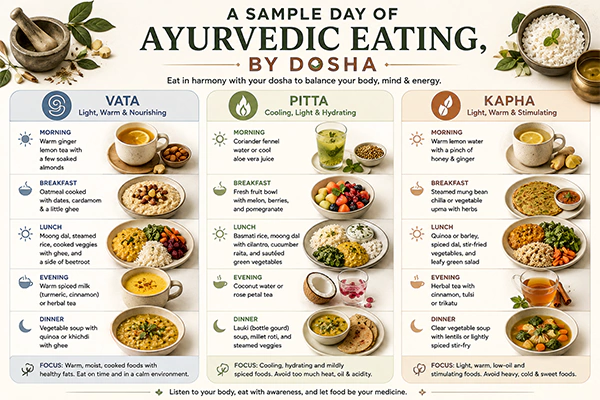
Since hormonal symptoms present differently depending on your dominant dosha, here’s how a day of eating might look for each:
| Dosha | Focus | Sample Choices |
| Vata (anxiety, irregular cycles, dry skin) | Warm, grounding, moist foods | Warm oats with ghee and walnuts; steamed (not raw) cruciferous vegetables; Ashwagandha milk at night |
| Pitta (irritability, heat, inflammation) | Cooling, hydrating foods | Coconut water; Amalaki or Shatavari in the morning; raw salads with sesame seeds; avoid excess spice |
| Kapha (fatigue, weight gain, sluggishness) | Light, warming, stimulating foods | Ginger tea; lighter breakfasts; Maca in the morning for sustained energy rather than heavy grains |
Using Adaptogens Safely
As with the herbs featured on our Ashwagandha guide, adaptogenic herbs are generally well tolerated but aren’t automatically right for everyone:
- Pregnant or breastfeeding women should consult a doctor before starting any new herb.
- Those on thyroid medication, blood pressure medication, or with existing hormone-sensitive conditions should check with a healthcare professional first.
- Start with the lowest suggested dose and build up gradually rather than starting at a high dose.
- Give any new herb at least 8–12 weeks of consistent use before judging whether it’s working — most of the clinical studies above ran for two to six months.
Conclusion
Balancing your hormones isn’t about a restrictive diet, it’s about a colorful, nutrient-dense, dosha-aware relationship with food, backed increasingly by clinical research alongside centuries of Ayurvedic practice. By adding these superfoods into your daily routine and paying attention to how your own constitution responds, you’re not just eating, you’re communicating with your biology.
You don’t have to overhaul everything at once. Start small, a warm cup of Ashwagandha milk, a handful of pumpkin seeds, or steamed broccoli instead of raw and notice how your body responds to the new rhythm it finds.
FAQs
Q1: Can superfoods be consumed even if I’m on birth control?
Ans: Generally yes, these foods support overall organ health and can be eaten alongside birth control. If you’re adding a new herbal supplement rather than just foods, it’s worth a quick check with your doctor first.
Q2: How long does it take to see results from hormone-balancing foods and herbs?
Ans: Most of the clinical trials cited above ran for 8 weeks to 6 months before showing significant results. Expect at least one to three full menstrual cycles before judging whether a change is working for you.
Q3: Is soy beneficial for my hormones?
Ans: Research on soy isoflavones and hot flash reduction is genuinely positive, particularly for higher-genistein formulations. Organic, non-GMO soy is the better choice if you’re adding it specifically for hormonal support.
Q4: Which is better for hormonal balance, Ashwagandha or Shatavari?
Ans: Ashwagandha is more Vata-pacifying and better suited to stress-driven, anxious hormonal symptoms. Shatavari is more Pitta-pacifying and traditionally favored for hot flashes and general women’s reproductive health. Some women benefit from both at different times of their cycle or life stage.
Q5: Do I need to know my dosha to use this guide?
Ans: No, the food categories above (omega-3s, phytoestrogens, cruciferous vegetables, magnesium) benefit most women regardless of dosha. The dosha notes are there to help you fine-tune preparation methods and herb choice, not as a strict requirement.
Sources: