

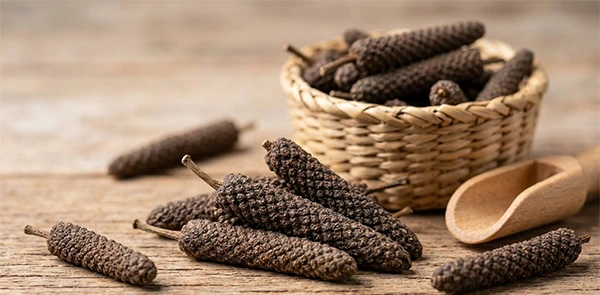
Pippali is a highly revered plant in Ayurveda due to its extensive medicinal properties. Also known as long pepper, it is a rasayana (rejuvenator) that aids digestion and boosts energy and immunity naturally.
With its anti-inflammatory, carminative, and healing properties, pippali benefits our overall health. Whenever suffering from a cold, I swallow pippali powder along with honey, which helps me breathe easily. If you are looking for an ayurvedic remedy that promotes holistic wellness, pippali can be the go-to herb for Ayurveda for beginners!
Best Pippali Benefits in Ayurveda
Pippali is a small spice that is exceptionally beneficial for our overall health. The herb works as a natural painkiller for menstrual cramps and reduces inflammation in joints. Furthermore, it is effective for promoting weight management and improving liver issues. Here are the detailed pippali benefits:
1. Improves Gut Health
Long pepper benefits our gut health and reduces issues like bloating and gas after meals. In Ayurveda, it is believed to boost agni (digestive fire) and enhance metabolism in the body. With its deepan (appetiser) and pachan (digestive) properties, it improves appetite and makes food easy to digest. Additionally, it helps with constipation, acting as a natural laxative.
2. Supports Respiratory System
Pippali plant is a potent ayurvedic herb that helps in many respiratory issues, including cough, cold, bronchitis, and asthma. It works as a natural expectorant, clearing phlegm and congestion. Balancing the kapha dosha, it supports easy breathing and works like a natural bronchodilator. It shows the best results for respiratory illnesses when taken along with honey.
3. Boosts Immunity and Energy
Pipli is the best remedy in Ayurveda that restores energy and immunity naturally. As a rasayana (rejuvenating) herb, pipli strengthens the immune system and rejuvenates the body.
Furthermore, with its antioxidant properties, the herb helps the body fight seasonal infections and varied chronic illnesses. It also improves energy levels in the body by improving digestion and clearing ama (toxins) from the body.
4. Supports Healthy Weight Management
Pipali is one of the most effective Ayurvedic herbs for weight management. The regular consumption of the herb lowers sudden hunger pangs for unhealthy food. Moreover, as a metabolic stimulant, it improves digestion and burns fat, which promotes faster weight loss. With its kapha-balancing property, it decreases kapha-related sluggishness and heaviness in the body.
5. Promotes Detoxification and Liver Health
Possessing hepatoprotective properties, pippali benefits liver function. It improves the bile secretion, which leads to better nutrient absorption. As a detoxifier, the herb helps eliminate ama (toxins) from the body and stimulates blood circulation. Additionally, by supporting metabolism and digestive health, pippali churna reduces the burden on the liver and kidneys, promoting their better functioning.
6. Reduces Inflammation and Provides Pain Relief
With its anti-inflammatory properties, long pepper is known to reduce swelling and stiffness in the joints. The plant also has analgesic properties, with which it acts as a natural painkiller, providing relief in conditions like arthritis, rheumatism, muscle soreness, and joint pain. Ultimately, the herb is found to be an effective remedy for reducing physical strain and fatigue.
7. Enhances Cognitive Function and Mental Well-Being
Pippali is recognised as a medhya (nervine tonic) in Ayurveda that rejuvenates the majja dhatu (nervous tissue) and supports the neurological function. It is believed to enhance memory, concentration, and overall mental sharpness by reducing oxidative stress. Acting as an adaptogen, it also helps to reduce mental fatigue, anxiety, and stress. Incorporating the herb in the daily routine can aid memory retention and alertness.
8. Helps in Menstrual Health
Pipli benefits in reducing menstrual cramps or dysmenorrhea, which is known as kashtaartava in Ayurveda. Due to its ushna (hot) potency and vata-balancing nature, it relaxes the uterine muscles and reduces pain. It also improves blood circulation and supports healthy menstrual flow.
Did you know?
Pippali is well-regarded because of its yogavahi property in Ayurveda. It refers to its ability to act as a carrier to enhance the bioavailability of other herbs and nutrients with which it is combined.
Pippali Plant Overview: Taxonomy and Common Names
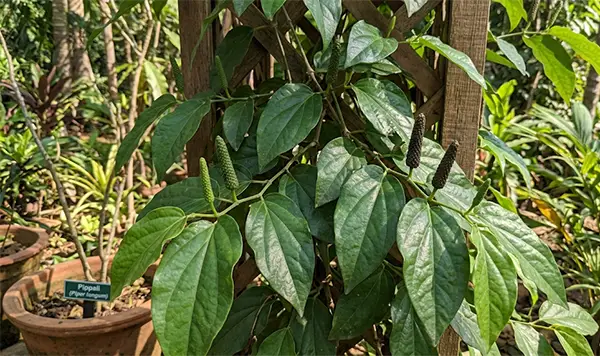
Long pepper is the slender aromatic climber that belongs to the Piperaceae family. The most medically useful parts of the plant are its fruits and roots. It is known by different names all over India, including Pipli, Pipal, Pipar, and Pippallu. Let’s see its taxonomy and common names:
| Kingdom | Plantae |
| Order | Piperales |
| Family | Piperaceae |
| Genus | Piper |
| Species | P. longum |
| Plant Type | Perennial, slender climbing vine with creeping, jointed stems. |
| Useful Parts | Mature fruits and roots. |
| Common Names | Hindi name- Pipli, Pipal, Pipar English name- Long Pepper, Indian Long Pepper Sanskrit- Pippali, Kana, Magadhi (from Magadha region), Vaidehi, Chapala, Krushna Tamil- Thippili, Tippili, Argadi, Sirumulam Telugu- Pippallu, Pipili Malayalam- Thippili, Tippali Marathi- Pimpli Bengali- Pipul, Pipli |
Did you know?
Long pepper is the primary ingredient in trikatu (a mix of pippali, black pepper, and ginger) and panchakola (a five-herb digestive mix).
Ayurvedic Medicinal Properties and Nutritional Value of Pippali
The secret to the medicinal benefits of long pepper lies in its ayurvedic properties and high nutritional content. It is loaded with vitamins, carbohydrates, iron and protein that help to improve brain health and keep blood healthy. Additionally, it is revered traditionally due to its ushna potency and vata and kapha-balancing nature.
Ayurvedic Medicinal Properties of Pippali
| Property | Action |
| Rasa (taste) | Katu (pungent) |
| Guna (quality) | Laghu (light), tikshna (penetrating) |
| Vipaka (post-digestive effect) | Madhura (sweet) |
| Virya (potency) | Ushna (heating) |
| Dosha action | Primarily pacifies vata and kapha dosha. Excessive usage can aggravate pitta dosha. |
Nutritional Value of Pippali (as per 100g)
| Nutrient | Value |
| Calorie | 251 kcal |
| Carbohydrates | 63.95 g |
| Dietary Fiber | 26.2 g |
| Protein | 4.4 g |
| Fat | 3.26 g |
| Calcium | 446 mg |
| Iron | 13.99 mg |
| Potassium | 1259 mg |
How to Use Pippali?
Pippali can be used safely in various ways to support different health issues. It is best consumed with honey and water after meals. You can also use it as a spice in a daily cooking ritual or add it to a decoction for enhanced taste and medicinal advantages.
| Method | Preparation |
Churna (powder)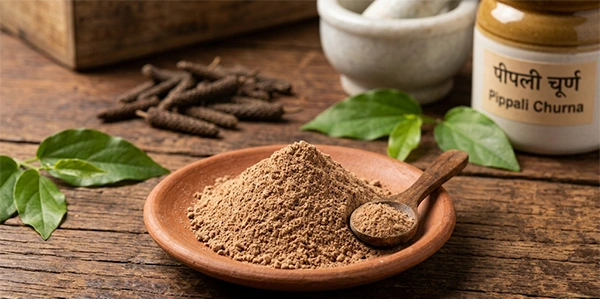 | Mix a half teaspoon of pippali powder with lukewarm water or buttermilk. Consume the mixture for improved digestion. |
Kadha (decoction)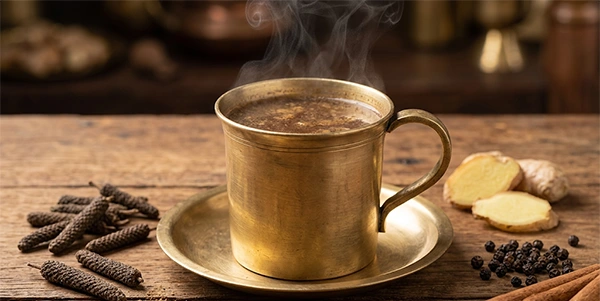 | Boil ½ teaspoons of pippali powder with other herbs like tulsi and black ginger in 1.5 cups of water. Let it boil until it reduces to 1 cup. Add honey and drink warm. |
Capsules/tablets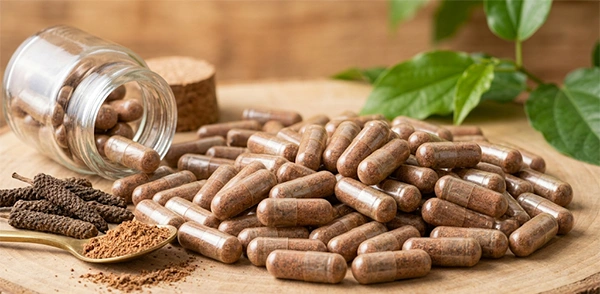 | Pipali capsules and tablets are available in the market. They are easy to use for daily wellness support. |
In cooking | Add pippali in small amounts in dal, stew, soup and curries to enhance their flavour and nutritional value, similar to black pepper. |
With ghee or honey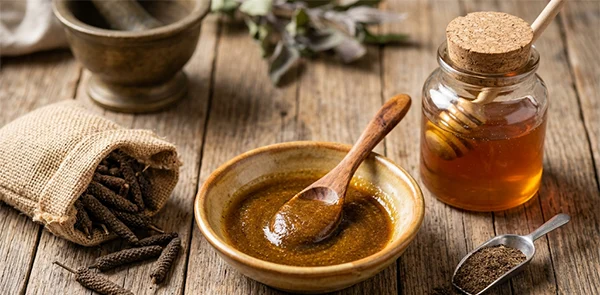 | Mix the pinch of long pepper powder with a teaspoon of honey. Consume this mixture to relieve congestion. You can also combine pippali with ghee for better absorption. |
Recommended Dosage of Pippali
Pippali is a strong spice, and it is crucial to follow the proper dosage to protect yourself from the potential side effects. It is generally found to be safe to consume ¼ to ½ teaspoons of the pipli powder with honey or water. The ayurvedic remedy can also be taken in the form of capsules or tablets that are readily available in the market.
| Form | Dosage |
| Pippali churna | ¼ to ½ teaspoons mixed with honey or water once or twice daily. |
| Pippali capsule or tablet | 1 or 2 capsules or tablets daily. |
| Pippali kadha | Mixed with ½ teaspoon of powder once a day. |
Note: The above-mentioned information is for general knowledge purposes and should not be considered medical advice. Always consult an Ayurvedic practitioner for safe and appropriate dosage tailored to one’s health needs.
Research and Findings on Pippali
In recent years, there have been many scientific studies conducted to evaluate the pippali uses and benefits in modern medicine. I have mentioned two of them below that are about its vardhamana dosage and comparison of chhoti pippali and badi pippali varieties.
Study Year: 2022
Aim: To evaluate the efficacy of pippali in vardhamana (increasing & decreasing pattern) dosage and a fixed dosage pattern in the management of primary hypothyroidism.
Method: A randomised clinical trial was conducted with 40 patients. The two groups, vardhamana and fixed, were administered in two dosage forms over 19 days. Serum T3, T4, and TSH levels were tested at baseline on the 20th day. Clinical severity was measured using Zulewski’s clinical score.
Results: Both methods showed significant improvement in the signs of primary hypothyroidism, but the vardhamana dosage was found to be more effective.
Source: Journal of Ayurveda and Integrative Medicine
Study Year: 2012
Aim: To evaluate and compare the anti-inflammatory activity of two varieties of pippali: chhoti pippali and badi pippali.
Method: Four market samples of each variety were collected and used in this study. Wistar strain albino rats were divided into four groups of six. Test drugs and controls were administered orally, and the activity was compared with standard anti-inflammatory drugs in both models.
Results: The chhoti pippali variety is better suited for managing inflammation than the badi variety.
Source: National Center for Biotechnology Information
Side Effects and Precautions to Consider For Pippali
In cases of inappropriate dosage, pippali, as an Ayurvedic medicine have side effects. While beneficial for overall wellness, it can cause stomach pain, allergic reactions, and increase pitta dosha if overused. Therefore, it is suggested to avoid using it if you are already on medications and talk to a doctor first before starting a long-term treatment plan with it.
Potential Side Effects of Pippali
- Digestive Discomfort
Improper dosage can lead to digestive issues like gastritis, stomach pain, diarrhoea, and acidity due to its intense heat.
- Allergic Reactions
Although it is rare, the herb can cause allergic reactions in some individuals, such as skin rashes, itching, and swelling.
- Increased Body Heat
Excessive intake can aggravate pitta and increase body heat. This can lead to sweating and a feeling of irritation.
- Bleeding Risks
Its improper consumption can increase bleeding risks, especially in individuals who are already on blood thinners, as it stimulates circulation.
Precautions to Take With Pippali
- Pregnancy and Breastfeeding
It is recommended to avoid or use the remedy under medical supervision in pregnancy and breastfeeding due to a lack of safety data.
- Drug Interactions
The herb interacts with drug absorption in our body. So, it is suggested to talk to a healthcare practitioner first if you are taking any digestive and immune-modulating medications.
- Pitta Imbalance
People with high pitta symptoms, such as sensitive digestion and heat issues, should avoid this herb or use it cautiously.
Wrapping Up
To sum up, Pippali is a powerful Ayurvedic formulation that is highly valued in Ayurveda to support various body functions. It reduces inflammation, improves metabolism and boosts immunity in our body. You can take this versatile herb in many forms, including churna, tablets or capsules or as a cooking spice.
Though it is a highly beneficial herb, it is important to keep in mind its side effects and precautions before starting the medicinal dosages. Consult a doctor first, especially if you are already on medications.
FAQs
Q1: What are the pippali benefits for digestion?
Ans: In Ayurveda, the herb is believed to boost agni (digestive fire) and make food easier to digest. As a result, it helps in indigestion, bloating and gas.
Q2: Can pippali boost immunity?
Ans: Yes! Long pepper is a rasayana (rejuvenating) herb that contains antioxidants. They boost immunity and help the body fight infections and chronic illnesses.
Q3: How to use pippali in food?
Ans: Pippali churna can be added to dal, stews, soups and curries. It enhances the taste in addition to providing the medicinal benefits for our health.
Q4: Why shouldn’t pippali be used in excess?
Ans: The excessive consumption of the ayurvedic remedy can lead to side effects like digestive discomfort and allergic reactions. It can also aggravate pitta due to its heating nature.
Q5: How does pippali support respiratory health?
Ans: Long pepper acts as a natural expectorant that helps in clearing mucus from the respiratory tract. It is traditionally believed to support asthma, bronchitis, and other respiratory conditions due to its anti-inflammatory properties.
Sources: