
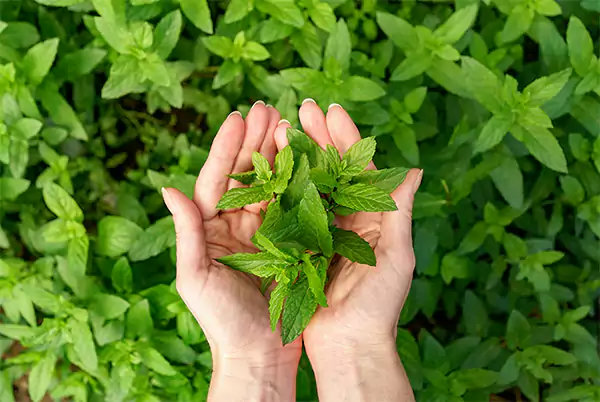
Tulsi, scientifically known as Ocimum sectum or Ocimum tenuiflorum, holds a revered space in the Indian household setting and grows throughout Southeast Asia.
They are deeply ingrained in our day-to-day lives and the Ayurvedic system. Mostly, we have seen them used in herbal tea as a cure for distinct ailments.
There are innumerable Tulsi uses, both spiritually and medically. Today, we will explore what are the benefits of tulsi plant and guide you on how to use it most effectively. Let’s begin!
Nutritional Value and Ayurvedic Properties of Tulsi
Holy basil is a nutrient-dense and low-calorie herb. It is rich in antioxidants and vitamins. This leads to supporting the immune system and minimizing stress. Let’s have a detailed look at the nutritional value as per 100 g and its ayurvedic properties:
Nutritional Value of Tulsi as per 100g
| Nutrient | Quantity (per 100g) |
| Fats | 0.6 g |
| Calories | 22 g |
| Carbohydrates | 2.7 g |
| Dietary Fiber | 1.6 g |
| Sugars | 0.3 g |
| Protein | 3.2 g |
| Sodium | 4 mg |
| Potassium | 295 mg |
| Vitamin K | 1540 mcg |
Ayurvedic Properties of Tulsi
|
What are the Benefits of Tulsi Plant Backed by Ayurveda?
There are many Tulsi plant benefits backed by Ayurveda. For instance, helping with colds and flu, boosting immunity, and promoting clear and glowing skin. Let’s see what are the benefits of tulsi plant in detail:
- Treats Respiratory Disorders
It is found that holy basil leaves have anti-inflammatory and antibacterial properties. In Ayurveda, there are many medical uses of it related to the respiratory system, which is why it is called Shwasahara. It is a key ingredient in many of the Ayurvedic cough syrups. Boiled leaves can soothe a sore throat and help in the treatment of respiratory diseases.
- Boosts Immunity
Tulsi is rich in antioxidants and micronutrients. This way, it is a miraculous example of how Ayurveda restores energy and immunity naturally. Holy basil enhances the white blood cell function, fights bacterial, fungal, and viral threats, and detoxifies the body. It curbs the growth of cancer-causing cells and HIV cells. This leads to preventing deadly illnesses.
- Purifies the Blood (Raktashodhak)
One of holy basil’s medical uses is that it helps to purify the blood. The simple recipe of a Tulsi tea can do wonders for your health. It helps by flushing out toxins and cleansing your digestive system.
- Helps in Skin Health
There are well-regarded benefits of holy basil leaves for skin health. It helps in combating skin issues like itching, acne, and infections. It’s believed that it helps in purifying the blood. This is the reason many people use it daily for issues like controlling breakouts and pigmentation.
Simple DIY Tulsi Pack
Grind fresh leaves of tulsi with some water or rosewater. When it attains the consistency of a paste, apply it to your skin. Leave it for 10-15 minutes until it is dry. Wash with cool water. Hence, regular use can help with acne and pigmentation.
- Controls Blood Sugar Levels
Tulsi supports glucose metabolism. It benefits the people who have type 2 diabetes. The sacred herb helps in regulating blood glucose levels and decreases the risk of damage. Consuming holy basil in any form helps the body process carbohydrates and fats. This results in a better metabolism process.
- Lowers Blood Pressure
Tulsi helps hypertension patients extensively. Consumption of this magical herb daily helps control high blood pressure and cholesterol levels in the body. There are tremendous benefits of its leaves for the symptoms related to high blood pressure. For instance, headaches, anxiety, depression, lack of sleep, and others.
- Supports Hair Growth and Scalp Health
There are immense Tulsi plant benefits for hair. The herb helps in strengthening the roots and improving the blood flow in the scalp. Its antifungal properties also encourage fighting dandruff. Applying tulsi paste on your hair or rinsing with tulsi water contributes to overall hair health. It leads to stronger hair and better scalp health.
Different Types of Tulsi Plant
There are four types of tulsi that we find growing around us: Krishna, Rama, Vana, and Kapoor Tulsi.
Each variant comes up with its own specific character and strengths. Below is the list of different types, along with tulsi plant images and their uses:
| Types | Image | Appearance | Uses |
| Krishna Tulsi (Purple Leaf) | 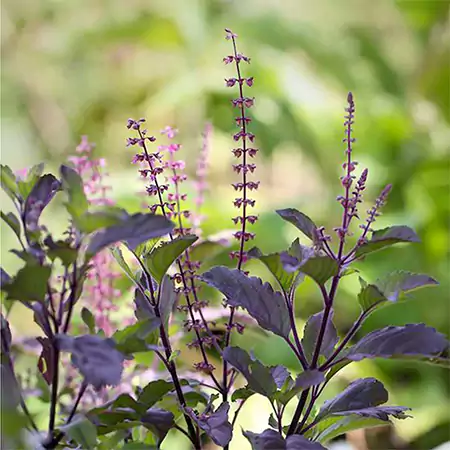 | It has distinctive bluish purple leaves. | There are many ways of using the Krishna variant in Ayurveda. They are used to treat many diseases like cholera, malaria, indigestion, the common cold, and the flu. |
| Rama Tulsi (Green Leaf) | 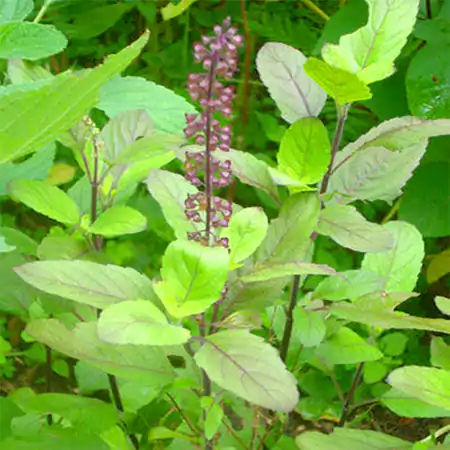 | This type has light green leaves and stems. | Rama variant leaves have cooling and soothing properties. These are used extensively to treat sinusitis, sore throats, blocked noses, and headaches. |
| Vana Tulsi (Wild Leaf) | 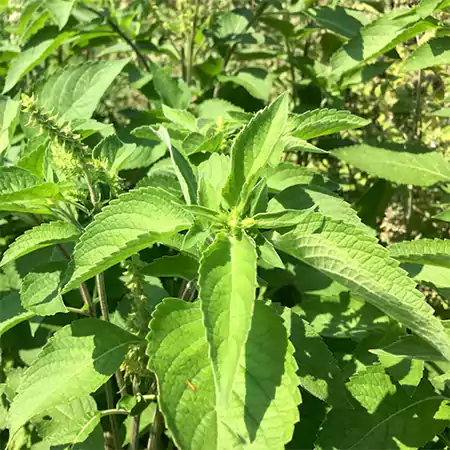 | It has bright emerald green leaves and a strong clove-like fragrance. | There are many uses of Vana tulsi leaves. Many people believe that this type has adaptogenic properties. It can help with mental ailments like anxiety, insomnia, and stress. |
| Kapoor Tulsi | 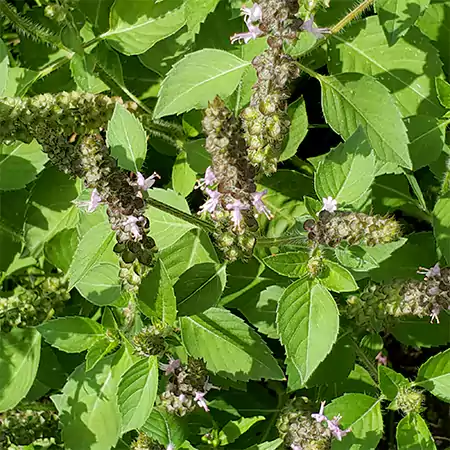 | This variant has small, light green-colored, and elongated leaves. | Kapoor tulsi leaves are cultivated for many medical and spiritual purposes. They are considered antifungal, anticancer, antidiabetic, and the ultimate immunity booster. |
How to Use Tulsi in the Right Way?
Using holy basil correctly involves consuming 3-5 leaves daily, brewing it as a tea, or combining it with honey or ghee for maximum benefits. Let’s have a detailed look at how to incorporate it in our daily lives:
Appropriate Dosage for Tulsi Leaves
| Form | Dosage |
| Fresh Leaves | 3-5 leaves a day |
| Powder (Churna) | ½ or ¼ teaspoon twice a day |
| Juice (Swarasa) | 5-10 ml once a day |
There are many ways you can incorporate holy basil into your daily life. It is a very safe herb to be consumed in various ways. Some of them are:
- Fresh Leaves
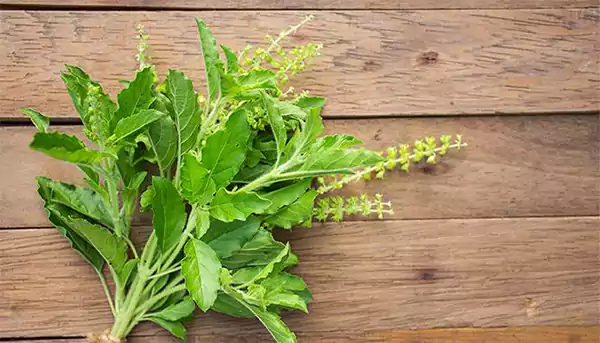
If you have a tulsi plant in your home or garden, you can have direct access to its fresh leaves. In India, it’s a common practice to consume 3-4 leaves on an empty stomach. Here, it benefits by boosting your immune system.
Note: Avoid consuming milk directly after chewing the leaves. Ayurveda considers this combination unhelpful.
- Powder (Churna)
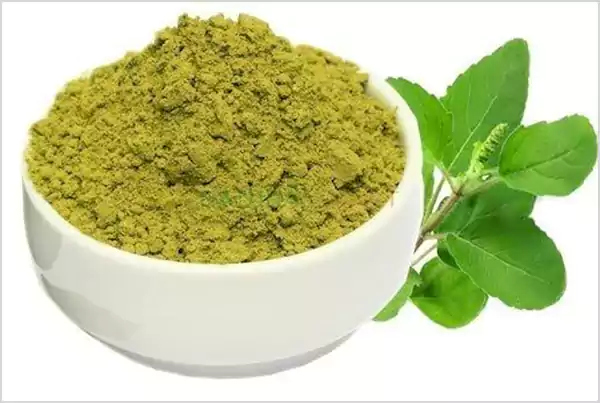
You can also consume it as a powder. Mix the dried leaf powder (½ or ¼ teaspoon) with warm water. Consume it daily to get the benefits. For example, in boosting immunity and easing a cold.
- Tulsi Tea or Kadha
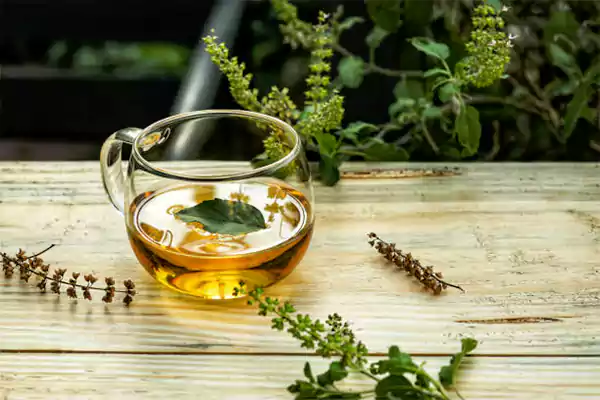
By far, the most popular manner of tulsi use is consuming it as a tea or kadha. Boil some water and remove it from the heat. Pour some fresh or dried leaves into the water. Let the tea steep, covered, for 15-20 minutes. Strain the leaves from it, and enjoy it. If you want more flavours, consider adding ginger or honey to it.
- Tulsi Water
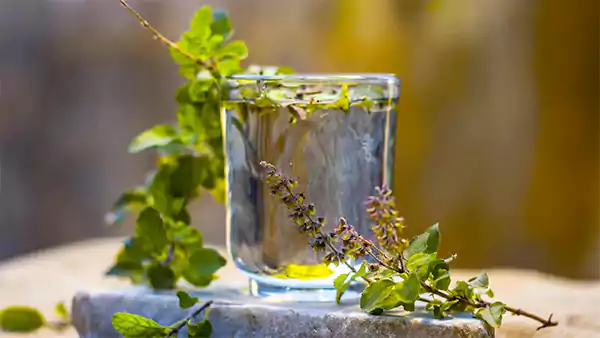
The tulsi water provides a refreshing start to your day. Soak some of its leaves in water overnight. Drink the infused water in the morning. The water helps in better digestion and stress relief.
- Tulsi-infused Ghee or Honey
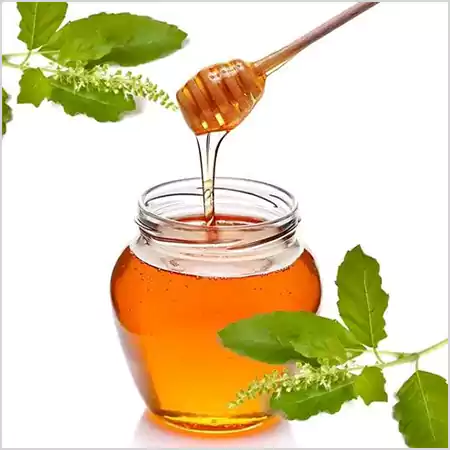
A traditional Ayurvedic preparation of holy basil is to infuse it with ghee or honey. Take a spoonful of dried holy basil powder and mix it with ghee or honey. Adjust the amount of ghee or honey according to taste and consistency. This mixture is suitable for direct consumption or can be utilized as an additive.
- Tulsi Juice (Swarasa)
Fresh leaves can be consumed as a juice. For this, extract juice from the leaves (5-10 ml) and mix it with water or other juices. This is a refreshing way of consuming and enjoying the benefits. It is profoundly rejuvenating for the immune system. One of the most commonly seen combos is blending it with Aloe vera juice. The drink acts as a detoxifier and is beneficial for joint pain and gastric issues.
Who Should Avoid Tulsi?
It is always advised to be mindful of what you are eating. Generally, Tulsi is considered safe for most people in the right amount (like in tea or a few leaves). But it’s significant to consider the precautions:
- Initial Consumption
If you are trying holy basil leaves for the first time, it may cause diarrhoea or nausea. Always start with small quantities and let your body adjust to the gradual increase in the intake.
- Pregnancy and Lactation
It is advised that pregnant women, lactating mothers, and women trying to conceive should avoid high amounts of holy basil. The effects of it on infants and nurturing mothers are not well-documented yet.
- Pitta Imbalance
If you tend to have a Pitta dosha imbalance (prone to indigestion, heartburn, acne, and anger), use holy basil carefully. Its warming nature may elevate the symptoms.
- Blood Sugar Levels
There are proven benefits of holy basil leaves in lowering blood sugar levels. People who have diabetes can consider using its leaves. However, it is suggested that they take precautions and closely monitor their blood sugar levels
- Surgery
Tulsi leaves act as a natural blood thinner and affect bleeding. If you are going for surgery, it is advised to stop its consumption a few weeks before.
Myth Vs. Fact About Tulsi
Tulsi is surrounded by many myths or misconceptions. They can cloud our judgment over claimed benefits. Let’s debunk those myths and understand the facts about this magical herb:
Myth 1: Tulsi is only a spiritual plant.
Fact: Holy basil is indeed considered sacred to the Hindu religion. It is often grown in Indian households for spiritual purposes. However, there are many holy basil medical uses mentioned in Ayurveda. Its leaves are used to boost immunity, treat respiratory issues, and reduce stress.
Myth 2: Tulsi should not be chewed directly.
Fact: It is a common belief in India that chewing holy basil leaves directly is disrespectful or harmful. But from a health perspective, chewing its leaves is perfectly safe and actually beneficial. It helps in oral care because it has antimicrobial properties. Though taking it in moderation is the key due to its potent essential oils.
Myth 3: Tulsi can only be used in tea.
Fact: Tulsi tea is the most famous way of consuming tulsi, but it’s not the only manner. Its leaves can be consumed in various forms- raw, juice or powder. The versatility of holy basil makes it the true “Queen of Herbs”.
Myth 4: Tulsi causes infertility in women.
Fact: One of the most common misconceptions is that Tulsi consumption leads to infertility, especially among women. There is no strong scientific evidence to prove this. On the contrary, it’s seen that regular consumption of it supports hormonal balance, which leads to better reproductive health.
Final Thoughts
Tulsi is rightly called a magical herb! What else will you call a herb that has such great medical and spiritual significance? Ayurveda sees it as a natural detoxifier, beneficial for skin and hair, and even helps in regulating blood sugar. Hope, now you know what are the benefits of tulsi plant!
Tulsi leaves can be consumed in various forms: raw leaves, juice, water, or powder. Whether it be a common cold or anxiety, Tulsi is the ultimate solution for you.
Two things are of supreme importance for using Ayurveda as beginners: consistency and patience. Consume mindfully and trust the process for desired results.
FAQs
Q1: Can I safely consume raw Tulsi leaves every day?
Ans: Yes, taking 3-5 tulsi leaves is considered safe for daily consumption. Wash the leaves before consumption. Avoid eating raw leaves with milk. It is considered unhelpful in Ayurveda.
Q2: Is Black holy basil (Krishna Tulsi) better than Green holy basil (Rama Tulsi)?
Ans: All Tulsi types are beneficial, but Krishna Tulsi (the black or purple variant) is considered the best. It has a greater concentration of beneficial components like Eugenol. This type is often recommended for respiratory issues and a strong immune system.
Q3: Is Tulsi water good for health?
Ans: Yes, Tulsi water is considered good for the human body. It is a natural detoxifier that supports oral and eye health. It is considered effective for clearing up the congestion and boosting the immune system.
Q4: What are the main uses of Tulsi in day-to-day life?
Ans: There are many Tulsi medical uses stated in Ayurveda. It helps with many respiratory issues. Consuming it daily favours skin and hair health. Holy basil leaves promote a better immune system and a calmer mind.
Q5: Can Tulsi provide relief from cough and cold?
Ans: Tulsi has immunity-boosting properties that provide relief from cough and cold. It helps fight germs, clear congestion, and boost immunity.