The Karanja Tree, aka Millettia pinnata or Kaanji, is one of the most versatile species of Fabaceae. Found in Asia, the Karanj plant is a remarkable ayurvedic herb, used for centuries to get good health, glowing skin, and overall well-being.
Though possessing immense curative potential, the Karanj tree has become a forgotten trail of Ayurveda, which is why here I’ll take a deep dive into the uses, importance, benefits, and Ayurvedic properties of this wonder tree.
- Karanja Tree: A Quick Overview
- What are the Features of the Karanj Plant?
- Ayurvedic Applications of Karanj Tree
- The Effects of Karanja Tree on Doshas
- Medical Benefits of Consuming the Karanja Tree
- How Much Dosage of Karanj Plant is Safe to Consume?
- Environmental Benefits of the Indian Beech Tree
- Potential Side Effects of Karanja Tree Usage
- Wrapping Up!
- Frequently Asked Questions
Karanja Tree: A Quick Overview
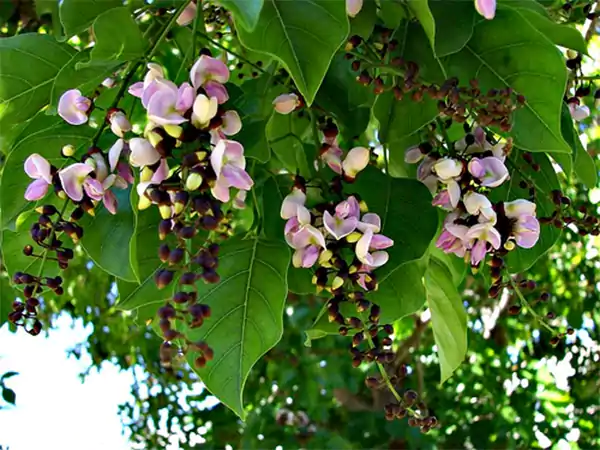
The Karanja tree is a part of the Fabaceae Family highly used in Ayurveda and traditional medicine for its therapeutic properties, mainly for skin ailments. This medicinal herb is rich in Flavonoids that are derived from flavones, flavans, and chalcones.
From its glossy leaves to seeds and bark, everything in this miracle plant holds exceptional restorative qualities. It naturally harmonizes the body’s energies, i.e., Tridoshas, especially Kapha and Vata.
Native to eastern and tropical Asia, this versatile medicinal herb is used for curing gastric issues, treating skin disease, and promoting hair growth.
| Category | Details |
| Botanical Name | Pongamia pinnata |
| Family | Fabaceae |
| Genus | Pongamia |
| Species | P.pinnata |
| Pongamia pinnata Common Names |
|
| Other Vernacular Names |
|
| Growth & Habitat |
|
| Medicinal Qualities |
|
| Ayurvedic Properties |
|
| Principal Constituents | Flavonoids |
| Classical Categorization |
|
What are the Features of the Karanj Plant
Native to the Indian subcontinent, Pongamia pinnata (Karanj plant) is a large deciduous tree mainly found in the Indian subcontinent and parts of Southeast Asia. Due to the diverse climatic conditions in the Asian region, this Indian beech tree has the following features.
- The Kaanji is a fast-growing tree maturing quickly in just a few years.
- It has strong and durable wood that is termite-resistant.
- This tree has the property of fixing nitrogen in the soil.
- It’s rich in oil with several medicinal properties.
- Lastly, this tree is highly drought-resistant and can survive in arid and semi-arid regions.
Also Read: Gond Katira Benefits: What Practitioners and Research Say About Its Benefits
Ayurvedic Applications of Karanj Tree
Being one of the most cherished medicinal herbs, the Karanj tree has the following ayurvedic applications recommended for Ayurveda for beginners:
- Kushtaghna: Treats skin disease
- Gulmahara: Relaxes abdominal pain and tumors
- Vrananahara: Facilitates quick wound healing
- Shothahara: Relieves inflammation
- Mehahara: Aids in diabetes
- Yonidisharut: Helps in vaginal diseases and uterine disorders
- Udavartahara: Fixes bloating
- Kaphavataghna: Balances Kapha and Vata
- Arshahara: Soothes piles
- Krumihara: Treats worm infestations
- Kushtajit: Relaxes psoriasis
The Effects of Karanja Tree on Doshas
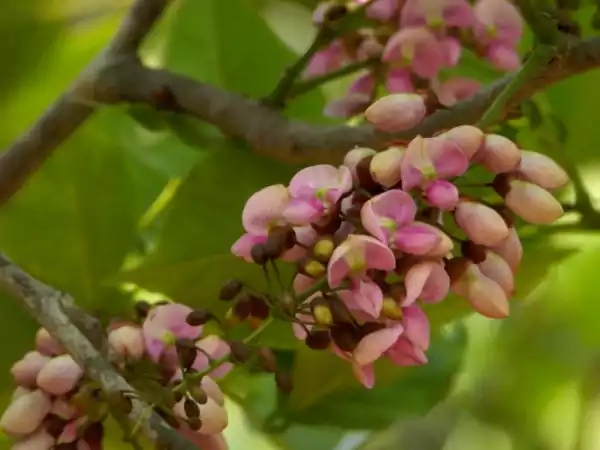
The Karanja herb is particularly known for balancing the Vata and Kapha doshas. This Indian beech tree balances doshas in the following ways:
- It has vata kapha shamak properties and treats janya diseases.
- Due to Kapha-regulating properties, the Kaanji plant is helpful in controlling skin diseases, congestion, and dandruff.
- Furthermore, it mildly balances Pitta dosha, treating skin conditions and digestive disorders.
- The Karanj plant balances Vata and soothes dryness through seed oils and bark.
- Good for relieving bleeding disorders due to its anti-inflammatory properties.
- Works as a deepan by stimulating the secretion of digestive juices, helping with loss of appetite.
- The anti-inflammatory properties of Karanja oil are used for treating arthritis patients.
Medical Benefits of Consuming the Karanja Tree
Traditionally, the Karanja tree was used for treating hemorrhoids, leprosy, and dyspepsia. Even the powder of its seeds was used to relieve bronchitis, and the leaves were used for fixing parasitic skin diseases. Some modern medicinal benefits of the Karanj plant are as follows:
- Promotes Hair Growth: Antioxidants and other essential compounds boost hair growth and improve the hair texture, even preventing premature graying of hair.
- Treats Leprosy: The anthelmintic and bactericidal properties of Karanja oil aid in treating leprosy.
- Relieves Skin Anomalies: Its antiseptic properties can treat skin-related diseases like infection and abscess.
- Prevents Appetite Loss: People who have a weak digestive system should try Karanja tonic to balance the secretion of gastric juice, helping with loss of appetite, along with their Ayurvedic weight-gaining strategy.
- Fixes Ulcers: It has antioxidant properties that heal internal gastrointestinal ulcers and prevent cell damage. Just mix the Karanja oil with coconut oil to soothe ulcers.
- Wound Care: Boil 20 to 30 grams of Kaanji bark powder and reduce the water to ¼ for wound care.
- Eczema: Equally, adding turmeric and Karanja tree seed powder together can prevent eczema.
- Hemorrhoids: Its dry powder is mixed with triphala powder in a 1:1 ratio for Kshara therapy (ano-rectal alkaline therapies) to cure hemorrhoids.
- Conjunctivitis: Young shoots of Kaanji plant leaves are soaked in water and macerated after decoction for a cold fusion, which relieves conjunctivitis.
- Wasp Bite: The extract from leaves can be applied over lesions of an insect or wasp bite, reducing swelling and pain.
How Much Dosage of Karanj Plant is Safe to Consume?
Depending on age, health, gender, and medical history, the dosage of the Karanj plant varies from person to person. Hence, it is recommended to consult a certified doctor or medical practitioner before adding this magical herb to your diet. However, the general dosages for a healthy adult are as follows:
- 1 to 3 grams of Karanja powder every day.
- If drinking it as juice, 10 to 20 ml twice a day is safe to consume.
- Ointments are recommended for external use only.
- In the form of capsules, 1 to 2 capsules are considered within safe limits.
Environmental Benefits of the Indian Beech Tree
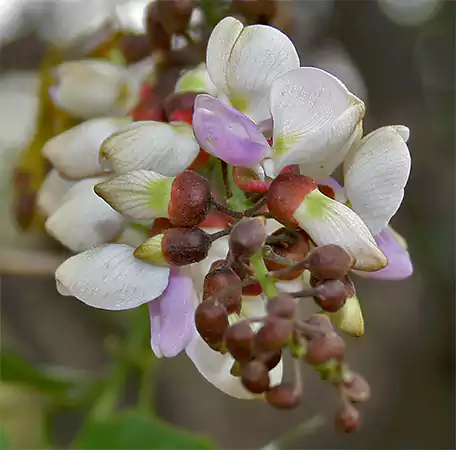
Apart from improving the health and overall well-being of humans, the Karanja Tree also provides immense benefits to Mother Nature, resulting in a strong ecosystem. Some of the ecological benefits of the Indian beech trees are as follows:
- Along with preserving biodiversity, it provides food and shelter to a number of birds and mammals.
- The large and dense canopy of the Karanja tree works as a shade, blocking heat and providing comfort in hot climate regions.
- Works as a natural filter by generating oxygen. It absorbs harmful toxins and pollutants like sulfur oxide, nitrogen oxide, and small particles. Furthermore, it quickly absorbs carbon dioxide and other greenhouse gases from the environment, preventing air pollution.
- It helps in maintaining the water cycle by releasing moisture in the atmosphere through transpiration, which helps in inducing rainfall.
- By attracting pollinators like bees and butterflies, the Karanja tree supports biodiversity and balances the ecosystems.
- The absorption of greenhouse gases and other toxins also helps in preventing ozone layer depletion.
- This tree has an exceptional life span, sometimes even surviving for centuries.
Potential Side Effects of Karanja Tree Usage
Though loaded with immense benefits and ecological pros, Karanja trees also have some side effects usually caused by overconsumption or improper usage; they are as follows:
- The oral consumption of Karanja oil can trigger nausea, vomiting, diarrhea, headache, dizziness, abdominal pain, and liver stress.
- It can also irritate skin, causing redness, itching, and allergic contact dermatitis.
- The raw consumption of leaves can cause allergic reactions in some people, causing digestive irritation or stomach upset.
- Prolonged use without consultation from a certified medical practitioner can result in liver stress.
| ‼️Word of Caution‼️ Kids, pregnant women, and breastfeeding mothers should not consume the Karanja products until prescribed by the doctor, as they are at higher risk of toxicity. Never ingest Karanja seed oil without the consultation of an Ayurvedic practitioner.Always do a patch test before directly applying it to your skin. |
Also Read: Shilajit vs Ashwagandha: Differences, Benefits, Side Effects, and Consumption Guidelines
Wrapping Up!
The Karanja tree is a multipurpose plant serving immense ecological and health benefits. But whether you really need it or not totally depends on your lifestyle, medical history, and other parameters. The wrong dosage and overconsumption can do more harm than good.
Hence, I suggest taking a proper consultation from a certified Ayurvedic or Medical practitioner before adding this herbal supplement to your routine. This way, you can get the maximum benefit of the Karanj plant without risking your health.
Frequently Asked Questions
Q1: What is the use of the Karanja Plant?
Ans: The Karanja plant is an herbal medicine mainly used for treating skin diseases. From the roots to the flowers, leaves, and bark of this plant, everything has medicinal properties and is used for ayurvedic purposes.
Q2: What is Karanj called in English?
Ans: In English, the Karanja tree is known by these names: Millettia Pinnata, Panigrahi, Pongamia Pinnata, Cytisus Pinnatus, Pongamia glabra, Pongame oil tree, Indian Beech, Pungai, and Kanuga.
Q3: How to identify a Karanj plant?
Ans: The Karanj plant is evergreen with a short greyish-brown bole, which is mostly smooth, with a crown of bright green feather compound leaves that have a glossy finish.
Q4: What are the side effects of Karanja?
Ans: Allergies, pimples, irritation, and uneven redness over the face are some common side effects of Karanja.
Q5: Is Karanja edible?
Ans: Yes, the seed extract, leaves, root bark, and stem bark of the Karanja tree have antiviral properties and are totally edible.